Welcome to WordPress. This is your first post. Edit or delete it, then start writing!
Category: Uncategorized
-
Leadership Unveiled: Discovering the ‘Why’ That Drives Us, Inspired by Oprah Winfrey and Steve Jobs Journey

Leader in a group discussion with teammates 
Open communication between leader and teammates In a world where leaders often grapple with the complexities of authenticity, purpose, and innovation, understanding your core motivations can fundamentally redefine leadership. Many leaders face the challenge of navigating their roles without a clear sense of purpose, leading to decision fatigue, lack of direction, and diminished impact. Through the lens of Oprah’s authenticity and Steve Jobs’s innovation, we’ll explore how deeply comprehending what drives you can not only clarify your leadership path but also significantly amplify your influence and effectiveness.

Credits to shutterstock of Oprah Winfrey picture
Oprah’s Secret: Connecting Through Authenticity and Purpose
I had this epiphany while rewatching an old Oprah episode (yes, I still do that). It hit me – her strength was not just about the topics she chose but about her unwavering commitment to her ‘why.’ She connected, she inspired, and she led with her truth. Isn’t that what we all strive for?
Oprah’s journey exemplifies authenticity and purpose-driven leadership. By sharing her vulnerabilities and triumphs, she built a profound connection with her audience, teaching us the value of embracing our true selves.
Case Study Examples

Credit to Amazon Prime for The Oprah Winfrey Show picture -
In 1986, Oprah took a significant risk by transitioning her successful local talk show into a nationally syndicated program, “The Oprah Winfrey Show.” At a time when daytime talk shows were sensationalist and tabloid-like, Oprah shifted the format to focus on literature, self-improvement, and spirituality.
-
Embrace your unique voice and vision. Oprah’s success stemmed from her authenticity and willingness to diverge from the norm. This case highlights the importance of staying true to one’s values and vision, even when it contradicts popular trends. Leaders should trust their instincts and remain authentic to their vision.
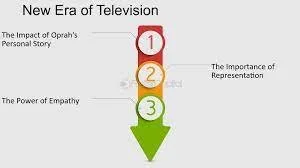
Credit to Fastercapital.com for How Oprah Redefined Television infographic -
Facing initial low ratings and significant financial losses, the launch of OWN in 2011 was deemed a failure by many critics. However, Oprah persevered, reevaluating and restructuring the network to better align with her vision and values.
-
Persistence in the face of failure. Oprah’s ability to reassess and realign her strategies under pressure demonstrates the strength of a clear ‘why.’ Leaders can learn that setbacks are not endpoints but opportunities for growth and realignment.
Reflective Question
How can you leverage your authenticity to inspire and connect with others more deeply?


Credit to Alamy of Steve Jobs picture Steve Jobs: Revolutionizing Technology with a Vision for Perfection
The visionary co-founder of Apple, offered a leadership model distinctly his own yet profoundly committed to excellence, setting him apart from other icons like Oprah. His relentless pursuit of perfection in user experience wasn’t just about inventing new technology; it was about revolutionizing how we interact with the world, seamlessly blending art with technology in unprecedented ways. This ambition drove the creation of groundbreaking innovations such as the iPhone and iPad, each fundamentally transforming industries upon their release.

Credit to Business Insider of The First iPhone 
Access to music on iPhone -
The revolutionary design of the first iPhone, with its single button and touchscreen interface, marked a significant departure from the prevailing keypad-based phones, highlighting Jobs’s commitment to user-centric design.
-
Bold visions and user-focused innovation can redefine industries. Leaders should dare to explore new territories with a clear focus on user needs.
Reflective Question
How can I prioritize user needs to disrupt and redefine standards within my industry?
-
In a bold move, Jobs introduced a device that combined a phone, an iPod, and an internet communicator. Venturing into the mobile phone market, Apple, under Jobs’s leadership, demonstrated unparalleled innovation and courage.
-
Leadership requires the courage to innovate and the vision to see beyond the current market landscape. The iPhone’s success illustrates the value of exploring uncharted territories, guided by a clear vision of the future.

Collecting data on user experience
The Power of Vulnerability and Vision in Leadership
Both Oprah and Jobs leveraged their vulnerabilities to forge deeper connections and drive innovation. Sharing struggles and maintaining a clear vision even under pressure are hallmarks of their leadership styles.

Credible and great leader walk Strategies to Uncover Your Leadership Why: A Step-by-Step Guide
Discovering your leadership “why” is pivotal for navigating your path with conviction and purpose. Here’s how you can start this journey:
-
Reflect on Your Core Values
-
Identify the principles that are non-negotiable in your life and work. These core values are the compass that guides your leadership “why.”
-
-
Assess Your Greatest Achievements
-
Consider your most fulfilling accomplishments. Understanding what motivated you in these moments can illuminate your underlying motivations.
-
-
Seek Feedback
-
Engage with colleagues or mentors to gain perspectives you might overlook. External insights can offer a fresh look at what drives you as a leader.
-
-
Experiment with Different Approaches
-
Leadership is not one-size-fits-all. Exploring various styles can help you find the approach that resonates most deeply with you.
-
-
Journaling and Mindfulness
-
Regular introspection through journaling or mindfulness practices can offer clarity on what influences your decisions and actions.
-
Incorporating these strategies with lessons from Oprah Winfrey and Steve Jobs, you can carve out a leadership path that is uniquely yours, driven by a clear and personal “why.”
Exploring Various Leadership Styles
Credit to Alamy for the leadership keywords -
Leadership manifests in myriad forms, each powered by a distinct “why.” Consider Elon Musk’s forward-looking vision compared to Jacinda Ardern’s empathetic governance. These contrasting styles show that leadership effectiveness is not about the “why” itself but how authentically you align your actions with your core motivations.
-
Understanding the diversity in leadership styles enriches your perspective, allowing you to appreciate the varied paths to effective leadership. Whether driven by innovation, like Steve Jobs, or social responsibility, like Jacinda Ardern, the authenticity of your “why” is what defines your impact as a leader.
Tying It All Together: Your Takeaway
As you wrap up your day (and this blog), take a moment to ponder your ‘why.’ It’s not just a one-off exercise; it’s a continuous journey. Whenever in doubt, their legacy is there for inspiration.
Oprah Winfrey and Steve Jobs exemplify that understanding and living your ‘why’ can lead to profound leadership success. Their stories encourage us to find our own path, guided by authenticity, innovation, and purpose.


Discover More with the Leadership Micro Talent Program
But wait, there’s more! If this conversation about leadership and finding your ‘why’ has sparked something in you, I’ve got just the thing. Check out the Think Codex’s Leadership Micro Talent Program here to discover how our program can help you and your leadership team discover and refine their ‘why’.
-
-

How can you ensure your employees have these top 3 soft skills in 2024 and help them develop these essential skills to drive success?
Written by: Gordon Tai (Gamification Designer)
The professional world has undergone a major shift due to the global pandemic in 2021. Companies around the world have embraced rapid change, pivoting towards digitization, leading to remote work and a surge in employee upskilling. As a result, many companies are investing more in upskilling than ever before.
As we approach 2024, the working world is preparing for another transformative phase. Generative AI is set to disrupt almost half of workers’ skills in the next five years. This means it’s more important than ever to have a workforce that can adapt and be resilient. The question on everyone’s mind is: “What skills will define success in 2024, and how can organizations prepare?”
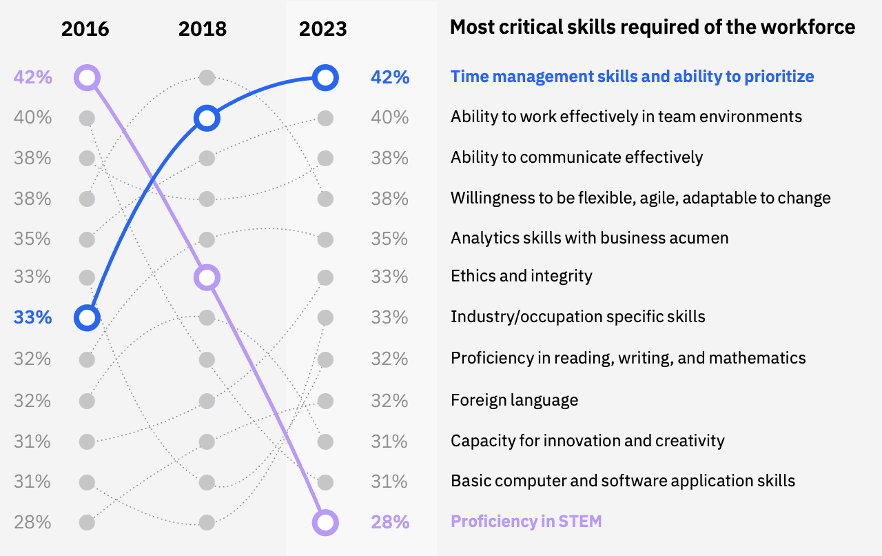
Infographic taken from IBM: Augmented work for an automated, AI-driven world
The Soft Skills Imperative
Recent research by IBM, involving 3,000 leaders and 21,000 workers across 20+ countries, has shed light on the increasing demand for soft skills beyond technical expertise. These skills include time management, collaboration, and communication.
Here’s how HR professionals can take action:
1. Time Management Mastery
-
Offer time management workshops or seminars for employees, providing practical tips and tools to enhance their time management skills. Create a resource library with time management resources for ongoing development.
2. Cultivating Collaboration
-
Implement cross-functional team projects that require collaboration. Encourage team members to share their experiences and best practices in collaborative settings. Create a collaborative workspace to foster teamwork.
3. Effective Communication
-
Offer communication training programs emphasizing active listening, clear speaking, and conflict resolution. Foster frequent team meetings to enhance departmental communication.
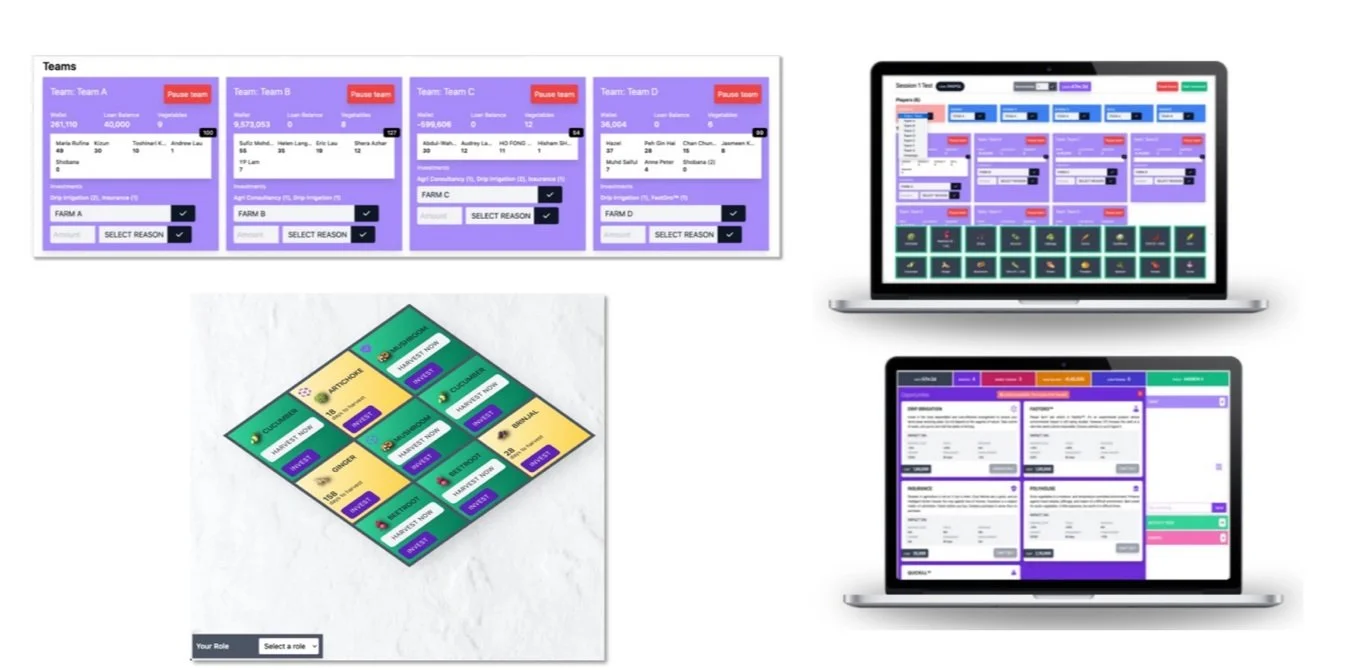
ThinkAdapt Business Simulation A Unified Solution: ThinkAdapt by ThinkCodex
To bridge the gap between recognising the importance of soft skills and effectively fostering them within your organisation, we introduce ThinkAdapt by ThinkCodex.
ThinkAdapt functions as both a teambuilding simulation and crisis management theories. Teams engage in an adrenaline-charged environment, where they:
-
Master Time Management
-
Prioritise Collaboration
-
Emphasise Communication
By deploying ThinkAdapt, HR professionals can reinforce the soft skills development journey within their organisations. It’s a real-world solution that mirrors the challenges businesses face today.
We’ve successfully partnered with esteemed clients such as Nestle, AIA, and Sumitomo-Mitsui Banking Corporation, witnessing firsthand how ThinkAdapt equips professionals with the essential skills needed to thrive in the ever-evolving professional landscape.
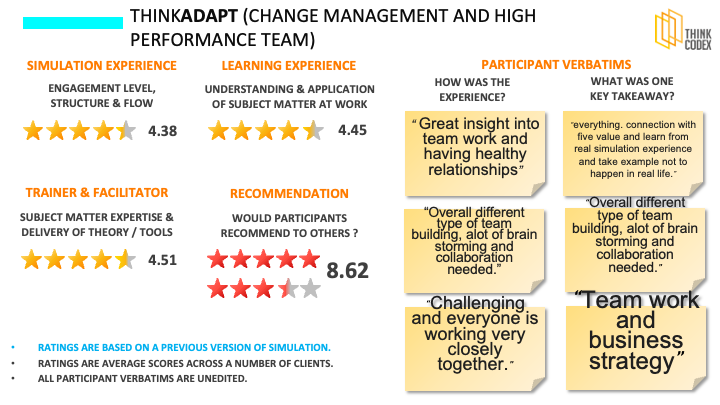
Testimonials from our learners As we head towards 2024, HR professionals need to focus on developing soft skills such as time management, collaboration, and communication. ThinkAdapt simulation by Think Codex can help prepare your team for the challenges of tomorrow!
-
-

Revolutionizing Corporate Training: The Power of Gamified Learning at KPMG and British American Tobacco
Written by: Raveena Elizabeth (Marketing Lead)
Hello there, dear readers!
We live in an age of corporate training that often feels more like a chore than a transformative experience. Slide after slide of uninspiring content and endless multiple-choice quizzes. But what if learning at work could be… engaging & fun?
That’s the exciting question that’s gaining momentum. We’re not merely talking about gamification; we’re talking about gamified training done right. Join us as we explore a groundbreaking study conducted at KPMG by Harvard Business Review, a prominent player in professional services.

Example of employees playing games at workplace The study at KPMG assessed the impact of gamified training on employee performance, specifically examining the “KPMG Globerunner” program. This training incorporated gamification elements, immediate feedback, and competition, and was implemented across 24 offices over 29 months. The study found that gamified training had a significant positive impact, resulting in increased fees collected, a larger client base, and more business opportunities. It also highlighted the pivotal role of leaders in this training approach and offered recommendations for organizations looking to implement similar training programs.
Key Takeaway 1: Gamified Training Supercharges Employee Performance
-
When gamified training is executed thoughtfully, it has the power to significantly enhance employee performance. The winning recipe includes well-structured lessons with elements such as progressing through challenges, real-time feedback, earning points, and a touch of friendly competition.
-
The results speak for themselves: a remarkable increase of over 25% in fees collected, a 16% growth in clients served, and promising new opportunities on the horizon. It’s more than just a game; it’s about making substantial improvements in how employees carry out their roles.
Key Takeaway 2: The Impact of Engaged Leadership
-
Now, let’s turn our focus to leadership. The study at KPMG emphasizes the crucial role that leaders play in this training approach. When leaders actively participate, the results get even better.
-
Offices whose leaders participated more than others increased fees collected by 19% more and grew the number of clients served by 7% more. Leadership involvement sets the tone for the entire team.
Key Takeaway 3: Cultivating a Culture of Enthusiasm and Play
-
Creating a work environment where playing is not just allowed but encouraged can be transformative. When leaders themselves embrace the training as an integral part of work, it sends a powerful message to the entire team.
ThinkAgility: Leadership Simulation for British American Tobacco (BAT)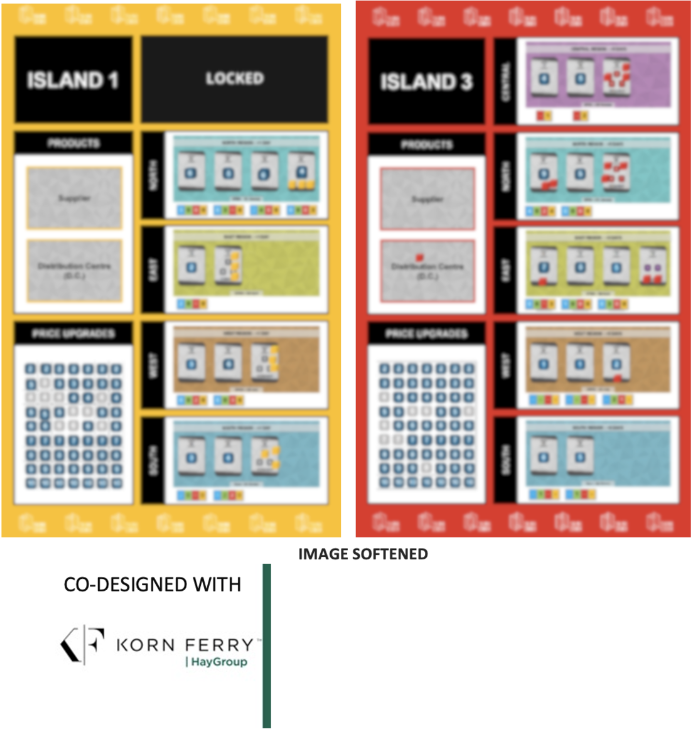
Problem Statement:
-
Across the global landscape, British American Tobacco (BAT) faced challenges within its leadership & core teams to be agile with the ever-changing business environment – especially with a shift in consumer behaviour and regulatory compliance. Collaborating effectively and being able to respond to market changes was good in some teams but less so in other teams. There was a pressing need for an improved and structured way to make informed decisions and deliver results.
Our Solution:
-
Introducing ThinkAgility, aimed at delivering agile results within BAT’s leadership across diverse locations, including Australia, New Zealand, Oceania, and various Asian countries in partnership with Brandt International. Through a combination of business simulation-based workshops and debrief sessions, ThinkAgility helps participants understand, retain, and apply their learnings effectively in their work.
The game aspect:
-
Participants, taking on roles as strategists, auditors, client liaisons, and region managers, embarked on a transformative journey. They were entrusted with overseeing various regions in a dynamic simulation.
-
Simulation Objectives:
-
Managing complex team dynamics and limited resources.
-
Understanding team members’ strengths and limitations.
-
Developing flexibility and agility in the face of competition and unexpected scenarios.
-
Delivering results the first time in tough circumstances.
-
Before each round, they engaged in thought-provoking discussions on strategy and resource allocation. This strategic element is key in the fast-paced, ever-changing business landscape.
-
Learning Outcomes:
-
Results Agility: Navigating challenging situations to deliver results.
-
Change Agility: Comfortably adapting to change and experimenting.
-
People Agility: Effective communication and collaboration across diverse groups.
-
Mental Agility: Solving problems in unique and innovative ways.
-
Self-awareness: Recognizing one’s strengths and weaknesses.
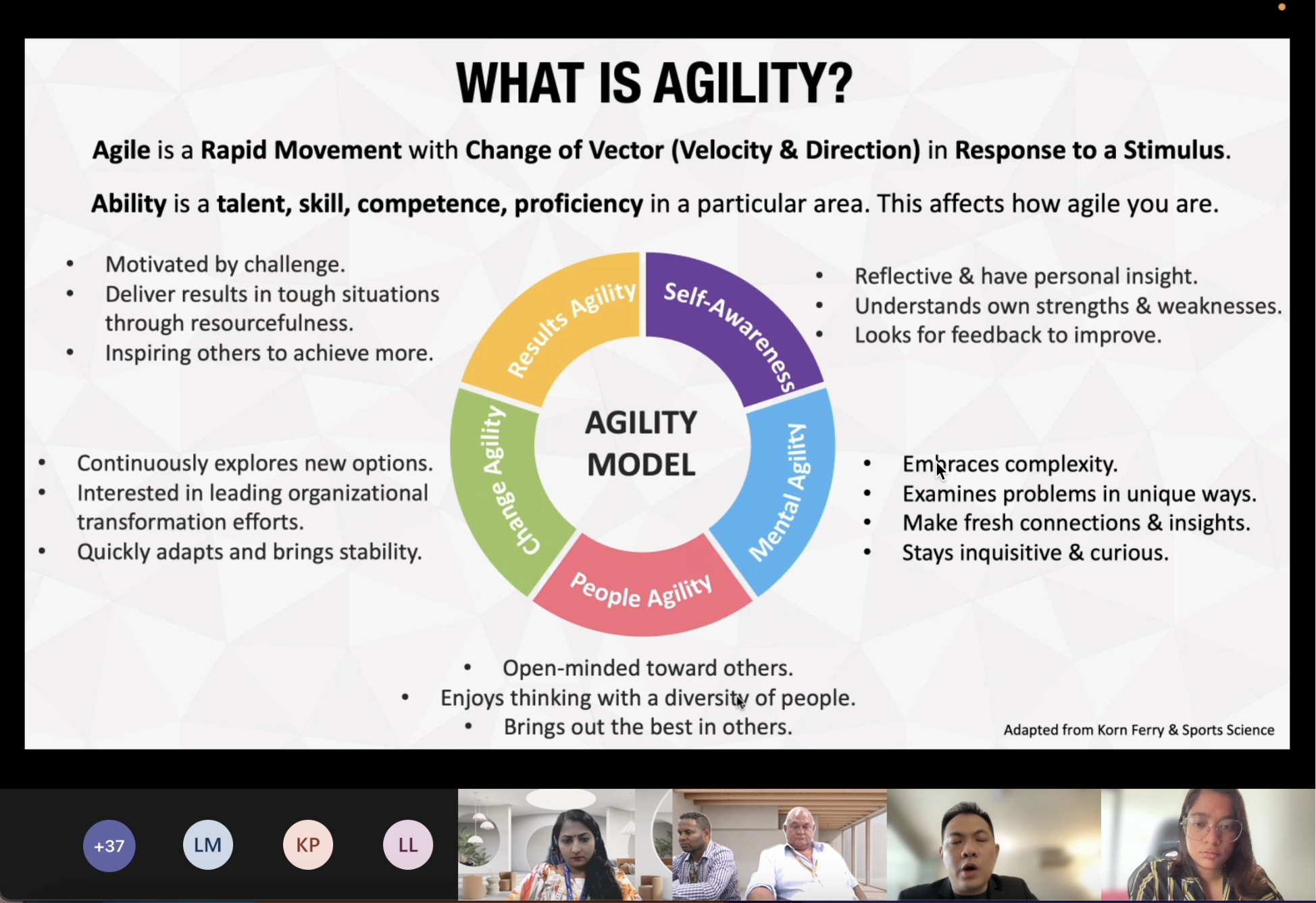
Debrief on agility concept during the virtual training session Throughout the simulation, participants encountered deliberately crafted scenarios meant to disrupt their team’s strategies, compelling them to adapt in real-time. It was more than just a game; it was a profound lesson in learning agility.
So, did it help them?
The transformation experienced by our participants was profound. They discovered a newfound agility in their approach to tasks and projects.
Here are some key insights they shared:
-
“Being agile in my approach to tasks and projects. Identifying tasks that can be executed simultaneously without dependencies. Leveraging the strengths of my team members. Remaining vigilant and ready to adapt in any situation to meet objectives without compromise.”
-
“Balancing the strengths of my team with the tasks at hand. Striking a harmonious equilibrium between consistency and flexibility to achieve outstanding results.”
-
“I wished that I had gone through this engagement earlier – my team would have been better equipped with managing the challenges during the rollout and pivoting of our market strategies”
The consensus is clear: this training not only motivates active participation but also encourages the practical application of learning in the workplace. It’s more than a shift in mindset; it’s a driving force for continuous improvement on the job.
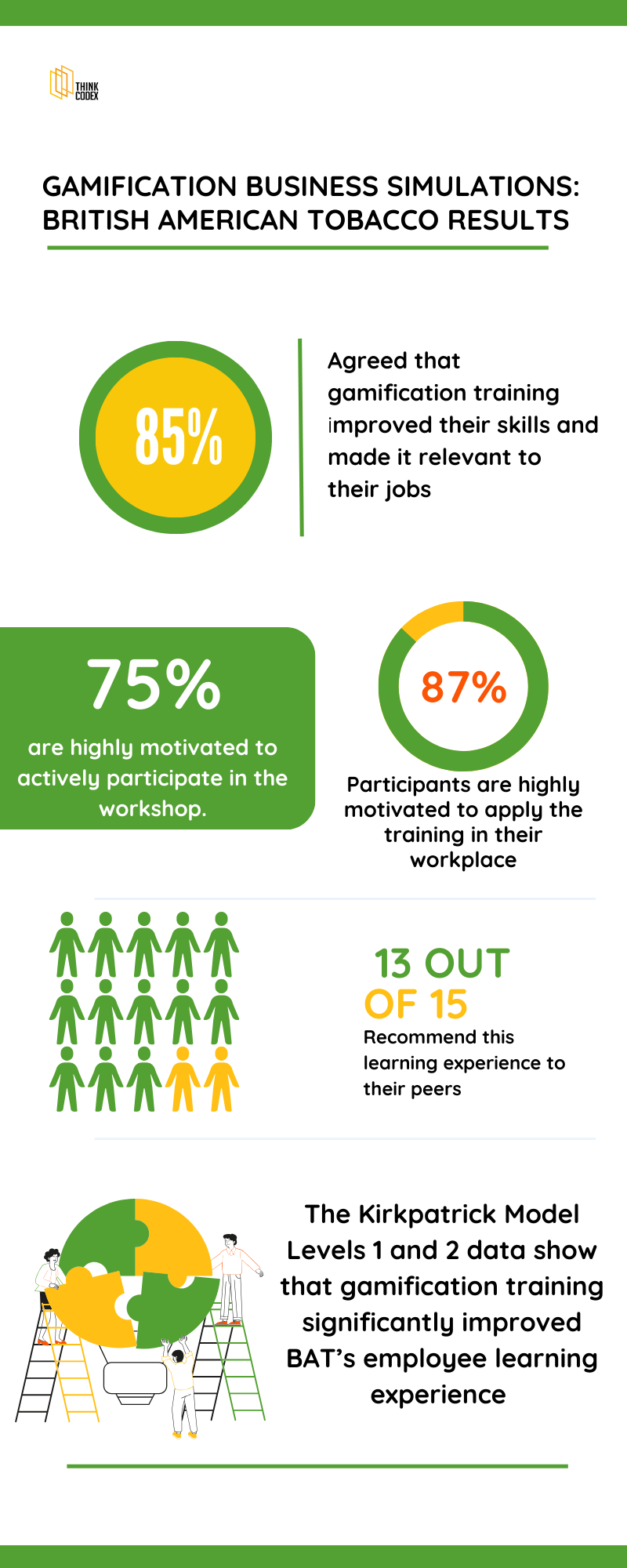
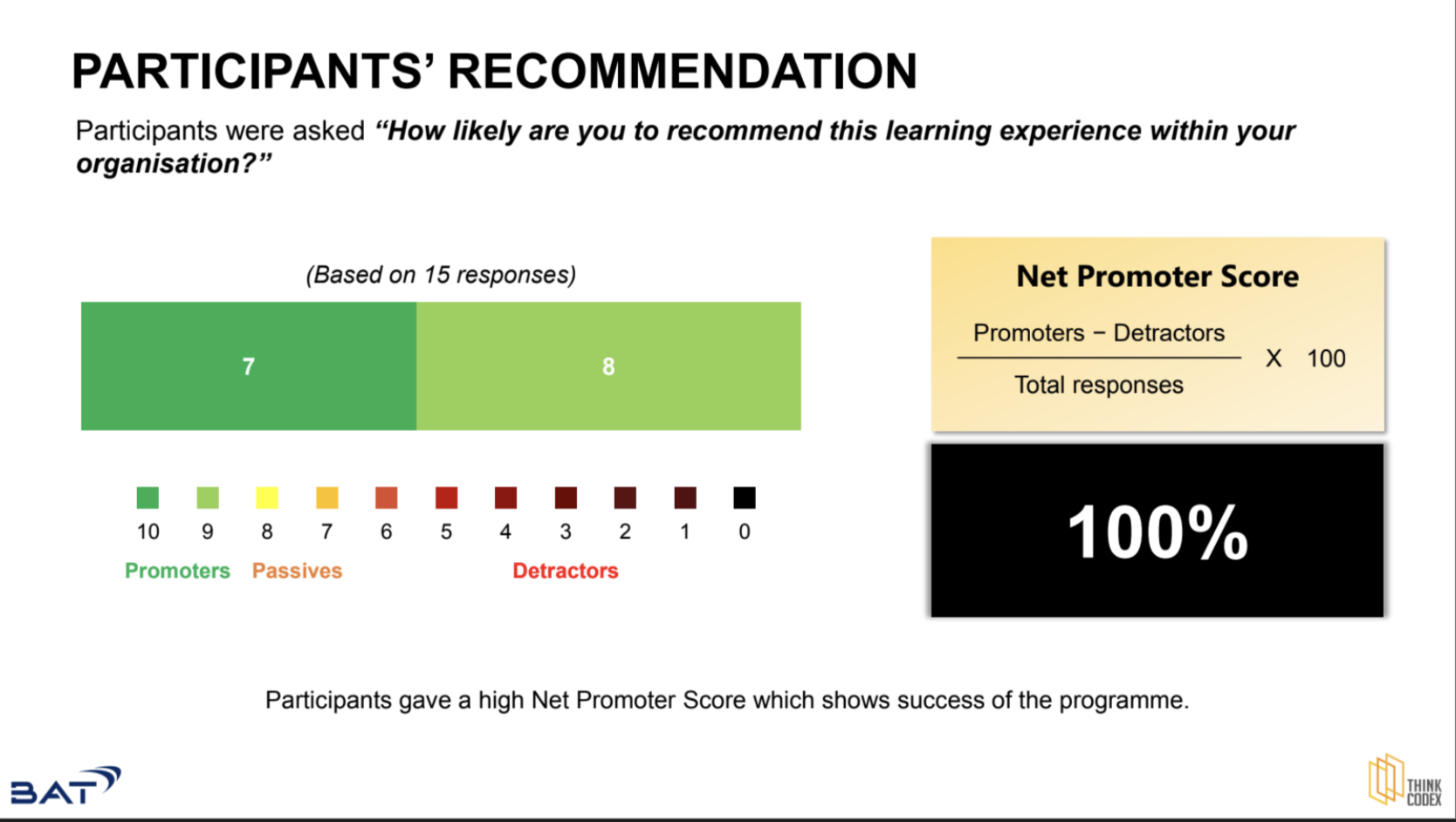
NPS on participant’s recommendation In essence, our collaboration with BAT in gamified training harmonizes with the insights from the Harvard Business Review. It underscores the significance of leader engagement, the creation of a learning-friendly atmosphere, and the measurement of outcomes at an organizational level.
This isn’t just about education; it’s about inspiring change and nurturing newfound agility when addressing work-related challenges. As one participant aptly put it, “This training got me thinking about my current role and how to enhance productivity with my team and across the business. It’s about implementing change and ensuring consistency along the way.”
We firmly believe in this transformation, and we’re excited to continue leading the way in innovative corporate training. It’s not just a game; it’s a game-changer!
-
-

5 Strategic Steps to Align Your L&D with Business Success
Written by: Raveena Elizabeth
We’ve seen it all too often. L&D is seen as a support function (a.k.a backup) or a rapid response team (aka fixer) when the business suddenly needs to manage a people gap problem. L&D can be viewed as a secondary infrastructure and called upon only when help is needed. It doesn’t have to be like this. L&D professionals need to understand business strategy and then create an aligned L&D strategy for the business’s success.
Enter the L&D Strategy and it’s 5 stepsDo we really have clarity and know the business strategy and needs? Most of us get our understanding from the few lines written inside a Training Needs Analysis document.
A learning and development (L&D) strategy is a comprehensive plan that outlines how an organization will meet its professional development needs and achieve its business objectives. It is time-bound, meaning it has a specific time frame for completion, and sets measurable goals and objectives. Failure to do this just makes the L&D function out of scope, outdated, and an unwanted distraction from “real” work.
The goal of an effective L&D strategy is to provide employees with the necessary skills and knowledge to improve their performance, enhance their engagement, and contribute to the overall success of the business. This blog post will explore the different types of business goals and how L&D teams can design and implement an effective learning and development strategy.
Step 1: Understand the Types of Business Goals

The first step in developing an effective L&D strategy is to understand the types of business goals that an organization can have. These goals can be broadly categorized into two kinds: business-related goals and employee-related goals.
-
Business-related goals are focused on improving the overall performance and success of the organization. These goals include increasing revenue, reducing costs, improving customer satisfaction, and increasing market share.
-
Employee-related goals, on the other hand, are focused on improving the skills and knowledge of the employees. These goals include improving employee engagement, enhancing employee performance, and developing a culture of continuous learning.
How To
Often the need of the organization will include both in a single intervention by L&D. Here’s the key, even when it seems like a simple request in an email, always schedule a call with the stakeholders – decision makers, potential participants, and perhaps any other people that the training can impact. Often we will find that there is a notable difference between what is written in an email and what is revealed in a meeting. The details you get in the meeting help you to craft a more focused and accurate L&D solution. Don’t skip the meeting!Once you gain clarity, it’s time to move on to Step 2.
Step 2: Conduct a Skills Gap Analysis
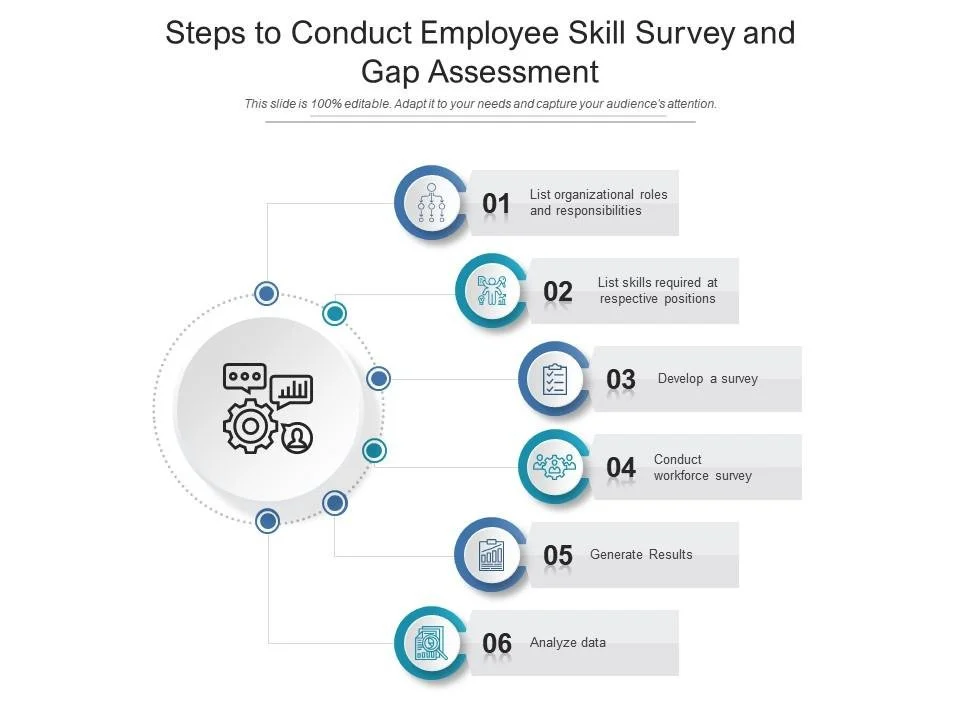
Steps to conduct employee skill survey and gap assessment This involves evaluating the skills and knowledge required to achieve business goals and comparing that to the skills and knowledge currently possessed by employees. The analysis can be conducted using a variety of methods, such as Training Needs Analysis (TNA), surveys, assessments, focus groups, or interviews. Once the skills gap has been identified, organizations can create targeted training and development programs to close the gap.
How To
It’s crucial to ask BOTH the employee what they view as their gap and also their line manager to see what is the gap of the employee. Do not communicate the results of the other party to each of them until both of them have completed this process. This is to prevent bias and also groupthink between both the results.Step 3: Design Learning Programs
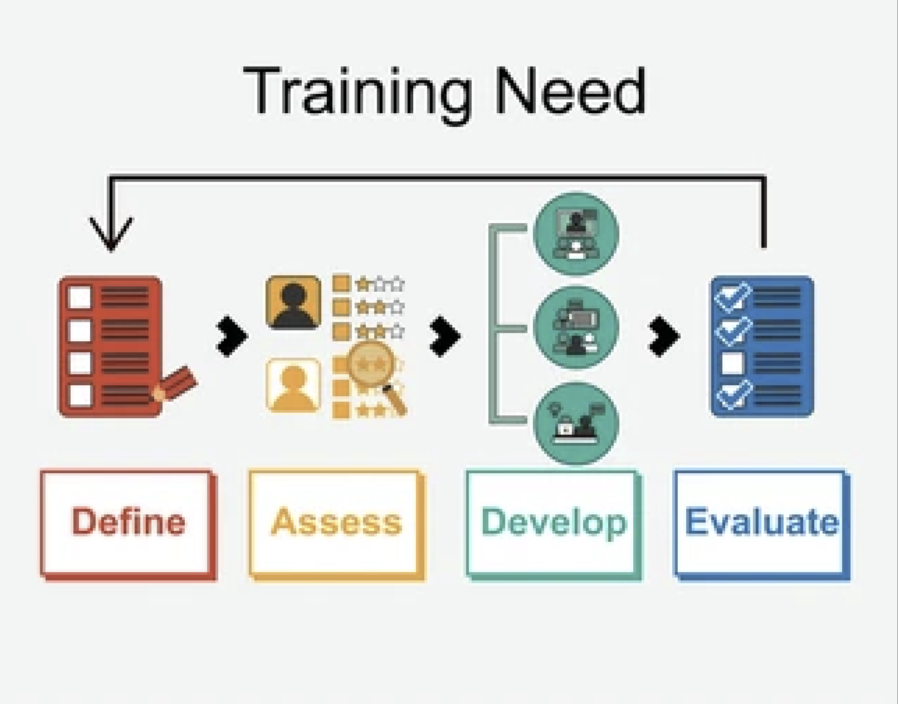
Training need analysis vector Effective learning programs should be designed in a way that aligns with business goals and addresses the specific needs of the workforce. This involves using various learning methods such as Instructor-Led Training (ILT), eLearning, On-the-Job Training (OJT), Gamification, Simulations, Mobile Learning, and Social Learning to cater to different learning styles and ensure that employees can apply the new knowledge and skills to their jobs.
How To
Remember it’s not the type of training that matters – that’s the method only. Use whatever method that gives the best results. Some methodologies may be more suitable for high engagement and practical applications such as gamification based simulations.Step 4: Measure and Evaluate L&D Effectiveness
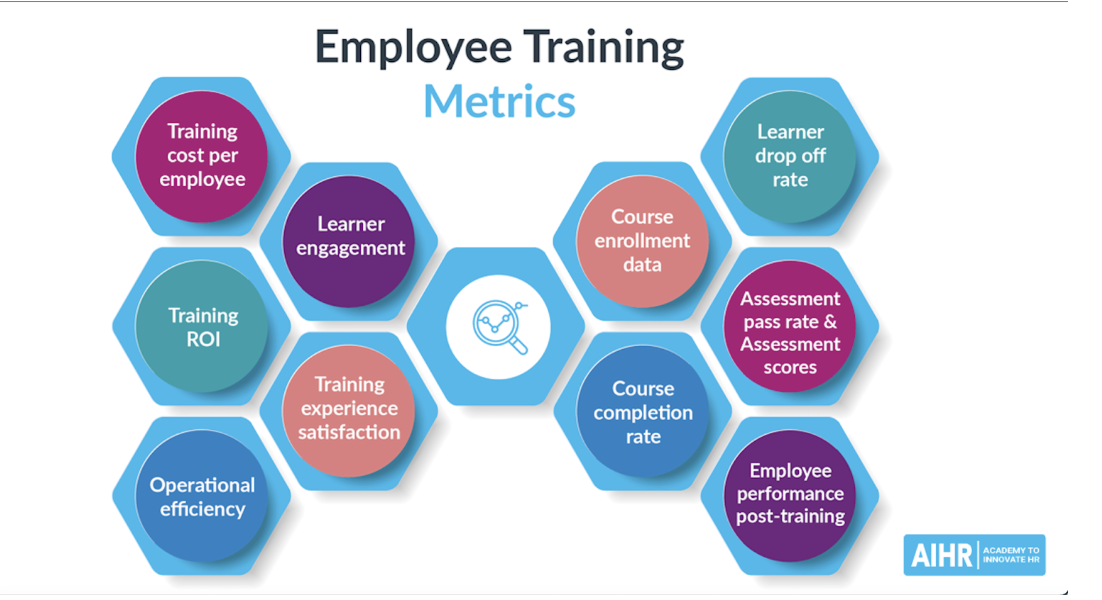
Source by AIHR To ensure that L&D programs are effective and contribute to business goals, this can be done through various methods, such as surveys, assessments, and performance evaluations. This helps identify areas where improvements can be made and ensures that the organization is getting a return on its investment in L&D.
Step 5: Communicate and Collaborate with Key Stakeholders and Measure and Evaluate L&D Effectiveness

Effective communication and collaboration with key stakeholders are critical to the success of aligning L&D strategy with business goals. This includes working closely with senior leaders, managers, and employees to ensure that the training and development programs are aligned with the overall business strategy. Also, help to identify areas where improvements can be made and ensure that L&D efforts are relevant and practical.
To illustrate the importance of aligning L&D strategy with business goals, let’s take a look at a real-life example (studied by Deloitte, 2023) A major German information and communications technology company faced several challenges: A lack of highly demanded IT skills, a low turnover rate, a high average age of the workforce, and insufficient business performance.
To overcome these challenges, the management team of the company decided to kick off a large-scale agile transformation that involved over 60% of its total workforce. By re-up-skilling existing staff into agile roles and adopting agile methodologies, the company not only significantly increased its business performance but also developed a thorough learning culture within the organization that made learning in the flow of work a key pillar of its strategy.
This case study highlights the importance of aligning L&D strategy with business goals. The IT company recognized the need to re-skill its workforce to meet the demands of the market and improve business performance. By aligning L&D initiatives with the company’s strategic goals, the company was able to achieve a successful transformation and develop a culture of continuous learning within the organization.
However, if the company had not implemented an L&D strategy that aligned with its business goals, it may have continued to struggle with a lack of skills and insufficient business performance. It may have also missed the opportunity to develop a learning culture that could drive innovation and growth.
In conclusion, it’s crucial for organizations to align their L&D strategy with their business goals to achieve success. However, it’s equally important to continuously evaluate and update the strategy as the business landscape evolves. I encourage you to take action and regularly assess your L&D strategy to ensure it remains aligned with your business goals and helps drive your organization’s success.
Need our expertise in helping you to achieve your business goals? Click here for a free consultation!
-
-
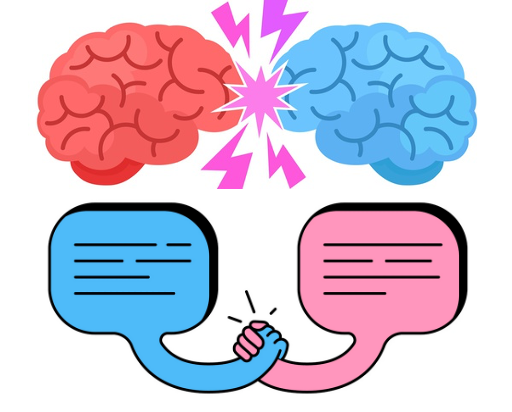
Making Sound Decisions With Critical Thinking
Written by: Shobana G.
“Too often we enjoy the comfort of opinion without the discomfort of thought” – John F. Kennedy
As we navigate through a fast-paced world of technological change and innovation, on top of managing uncertainties in so many aspects, we often find it a challenge to achieve consistency in making good decisions. Some days we fair well while the other days we fail to meet the mark. Not just in decision making, there are instances we find it a struggle to get or ideas or opinions to be heard or considered. Why aren’t the proposal papers getting approved? Why are our good ideas getting shot down by the management?
Here in lies the importance of being able to think critically before making decisions or even before blurting out an opinion. Critical thinking is the ability to think clearly and rationally understand the logical connection between ideas, facts, arguments, etc. Critical Thinking requires us to ask questions about what we see, what we hear, what we read and what we experience.
Are You a Critical Thinker?
Attributes and abilities portrayed by a critical thinker include:
· Includes different perspectives or opposite sides of the argument.
· Always curious, but thoughtful at the same time asks questions and does not automatically accept everything that is read or told – Why is this a good idea? Is there data that shows that the new way could benefit the business? What metrics can be used to measure results?
· Analyzes the source of information
· Develops reasoned and persuasive arguments.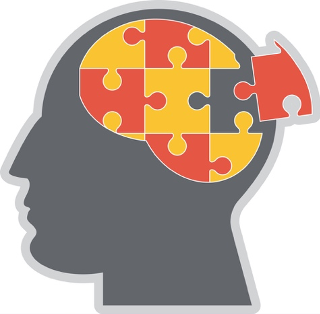
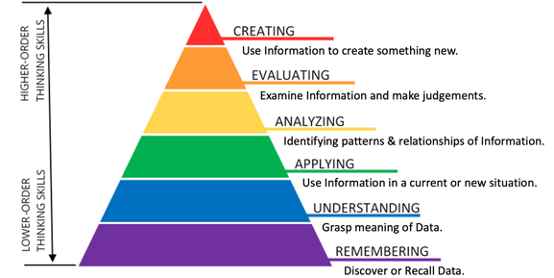
Bloom’s Taxonomy & Critical Thinking Go Hand In Hand
Bloom’s Taxonomy is a method created by Benjamin Bloom (1965) to categorize the levels of reasoning skills that students use for effective learning. The framework brings one through a thought process of analysing information or knowledge critically. It begins with a set of lower order thinking skills knowledge and levels up to seek more information based upon a series of levels of questions and keywords that brings out an action on the part of the student.It is Simply A Structured Way of Thinking
Critical thinking is all about having a structured approach from the very beginning of our thinking process right up to communicating the idea, conclusion or even an opinion.
Firstly, build AWARENESS by STEP I & II:
(I) Understanding the Objective
Our utmost priority here is to gain clarity of what is the objective of the task at hand. “What is expected out of me ?”. Without clarity, we end up doing a lot of our re-work because the initial work was misaligned with the objectives. This happens more often than not – so taking that few minutes to clarify the task at hand might save you a few days of re-work.(II) Organising information
It is now no longer an issue to get data if you know where to look. Firstly, understand that there are two ways to look for data – by asking another person or doing research. The second part is to select the right data – what stays in your focus. Always look for data that is aligned with your objective and within the context of the topic. Answering the What, Why , Where, When questions will give you a clear overview of the topic or situation.Once awareness is present, we run an ANALYSIS through STEP III & IV:
(III) Structured Reasoning
Many people provide opinions but often have weak or don’t have supporting reasons. There is also a lot of data being provided, but without context, the data might not be useful or might lead us to the wrong conclusions. At this part, it’s important to question the data or opinions and the person providing the opinion or data must provide supporting reasons or context. *Tip: Use “WHY” & “HOW” questions to get the reasoning!(IV) Considering Evidence
While people may produce reasons (arguments), we need to see if evidence backs up the reasoning. It usually comes in the form of tangible data, expert opinion, proven research and statistics. The strength of the evidence is tested by the credibility of the source that it comes from. Just any evidence from the internet or a person won’t give you a solid argument.Now, we take ACTION by performing Steps V & VI:
(V) Evaluating the Reasoning
Once all the reasons (arguments) are populated with evidence, it’s time to evaluate which reasons (arguments) should be considered. Ideally there should at least 2- 3 data points from different sources that supports an argument. This ensure there is no bias or skewed data. The strongest arguments are the ones that you will accept as part of the conclusion and moving towards the next step.(VI) Deciding on a Conclusion
Based on Step I: “Understanding the Objective” stage, you can decide on the conclusion. Depending on the topic or situation, the conclusion can be different. Decide on the conclusion based on arguments backed by solid evidence. Failure to do this will result in your conclusion being doubted or rejected during cross examination.Lastly, make an ANNOUNCEMENT by the final Step VII:
(VII) Communicating the Conclusion
A step that is omitted from most critical thinking models is the whole area of communicating your findings. A great critical thinker is able to communicate their thoughts in a concise and systematic manner. If you stakeholders are unaware of what you have done, you do a disservice to the effort and thinking you’ve put in. So communicate it out in whatever format you see fit. -
How to Start Right
Written by: Andrew Lau
Pictures, Certificates, our first published article, our first dollar made as an entrepreneur, the first sketch drawn by our kids…

Why do we put frames on things such as these? Why do we hang it up on the wall or display it somewhere visible? Is there a message we want to convey or is it there to remind us of certain memories?
When something is framed up, it tells 3 different stories about what’s inside the frame.
1. A frame is used to focus our attention to what’s on the inside. A frame says “This is Important”.
2. A frame is used to protect what’s on the inside. A frame says “This is Precious”.
3. A frame is used to accentuate what’s on the inside. A frame says “This is Worthy”.
Regardless of our roles as a leader, employee, student, parent, brother, sister, colleague or friend; what’s “on the inside” that you’re trying to frame in your life? I believe these are 3 questions we can ask ourselves:
1. What’s “on the inside” that I am trying to bring focus to?
2. What’s “on the inside” that I am trying to protect?
3. What’s “on the inside” that I am trying to accentuate?Is it an ideal, a set of values, a group of people, a way of life, an unmet achievement, emotions or a moment that reminds you what’s “on the inside”?
If we want to start the year right, we should think about what is important, what is precious and what is worthy to us. It could be about a goal in the future, it could be lessons from the past, or it could be about living in the here and now. Whatsoever it is, I would like for us to think about these things.
Lastly, let’s take one step further together. At the end of the day, what ultimately matters is what we do with it. So as much as we reflect, we need to respond. Respond not because we want to put on a show for others to see… but respond because these things are important, precious and worthy to us and our loved ones. This, in my opinion, is how we start the year right.
-

A New, Innovative Solution in Learning Gamification
Written by: Edward Teoh
More often than not, HR and L&D practitioners within companies big and small are looking for fresh and innovative solutions to fill up their learning calendar. After surveying a number of clients, we have found that “gamification” in training and developing employees is no longer just a buzzword, but a tool that most companies (83% of respondents) have already tried in one form or another.
Yet, what we’ve found is that most did not apply gamification at an advanced level (usually as one-off training programmes). 75% of those surveyed further indicated their willingness and high likelihood of applying gamified training solutions in the future. With so much attention and interest in gamification, is there a better way to approach gamification in corporate learning and development?
As is with most things, it’s never “what you do”, but “how you do it” that matters more. Let’s look beyond the traditional LMS options or corporate training solutions, and take a deeper look at gamification with its distinct levels.
GOING BEYOND LEVEL 1
Gamification practitioner An Coppens has laid out the 3 levels of learning gamification:
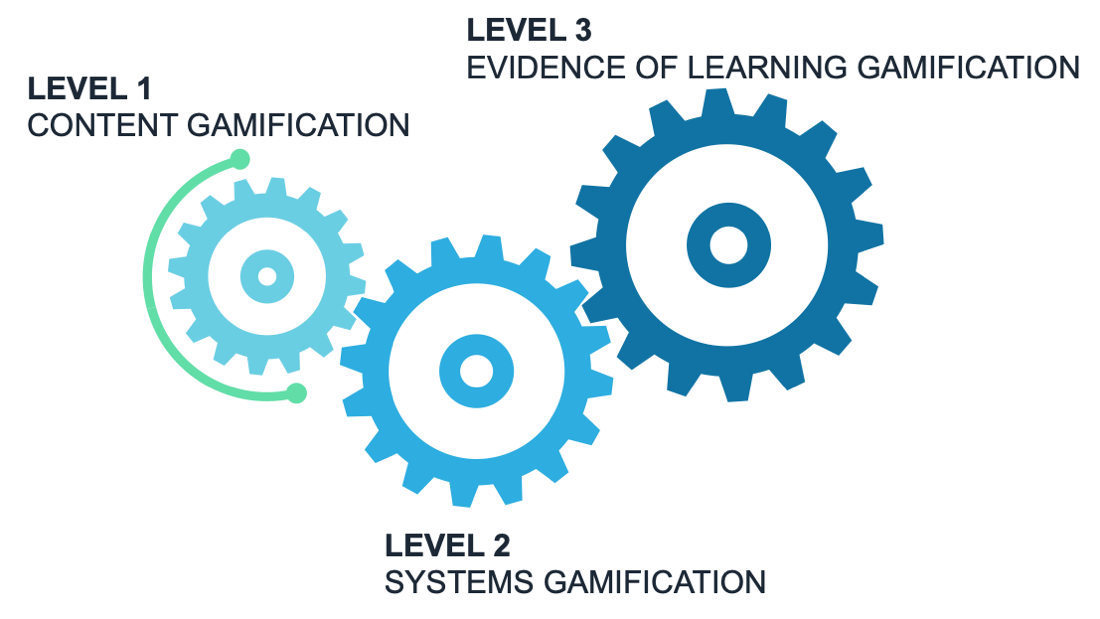
It’s not uncommon for companies to attempt at incorporating gamification into their learning initiatives, but only at Level 1 (Content Gamification) with elements such as quest & missions, scenario-based learning, choices & consequences and others. There remains a rich amount of untapped gamification potential under Level 2 (Systems Gamification) and Level 3 (Evidence of Learning Gamification).
Normal training (virtual or F2F) may not work well enough, as development gaps and learning challenges in most organisations require rapid upskilling– something a typical training methodology is not equipped to handle. Single training sessions might target a single variable but leave development gaps unaddressed. We want to wield the full potential of Gamification elements like habit-building, skills improvement, progression tracking and shareable proof of learning to address these shortfalls.
INTRODUCING STACKS
Over the years, Think Codex has delivered a number of gamified solutions to numerous Fortune 500 and Multi-National Corporations, and has synthesised a fresh approach in learning gamification using Level 2 and 3 of Learning Gamification. STACKS is a collection of award-winning gamification solutions that utilise action-biased methodology to deliver business results.
Instead of coming up with a single gamified session or solution, STACKS is a power-packed gamified learning programme package. Whether you face a challenge in performance management, organisational culture, digital transformation, sales & customer service-related issues, there is a STACK for that. In consultation with us, you may pick and choose from the menu of gamified training solutions from Think Codex to build your learning programme.
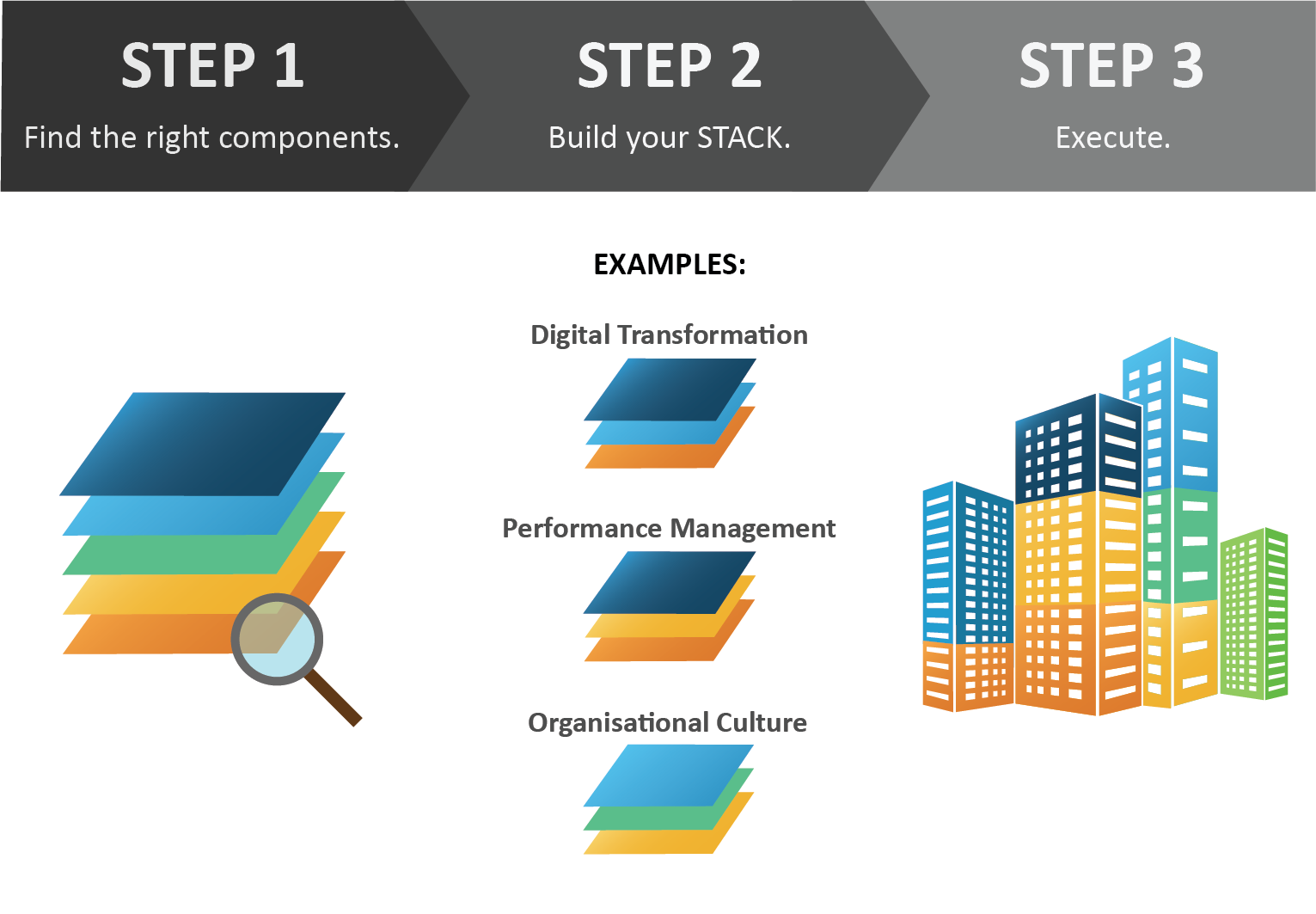
Find out more about STACKS by visiting our website at www.thinkcodex.com/stacks.
-

Dealing With The Aftermath Of 2020 (Part 1)
Written by: Kerry Wong
It has only been a little over six months since the year started, but 2020 has exceeded all reasonable expectations. Continuing from 2019, the devastating Australian wildfire was the first large scale crisis of 2020 that dominated the world’s attention. Shortly after that, WHO officially declared Covid-19 as a pandemic and countries began implementing various forms of lockdowns to contain the spread of the virus.
The magnitude and speed of collapse in activity subsequently caused the world economy to suffer, and both the International Monetary Fund (IMF) and the World Bank have since issued statements that the world is facing its worst economic downturn since the Great Depression in the 1930s. There has also been a movement against police brutality and discrimination across the globe. Honestly, it feels like 2020 is an insanely tricky hidden level I stumbled upon in a game, with boss characters popping up one after another and I am neither equipped nor prepared.
In this article, I want to explore the impact of the recent events on millennials and Gen Z as consumers through my perspective as a millennial.
Economic Downturn and Change in Spending Behaviour
As the world is collectively suffering a severe recession, the global unemployment rate has soared within the past few months. Accounting for a third of the workforce and falling within the younger end of the spectrum, millennials and some GenZs are, unfortunately, the disproportionate holders of the kind of positions disappearing the fastest. On top of that, as most millennials began entering the workforce around the time of the previous financial crisis, most were unable to accumulate wealth and gain the financial security the previous generations enjoyed. As job security is uncertain, millennials are now more likely than ever to be careful with their spending. While they are known to be willing to splurge more on conveniences and comfort, non-vital or impulse purchases should significantly reduce as priority will be focused on surviving and prepping for the unknown.
However, that does not mean that they would entirely give up on all conveniences and comfort. Besides deciding whether a purchase is necessary and the price is justified, millennials and GenZs will likely be more selective with who they decide to do business with as well, especially if there are similar products with similar price points from multiple companies. According to the 2019 Deloitte Global Millennial Survey, millennials and GenZs tend to speak with their wallets. They are willing to start and stop relationships with a business for very personal reasons. The figure below shows some of the reasons why they have started or ended a business relationship.
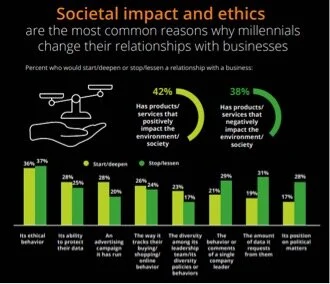
Source: Figure 9 – Deloitte Global Millennial Survey 2019 As storytelling is becoming more prevalent and used to engage consumers, a product or service is no longer seen as a standalone offering, and younger consumers are now considering all aspects of the company. They understand that if they want companies to change, the best way to do so would be to stop their relationship and hit the companies where it hurts the most, their bottom-line, as continuous buying would only reward the behaviour and perpetuate the situation.
Heightened Sense Of Responsibility Towards The Environment And Society
As can be seen in the figure below, the top personal concerns for both Millennials and Gen Zs is climate change and protecting the environment. With the loss of more than a billion individual animals and thousands of native flora during the Australian wildfire and the heart-breaking imagery and videos shared across the internet, millennials and GenZs are likely to be more concerned about the environment than ever. It is also not comforting that we seem to come across more record-breaking climate phenomena every year, such as “Hottest-Ever Year for The Planet’s Atmosphere” or “UK’s Wettest February On Record Since 1862”.
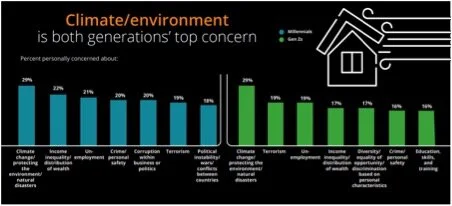
Source: Figure 2 – Deloitte Global Millennial Survey 2019 In a survey conducted by YPulse pre-pandemic, 54% of the respondents said that they regularly worry about climate change and 67% of them said that they had already changed some of their behaviours because of it. Even as the pandemic and quarantine are ongoing, young activists are bringing climate strikes and protests online, and many are still having discussions about it. They obviously will not be forgetting about it anytime soon, even in a post-pandemic world.
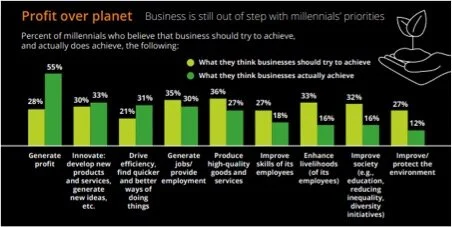
Besides climate change, millennials also believe that businesses have a responsibility to improve the livelihood of their employees and improve society, on top of running the actual business. The figure below provides some statistics on how millennials perceive companies. As we have observed how the tragic death of George Floyd has sparked a global movement against police brutality and social injustices, it shows that not only are millennials and GenZs active and vocal about issues directly impacting them, but they are also willing to engage on behalf of people who cannot do so for themselves. Growing up with the internet, millennials and GenZs have had access to different viewpoints, cultures, and resources from a much younger age, which have allowed them to be more fluid in the way they perceive the world.
Source: Figure 4 – Deloitte Global Millennial Survey 2019 What Should Businesses Do?
First off, it would be a good exercise for a company to evaluate their values, internal processes and see whether it aligns with the priorities of millennial and GenZs. Assuming that a company have evaluated their values and internal processes and made any necessary updates or changes, the next step would be for the company to communicate it to the public. At this stage, companies can incorporate some gamification to engage the consumer further and motivate them to select their company over their competitors.
The 2 core drives of gamification I would be touching on would be Epic Meaning & Calling and Social Influence & Relatedness. Epic Meaning & Callingis the Core Drive where a person believes that they are doing something greater than themselves or they were “chosen” to do something; while Social Influence & Relatednessis the Core Drive that incorporates all the social elements that drive people such as mentorship, acceptance, social responses, companionship, as well as competition and envy.
An example of a business that has incorporated both core drives in their brand is Body Shop. By announcing and promoting their various endeavours such as their “Forever Against Animal Testing” campaign and “Community Trade”, their commitment to trade fairly with suppliers and ethically source ingredients, they have essentially attached a world mission, an epic calling, to their products. In an industry where these are common issues, which some people are genuinely against and concerned about, the idea that buying your skincare products from Body Shop will help support the community is extremely motivating.
Besides that, as social creatures, we are very much influenced by what our peers feel and think about us. When we perceive a behaviour to be a widely accepted social norm, we tend to have a stronger urge to do the same as we want to be part of it. Referring back to Body Shop, if more people around you start using the products, and talking about the causes and impact it has on society, it will create a compelling situation that will motivate you to look into the brand as well.
However, with that said, while gamification can assist with getting a consumer engaged and more motivated to check out your brand, if your product is of bad quality or you were not transparent and honest, millennials and GenZs will call the bluff and walk away. Companies need to walk the talk.
Stay tuned for my next article as I will be exploring the impact of the recent events on millennials and Gen Z as employees.
References
-

The Realities of Remote Working during a Pandemic.
Written by: Bryan Woo
Amidst the Covid-19 pandemic, several governments across the globe have implemented some form of quarantine order in their respective countries, to minimize the spread of the disease. Malaysia is no different, as our government has issued a Movement Control Order (MCO), reinforcing stringent social distancing amongst its citizens in order to cope with this pandemic.
As a result, many organizations have no choice but to adopt compulsory remote working into their work culture. To say that this change in working style and environment has been disruptive would be an understatement, as many employees have their fair share of struggles balancing between work and home commitments, all while in the confines of their own homes.
At the time of writing, we are well over 3 months since the MCO has been implemented. Throughout this period, we have been receiving requests from clients of various backgrounds on solutions that may help their employees cope with their new working environments.
With that being said, let’s take a look at some areas that will heavily be impacted by long-term, compulsory remote working and what can be done to help individuals better adjust:
Productivity & Engagement
Workplace productivity typically describes the amount of work your staff can do within a certain number of hours or amount of labor cost. Most established organizations would have set up ways to measure and track productivity in their workforce, including staff who primarily work remotely. Furthermore, it is important that these measures are implemented in a manner that is within an atmosphere of trust and let employees feel that they are not being spied upon.
Unfortunately, even the most sophisticated measures can still be challenged by an ongoing pandemic, causing many organizations to be concerned with maintaining productivity as well as employee engagement. As the lines between work and non-work hours begin to blur, many firms will be at substantial risk of long term employee burnout. Research has shown that employees will feel that they are compelled to always be responsive to work-related duties, even if it is not urgent (1). This may be further amplified due to ongoing worries over COVID-19.
With that being said, our team at Think Codex has identified key areas of productivity that play a crucial role in keeping employees engaged with their work while not sidelining their mental and physical wellbeing: Clarity, Routine, Focus and Wellness.
i) Clarity
When people are unclear, time and effort are wasted. Ask yourselves, are you able to set clear goals with your team? Are these goals being measured and to what extent? Daily? Weekly? And lastly, what is being done to keep employees accountable and transparent to their goals?
Having a system that states what is expected of employees on a daily or weekly basis will ensure that goals are being measured in a clear and concise manner.
ii) Routine
Clear routine gives a sense of purpose as a motivator so that employees understand what their objectives are for the day. Furthermore, this helps them better plan out their workdays and set clear distinctions between hours dedicated to work commitments and hours solely for rest and family.
Granted, it will take some time for many individuals to ease into a routine, especially those with demanding family responsibilities. That is why a strong support system must be made available to help these individuals settle into their new routines with minimal complications.
iii) Focus
People who are not focused end up spending their time doing anything but their most important work. Hence, it is important that boundaries are set in place to minimize distractions. It can be as simple as setting up physical boundaries such as dedicating a room or a spot at home solely for work purposes and nothing more.
Aside from this, organizing work based on priority will allow individuals to accomplish their most important tasks in an order that best fits their schedule.
iv) Wellness
It has become increasingly common for many organizations to prioritize employee welfare, thus implementing healthy workplace practices to help foster a culture of wellness. Unfortunately, in the case of remote working, this can sometimes be often overlooked mostly due to distance and a lack of visibility amongst employees.
That is why it is crucial for employers to encourage a culture of support, where employees are able to rely upon and communicate with one another when needed as well as emphasizing the importance of self-care practices. After all, good work is associated with better physical and mental health, and even less absenteeism.
Team Dynamics & Collaboration
In any work setting where shared goals are the norm, team dynamics can either make or break an organization. Because each member is reliant on each other for success, it is imperative that clear communication as well as equal participation are present in a team, so that a culture of collaboration can be fostered.
However, employees who belong in full-time remote teams may struggle as they rarely meet up in person, yet often work on multiple shared projects together. Furthermore, efforts to collaborate within remote teams are often subjected to virtual distance, in which an over-reliance on smart, digital devices to communicate may lead to teams disconnecting (2).
With all this in mind, we can see that there are two main factors at play in shaping effective remote working teams: Communication and Team Identity.
i) Communication
Workplace communication is an uncommon challenge in many organizations, more so in the case of remote working. Any team that lacks effective communication will hinder efforts to achieve collaboration and productivity. Fortunately, there are some best practices that we can refer to, in order to minimize poor communication.
Firstly, it is highly recommended to establish communication norms by being explicit about how your team should communicate. Doing so will not only remove the ambiguity that so often surrounds workplace communication, it also provides a helpful guide on how team members are expected to interact with each other. Aside from this, organizations can even take a step further by incorporating virtual “water cooler” sessions by allowing team members to dedicate time to talk about non-work related matters. These can include things about their interests or even to check up on one another.
Aside from this, remote teams will benefit from identifying mediums/tools to best promote communication and collaboration. Not only will it provide an outline of what kind of messages should be sent through which mediums (e.g. emails, WhatsApp, etc.) , but also prevent team members from being bombarded and overwhelmed by multiple work messages from too many channels.
Lastly, organizations can also look into channels that reduce a sense of distance among team members, such as switching remote communication to regular video calls, which may be better for establishing rapport and creating empathy.
ii) Team Identity
When people feel a sense of community, they are more comfortable reaching out to others and more likely to share knowledge. Hence, team members who share a strong team identity will encourage a culture of trust and support among its members.
The first step to achieving a strong team identity is to clearly define and establish a shared goal. This can be done by clearly defining their goals, timeline as well as the level of authority among team members in relation to a project. Doing so will encourage a sense of unity as well as the accountability that will help push teams to succeed. This will also make developing processes to help team members keep each other in check much easier.
Naturally, having a strong team identity can encourage more collaboration among team members through idea sharing and brainstorming to accomplish a common goal, providing everyone an avenue to equally participate. Furthermore, this will provide an avenue for employees to build relationships, communicate well and resolve conflicts creatively, which can have a major impact on team collaboration.
As the Covid-19 pandemic rages on, many organizations are forced to be agile in order to create opportunities during this time of uncertainty. We at Think Codex are no different. In fact, our newly developed gamified digital programs are created with the sole purpose of helping organizations address the challenges presented in this article. If you find this relevant to your organization, please contact us at contact@thinkcodex.com.
We look forward to working with you and helping your organization overcome whatever challenges this pandemic might bring to your workforce.
References: