Written by: Raveena Elizabeth (Marketing Lead)
*ThinkCodex is a 4-time Gold Winner for the Best Team Building Vendor as voted by HR directors of Fortune 500 organizations & MNCs. We’ll be sharing our insights and also use a case study to demonstrate what a best-in-class team-building programme looks like.
Unlocking the Future of Team Building: Beyond Just Fun
Is team building just a fun event without real potential for change? In today’s ever-evolving landscape of employee engagement, it’s time to rethink the possibilities.
Imagine a world where your team-building activities not only foster camaraderie but also elevate your employees’ skills and align them with your company’s values. This is the future of team building, and it’s closer than you might think.
The Problem With TEAM-BUILDING Programmes
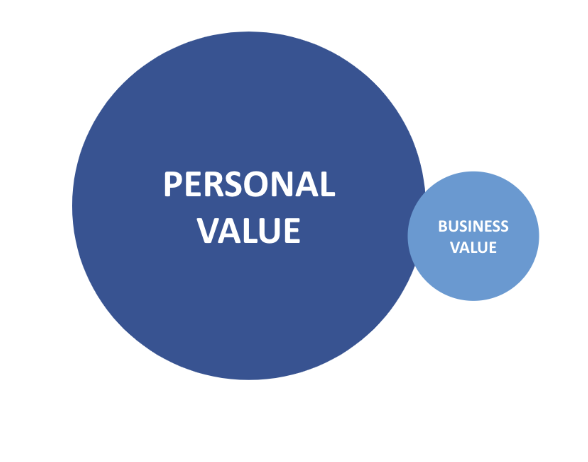
When discussing team-building strategies, it’s vital to keep in mind the two primary stakeholders: The Business and The Employee. The Business provides funding for these events, while The Employee actively participates in them. Although team-building events are often designed for personal enjoyment, it’s crucial to understand that this is only one aspect of the overall process.
Failing to closely align employees with the core values and mission of the organization could result in a significant disconnect that ultimately affects team dynamics and organizational success. Thus, it’s critical to prioritize BOTH personal enjoyment and the creation of a cohesive team environment that closely aligns with the goals and objectives of the organization. By doing so, businesses can foster a sense of unity and common purpose that genuinely benefits everyone involved.
Balancing Act: Business and Personal Value
At Think Codex, we believe in a balanced approach. We recognize the importance of both Business Value and Personal Value in team building. So, what does a great team-building event look like? It’s one that effectively combines these two aspects.
The Six Building Blocks of Great Team Building
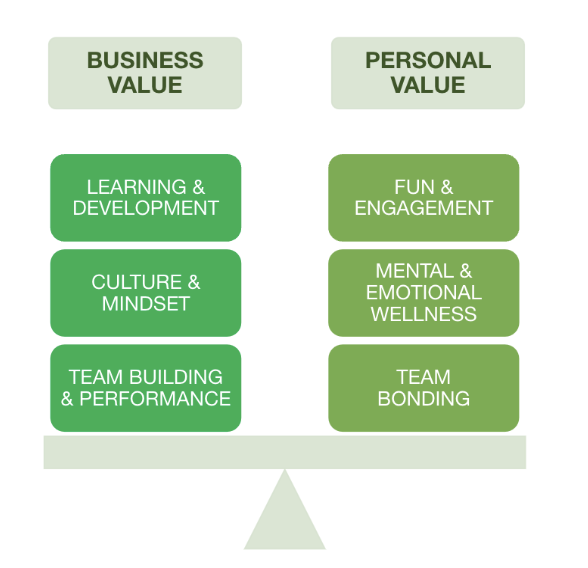
A remarkable team-building event integrates at least four components from each side of the spectrum, Business Value and Personal Value. Let’s explore these building blocks:
Business Value:
-
Growth: Provide employees with opportunities to learn and develop skills applicable to their work.
-
Alignment: Foster awareness and connection to your company’s purpose and values through Culture & Mindset.
-
Team Upskilling: Equip employees with the principles of high-performance teams for practical application.
Personal Value:
-
Experience: Ensure enjoyment and relaxation, offering a break from work-related stress.
-
De-stressing: Allow employees to release built-up negative energy through mental and emotional wellness practices.
-
Interaction: Encourage team bonding through enjoyable group activities.
Gamification: The Catalyst for Change
In the dynamic realm of employee engagement, traditional team-building methods often fall short. They can be too basic, offering little long-term value to participants or the organization. Employees today seek more than just fun; they crave opportunities for growth and development. Enter gamification, a game-changing solution that addresses these challenges head-on.
Gamification in team building is not merely a trend; it’s a necessity. It’s the bridge between enjoyment and growth. Gamification transforms your team-building events into powerful tools for skill development and values alignment.
What A Great TEAM-BUILDING Programme Looks Like
A great team-building programme must have these 4 components:
-
Increased Employee Engagement: It must be engaging and immersive, going beyond just having fun and fostering a sense of purpose and achievement.
-
Skill Development: It’s a learning opportunity. Your team will acquire practical skills that can be applied immediately in the workplace, effectively closing skill gaps.
-
Values Alignment: It facilitates a deep understanding of your company’s values and purpose. Your team will not only know these values but also embody them.
-
A Bit of Pressure: It adds a bit of a challenge so that teams can have a deeper-level building as opposed to surface-level bonding. According to Flow Theory, people grow best when tasks are not impossible and not too easy. This applies to teams as well.
Case Study: AIA and ThinkBuild ESG Simulation
AIA, a prominent player in the insurance industry, recognized the need to build high-performing teams and deepen their commitment to Environmental, Social, and Governance (ESG) principles. That’s when Think Codex entered the picture with a game-changing solution.
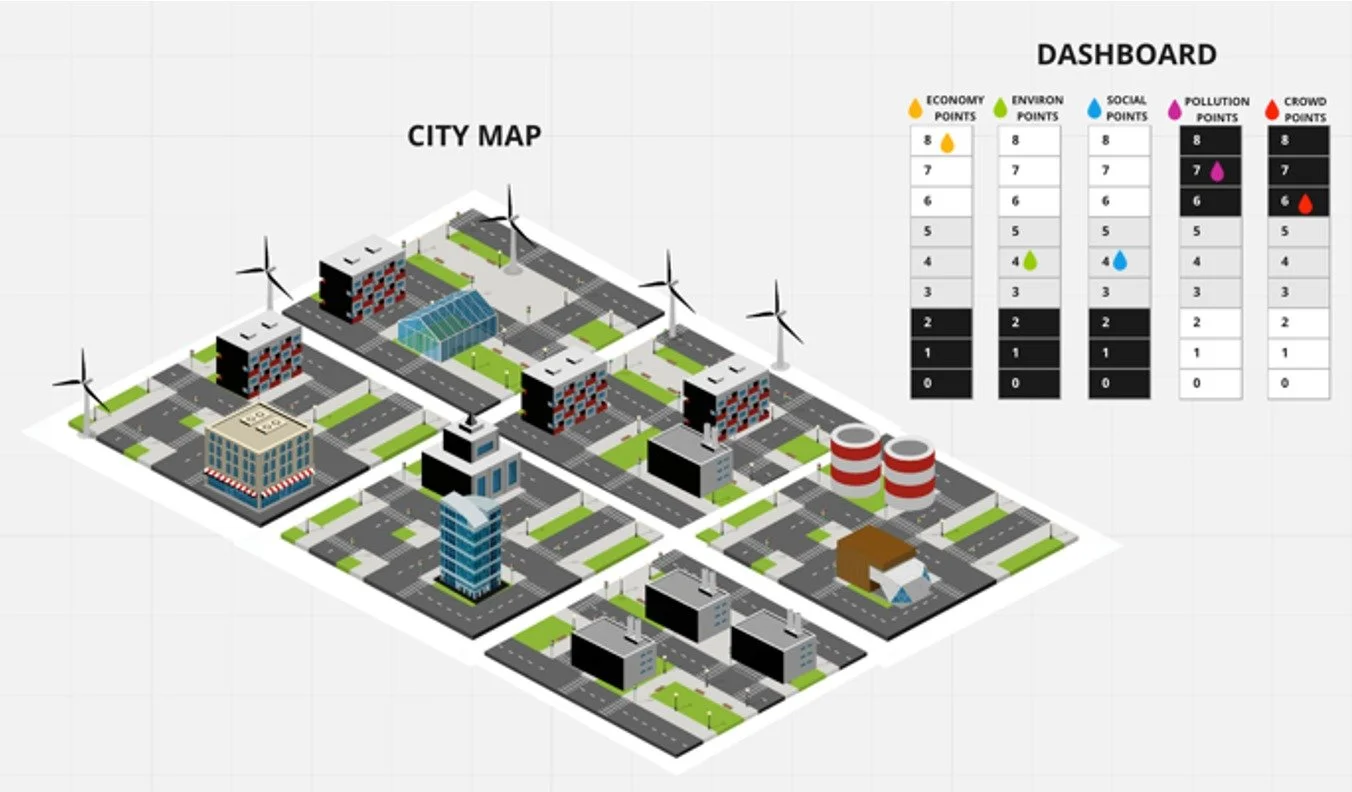
Here is an example of a digital version of the ThinkBuild simulation
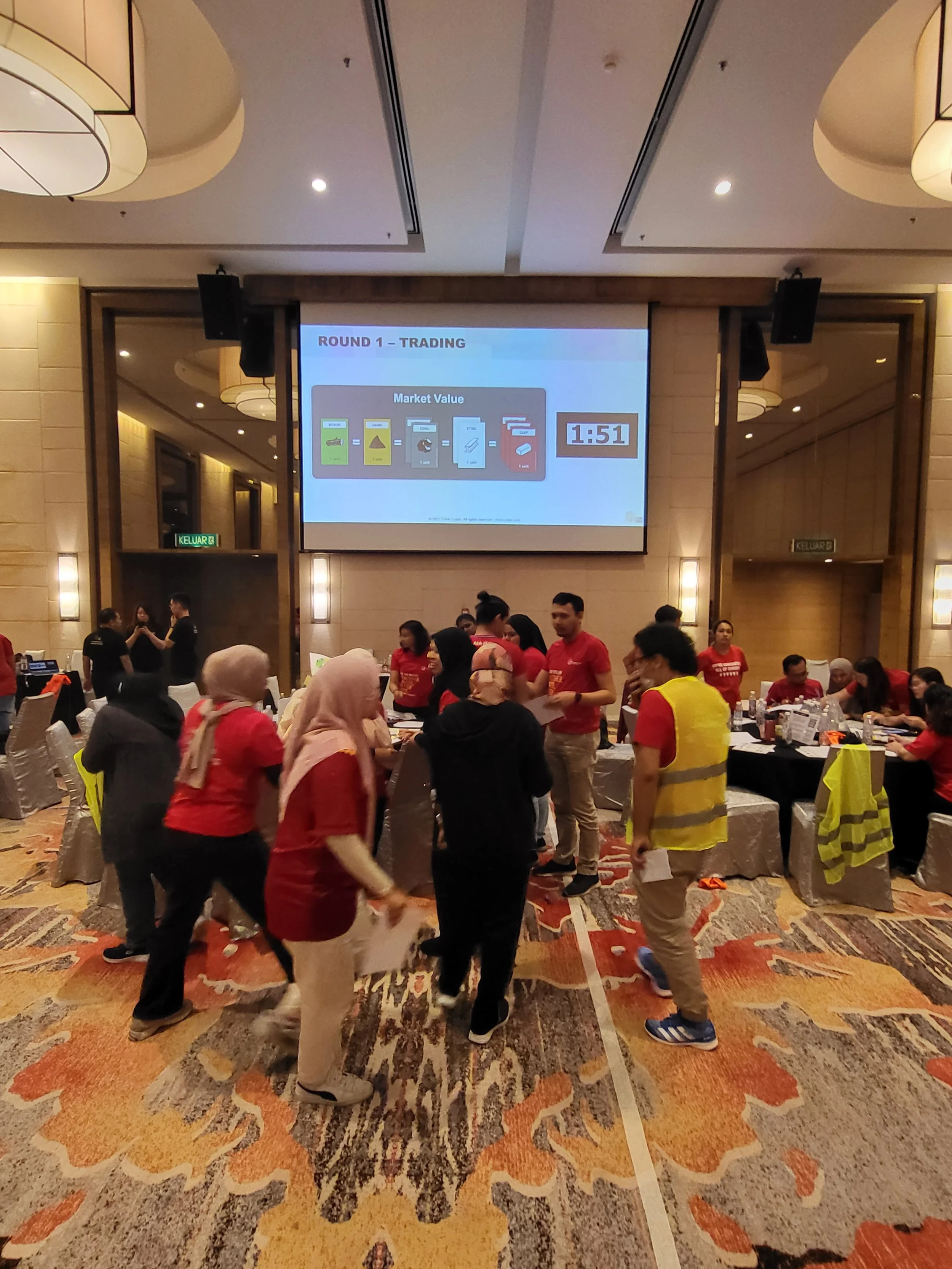
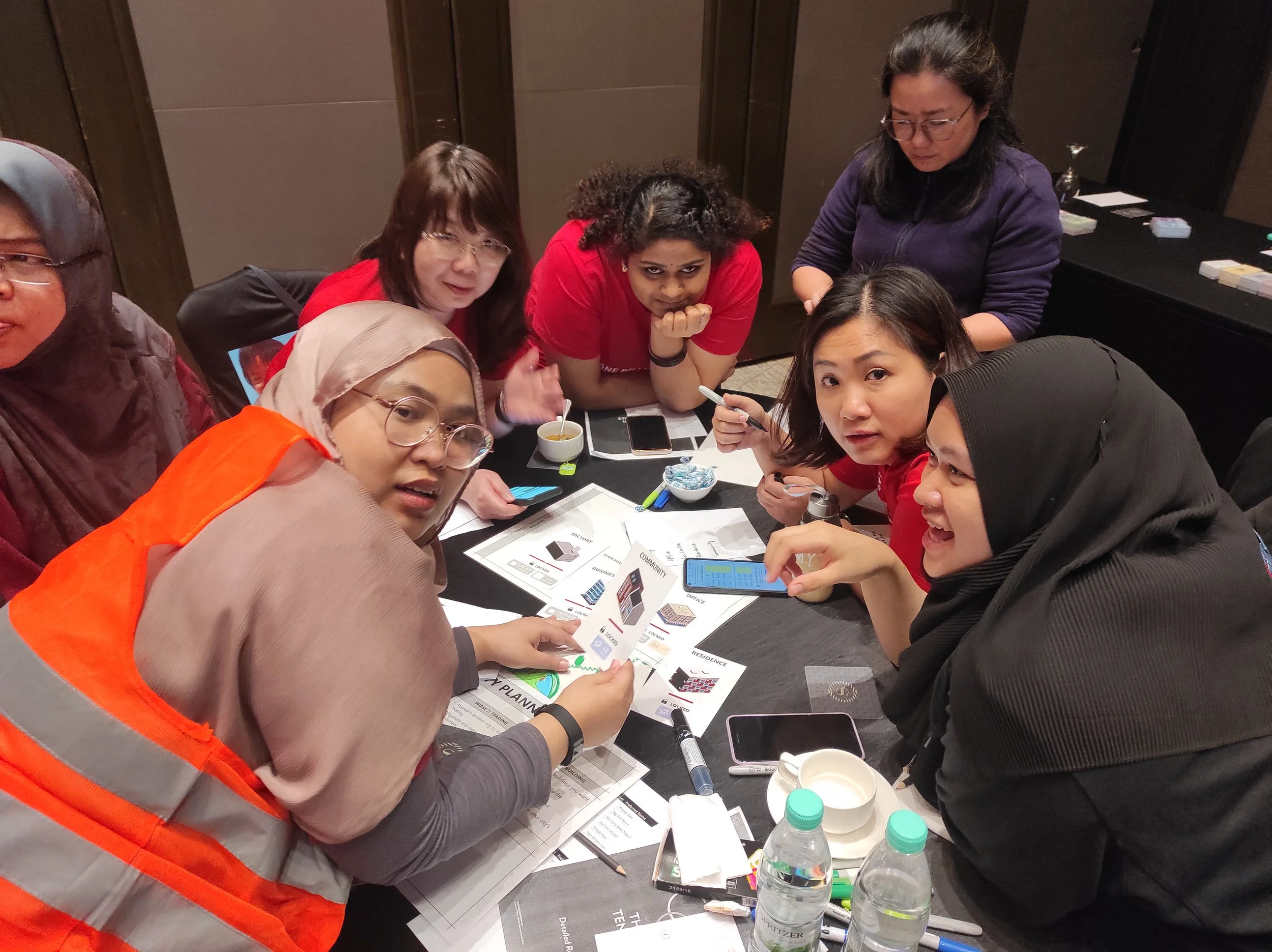
Introducing ThinkBuild Simulation, an interactive team-building experience that incorporates ESG education. This simulation lasts for over an hour and allows participants to delve into the essence of teamwork while tackling sustainability challenges. Teams work together to construct sustainable cities through planning, building, and reviewing. Although it’s not as intense as our main simulation, it effectively promotes team cohesion and is a fun experience. What makes ThinkBuild Simulation unique is its seamless integration of virtual simulations and in-person interaction. With this innovative approach, all 103 participants can fully immerse themselves in the interactive experience and enjoy the benefits of collaborating face-to-face.
During the ThinkBuild Simulation, participants gain valuable insights and key learnings:
-
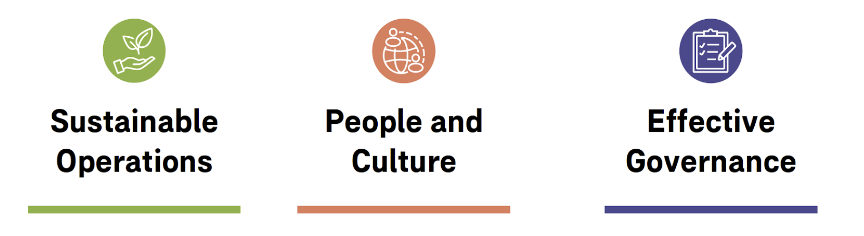
Understanding Team Stages: Participants can experience and understand the different stages of team development, leading to a deeper appreciation for team dynamics and alignment with Sustainable Operations’ ESG principles.
-
Building and Sustaining Culture: Through sustainable city planning, teams learn how to build and sustain a culture and identity within a team, an invaluable skill applicable to their real-life work environments, where they can better understand the role of People and Culture.
-
Problem Solving and Growth: Through ideation, problem-solving, and growing as a cohesive unit, participants gain problem-solving skills that can be effectively applied in their professional lives. This aligns with Effective Governance as part of their ESG principles.
This holistic approach not only enhances team performance but also instils a sense of purpose and achievement in participants, making it a transformative experience that extends beyond the simulation itself.
ESG-Focused Simulations: Bridging Theory and Practice
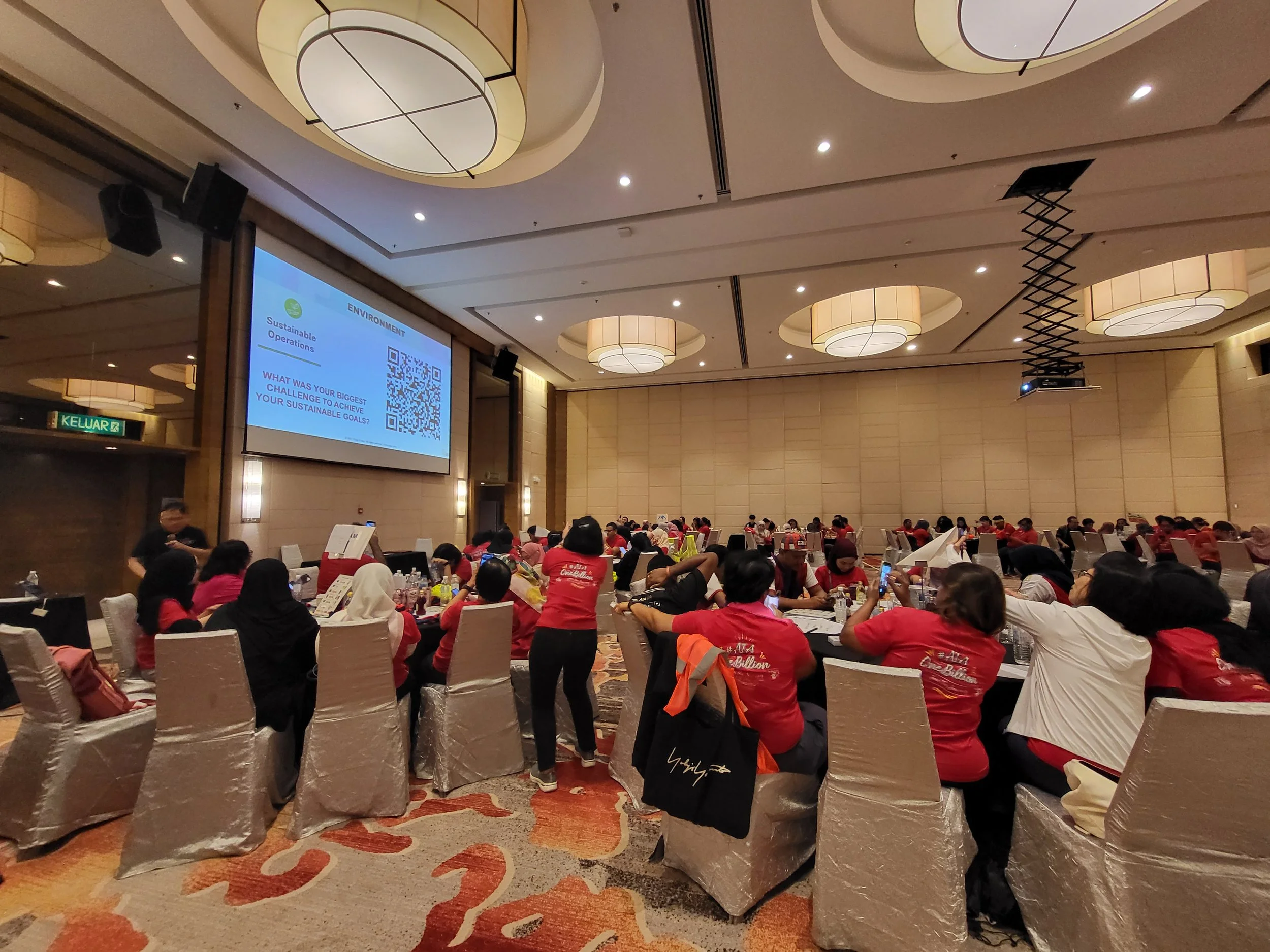
Participants face scenarios and challenges that demand the application of ESG practices for success. This hands-on approach not only educates but also encourages critical thinking about applying ESG principles to their roles. They learn how sustainable practices can positively impact their work, their team, and the environment.
In a world where change is the only constant, the ability to adapt and improve is crucial. Gamification, with its built-in feedback mechanisms, ensures teams don’t just participate but progress. It’s a win-win for businesses and employees, making team building more effective and enjoyable than ever before. This collaborative element enhances not only team dynamics but also deepens their understanding of ESG principles through shared insights.
Measuring Success: The Kirkpatrick Evaluation Model
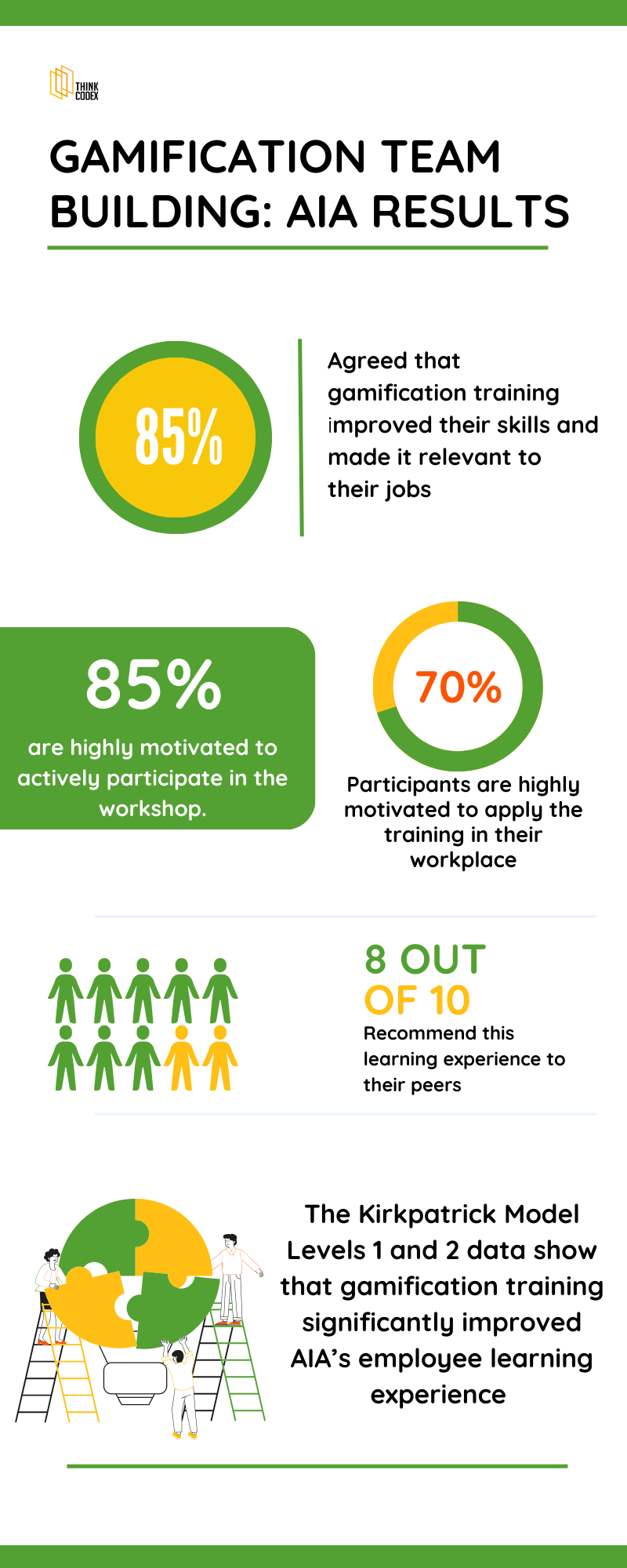
To gauge the impact of the ThinkBuild Simulation, we employ the Kirkpatrick Evaluation Model, focusing on Level 1 & 2 evaluation, which assesses participants’ experience and also learning.
The Results Speak Volumes
AIA employees rated the ThinkBuild Simulation highly, with an impressive overall rating of 8 out of 10. This isn’t just a number; it’s a testament to the effectiveness of gamification in team building and ESG education.
Here’s what some participants had to say:
-
“Hands-on experience that tackles real-life challenges.”
-
“Engaging trainers who make learning enjoyable.”
-
“Not your typical training; the skills gained apply both at work and in daily life.”
Elevate Your Team Building with Gamification
Want to improve your team-building skills? Look no further than gamification. With its feedback mechanisms, gamification ensures that teams not only participate but also progress. This can lead to increased effectiveness and enjoyment for both businesses and employees.
Think Codex and AIA have collaborated to create an example of how gamification can be used to elevate team-building, foster ESG insights, and drive success in organizations across industries. By unlocking the full potential of your teams, you can empower them with the knowledge and skills needed to succeed in today’s business landscape.
If you’re interested in exploring different ways that team-building gamification simulations can help you achieve your organizational goals, speak to our CONSULTANT for FREE demo session today.