By Andrew Lau
Strategic thinking has been an important and famous topic with regards to organisations, so much so that it has been mentioned countless times in management, innovation and corporate articles and blogs.
There are numerous workshops and trainings with regards to this area and we would like to shed some light on this topic as well and how simulations actually play a part in honing this skill.
We would start by introducing what is strategic thinking, its crucial components, an example of how it applies to our daily life and how simulations are able to effectively address this skill. We would like you to take note that there are countless amount of research with regards to strategic thinking, with numerous amount of segregation, components and definition.
We take on the theories of strategic thinking from Liedtka, as we believe that it is the most wholesome and well defined one yet.
What is Strategic Thinking?
The best way of learning what is strategic thinking is by knowing what strategic thinking is not. On the surface level, when strategic thinking is mentioned, we have in our minds that it is thinking about the strategy itself. It may appear to us that when we approach a project, planning up a strategy with regards to it denotes strategic thinking, but that is not the case.
Strategic thinking at an actual fact is a way of thinking, more specifically a mindset with regards to approaching a certain task or project, or in more layman terms, a more organised way of thinking.
You may ask, “what is the difference between both of the definition that you had just spouted?”
Well, the difference between making a strategy and approaching a project with a strategic mindset is the flexibility and adaptability that you possess when critical moments appear (i.e. when something does not go as planned).
A strategic mindset makes you think from your core of what is important to you, what are your strengths, what are your tolerance level for risk, who are your stakeholders, how are you approaching your future, and how you would turn your challenges into opportunities; which a mere strategy (with multiple backup plans) could not have addressed. It gives you a wholesome picture of what is happening within and around you for you to make the best possible decision at that moment in time.
And as Liedtka personally has said:
Strategic thinking, on the other hand, is a synthesizing process, utlizing intuition, and creativity, whose outcome is “an integrated perspective of the enterprise”
We hoped that we have managed to clear some of the misconceptions with regards to strategic thinking. Now let us move on to the elements of it to fully understand it better.
Components of Strategic Thinking
In order for strategic thinking to happen, all the following components have to be realised. Some could be more salient at different points of time depending on the circumstances. They are:
1. Systems Perspective: Having a mental model of the complete end-to-end systems of value creation, and understands the interdependencies within it.
2. Intent-Focused: A strategic intent is differentiated and implies a unique point of view about the future, which communicates a sense of direction, discovery and destiny to the team or individual.
3. Intelligent Opportunism: The ability to adapt without having to depend on top management strategies, which leave open to the possibility of new strategies emerging.
4. Thinking In Time: After having seen the future that we want, what must we keep from our past, lose from that past, and create in our present to get there?
5. Hypothesis Driven: Mirroring the “scientific method” by generating hypothesis and engaging in testing as central activities. Hypothesis generation asks the questions “What if…?” while hypothesis testing follows the critical question “If… then…?”
Understanding and practicing these five components will give you a powerful source of competitive advantage by (as quoted by Liedtka)”
Their whole system perspective should allow them to redesign the processes for greater efficiency and effectiveness. Their intent-focus will make them more determined and less distracted by their rivals. Their ability to think in time will improve the quality of their decision-making and the speed of implementation. A capacity for hypothesis generation and testing will incorporate both creative and critical thinking into their processes. Intelligent opportunism will make them more responsive to local opportunities… This meets the three fundamental strategically valuable capability: (1) they create superior values for customers, (2) they are hard for competitors to imitate, (3) they make the organisation more adaptable to change.
How can strategic thinking be applied in our daily lives?
Let us take a scenario here. You are currently in the marketing department of a FMCG industry and you are considering a career change because you have seen that your peers are switching companies and you feel that you have done enough time within this company. So most likely you would think of, “should I take a leap?” or “where should I go to next?” Ideally, it makes sense to venture into the same industry at the next company but you would like to try something new as well hence, you are in a dilemma. So let us apply the components of strategic thinking into this situation. It is important to take note that there are no right or wrong to this and would depend on individual differences.
The conventional definition of strategic thinking would get you to immediately come out with a long term plan, and mini goals to get there. What are your backup options if one the other does not work as planned. That would be your strategy. As you go down the line, the same cycle dissatisfaction happens again and you revamp or come out with another strategy. There are some things to be questioned here.
- Have you looked at the big picture? Such as what are some of your strengths and your important networks that you could cascade into opportunities? What you think you are good at versus what people value about you?
- Have you looked into your past and find out what you are good and poor at and how have you changed since then?
- Have you looked into the future of job needs? And what kind of skills do you need to equip yourself with in order to meet the future job needs?
- Do you have a specific/few direction(s) which you would you want to head towards?
- Have you gathered enough information to garner the resources needed to revise your strategy when your needs changes?
- Have you evaluate and manage to risk involved, for each of the path you take?
It may sound overwhelming at first, but as more practice is involved with regards to the strategic way of thinking, the easier it would be for you to utilise them. They should come naturally as it is a mindset by itself.
After answering all the questions, you should have a vivid picture /clear sound of what you should do next. This helps you to stay true to yourself and not ending up making a career change based on what you have seen on social media or small talks with your peers. In addition, it gives you a clear picture of the skills/knowledge/stakeholders that are at your arsenal and how they can be transferable to the next workplace that may or may not be relevant to your current industry.

Here is an example of how strategic thinking is applied in the scenario above:
First you look at the big picture and draft out the important stakeholders that have brought you to this day. That would be your uncle who provides you sound advice, your previous boss who introduced you this job, the sales manager who introduced the ropes of the company to you and your trusted team partner who backs you up in time of need. Interview them on why did they chose you? What do they see in you? And how have you improved over time?. Then draft out your strengths, skills and interests.
Take a look on how your skills match other forms of interests that you have. Know what is the best environment for you to work with and research on the transformation of job needs in the near future. Then take a look on where you need to improve or further polish to meet those needs. For example marketing has been going digital and customers’ demands are getting more specific, thus you feel that you need to hone your data analysis skill in order to segment customers’ needs more effectively.
Do not be afraid to look back at your past and check on what do you dislike and where your achievements were. Be sure to put that in mind when you are drafting your plan. For example, you are comfortable with technology and is always updated with the current technologies, at the same time hated being too comfortable in one place.
By now, you would have an intent on where you want to go. If your traits includes risk-taking and future-minded, then you would naturally be more comfortable in going to an industry that is more futuristic and different from your current industry (e.g. tech). If your trait consists of stability then consider taking another role within the same industry or vice versa. Be sure to check the risks involved in each decision as well.
With that, you are all geared up to face the situation when there are changes in job needs within the economy. For example, you would have an adequate amount of knowledge to face the digital marketing world as well as the competencies to carry out corporate marketing plans. The skills that you have obtained by then could further propel you to help bring existing companies into digitalisation, and many more opportunities to come.
In conclusion, we can see in the example that there is no one right way towards strategic thinking and each components of the theory could emerge at different points in time. Two persons with similar traits / strengths may have totally different career pathways due to differences in their pasts and traits. However, having an organised way of thinking helps you to get a firm grasp of the situation and how you could respond to them in an effective way.
Promotional Content Beyond This Point
How does simulation effectively addresses strategic thinking?
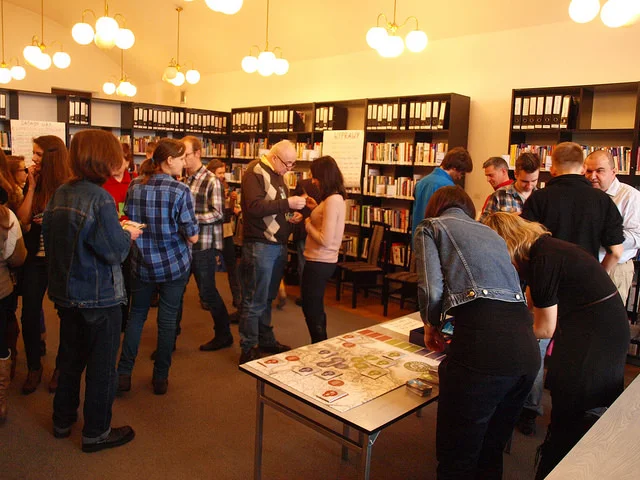
Strategic thinking does possess its complexity and therefore, requires a medium complex yet simple enough to transfer this skill towards the learner. We do not think traditional classroom teachings are adequate in addressing the full scope of strategic thinking because the fluency of this mindset has to be practiced in the real world setting to successfully grasp its mechanics. At the same time, the the workplace may be too hectic or comfortable that the learner falls back to his or her comfort mindset. Therefore, we believe that simulations possess the complexity, yet simple enough in a controlled environment to allow learners to practice this skill first, so they would have the confidence to apply them within their workplace.
With the alignment of Liedtka’s theory to our Strategic Thinking Simulation, Allocate, we are able to transfer the theoretical components in stages towards the learners and at the same time, allows them to test out the theories within a safe and realistic environment.
In addition, we have also aligned specific tools within the programme to help the learners translate the theories (in the head) into paper (visualising) so that they could act on them (execute). With this, we are sure that the strategic thinking mindset can be brought back into the workplace. And the benefit continues when they are shared within the working space.