Category: Uncategorized

  • If COVID-19 is A Game

    If COVID-19 is A Game

    Written by: Gabriel Goh

    Before you start reading, imagine yourselves in the future. The concept written here is hypothetical.   

    Time Travel 

     In 2047, Covid-19 has simmered down and as many real-life epidemics and tragic incidents, games are created based on the real events that happened in the past so that people could learn from these incidents even though they do not live through them. In 2047, there is ONE online game that always remains #1 on the Top 10 Games Chart since the first day it was published.   

    The game would be known as “Pandemic – COVID19”.  

    This would a cooperative game that requires players to work cooperatively to stop the spread of the coronavirus. In this game, each player will be given a region of their own to manage. To win the game, they will need to discover a cure in getting rid of COVID-19, while minimising loss of life and maintaining citizens’ well-being in their respective regions.

    Now, let us dive in and see how this game would be the number one game, hypothetically. You might think it’s the game mechanics that will be making it a top seller. You’re partially correct, but what would play a bigger role are the core drives that are being implemented in the game.

    What is core drive? According to Yu Kai Chou’s Octalysis framework, 8 core drives motivates human behaviours. They are the “why” that makes us perform certain actions. In this game, you will discover 3 core drives, namely Loss & Avoidance, Social Influence & Relatedness and Empowerment. 

    Core Drive 8 – Loss & Avoidance 

    This is the drive where people are motivated through the fear of losing something or having undesirable events transpire. This core drive is intended to motivate players to keep playing the game.

    Source: Loss & Avoidance Design: Ultimate Loss vs Executable Loss by Yu-Kai Chou

    In this game, COVID-19 (the antagonist) is contagious and it spreads rapidly from one person to another. It will demands the players to constantly log in to the game so that they could perform in-game actions to ensure the citizens in their regions are safe. Other than COVID-19, players would also need to manage social issues such as groceries hoarding and rebellious citizens. 

     If they don’t return to the game, they will lose when the impact of COVID-19 is accumulated and becomes out of control. These incidents might intrinsically motivate the players, compelling them to proactively be involved in the game to avoid these negative outcomes. 


    Core Drive 5 – Social Influence & Relatedness

    This core drive incorporates all the social elements in driving people, including competition, companionship and so on. As humans are social animals, this core drive works well by tapping into our desires to connect and compare with one another. 

    In the game, there will be a real-time tracker that shows the number of infected citizens and the last thing players want is to see their regions appear on the top of the tracker. Due to social pressure, they are to invest more time and effort in making sure they are off the tracker. 

    Alternatively, the tracker is also be used to motivate the players to offer help. As humans are empathetic creatures, they are naturally driven to support those who are struggling to perform well in the game based on the tracker. 

    Besides that, there is also a forum where players could exchange tips on how they manage their regions with one another. At this point, they could receive different forms of help to eradicate the disease that could not be achieved on their own. Players are less likely to lose interest once a sense of community is achieved in this game. 

    Source: Detroit Institute of Arts


    Core Drive 3 – Empowerment of Creativity & Feedback 

    This core drive emphasises on “play”. Players who are driven by this core drive tend to be creative and always experiment with new ideas through trial and error. 

    This game will allow room for creativity as players get to bring their imaginations to life. Players get to be creative in coming up with different rules & regulations to keep their regions safe from social issues and prevent the spread of COVID-19. Additionally, they will have the chance to invent and experiment with a variety of technologies in discovering a cure for the virus. 

    However, how will they know their actions are effective? Fortunately, a comprehensive feedback mechanism is designed in the game to answer this question. With the feedback mechanism, players will be constantly driven in coming up with improvisations to replace methods that don’t work based on the information derived from the real-time tracker, citizen panic level, region status and other indicators! 

    This will be a great game as it taps into players’ innate desire to create and affect the environment around them through their imaginations.

    Source: Why Giving Feedback Matters by Lucidchart

    Conclusion 

    What keeps the players engaged in the game isn’t really all about the game mechanics, but the core drives underlying them. This game serves as an example on how designers utilise the power of gamification to keep players engaged all the time.  

     Will you give this game a try? 
     

  • Flow In Learning Gamification

    Flow In Learning Gamification

    Written by: Edward Teoh

    Minute upon minute, and hour upon hour, the undiscerning video gamer lost track of all sense of time, hunger, thirst and fatigue. It is already midnight, his face lit only by the morphing screen in a dark room, yet nothing else in the world seemed to matter to him.

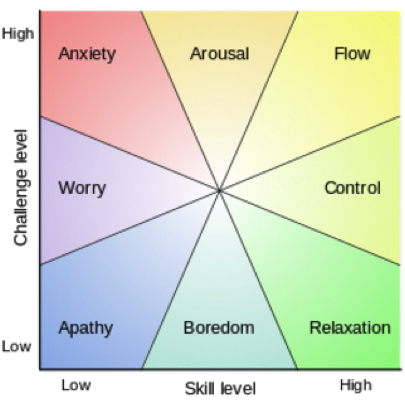
    Fascinated by the way artists lose themselves at work– their singular focus at producing art, how both brushstroke and painter merge as one, and how they lose the perception of time; Mihály Csíkszentmihályi coined the term ‘Flow’ in 1975. Flow is often described as a state of hyper-focus, when one is fully immersed in performing a task at hand. The Flow state is achieved when both the ‘skill level’ and ‘challenge level’ of a task is matched (at a high level).

    Source: The Experience Fluctuation Model by Massimini, Csíkszentmihályi and Carli (1987)

    Games are a powerful medium through which the flow state has been induced successfully without fail, for millennia. The sweet-spot of converging the ‘challenge level’ of the game with the player’s ‘skill level’ is continually achieved through the “scaffolding” phase– where the game difficulty is ever-marginally increased to match the player’s improved skill levels. The neurochemistry at work in our brain’s hardwiring makes us indefensible towards the highly addictive elements of operating under game-like environments.

    We have come a long way in our ability to create fun and addictive games, helping people tap into the Flow state. This led to the intuition and realisation that we could harness the power of games, and “gamify” other areas that matter to us as a society. Gamification has in recent years experienced an exponential rate of adoption in various areas, as people can now be self-motivated (in the Flow state) to perform certain actions to achieve desired outcomes– an ‘autotelic’ response.

    One area of gamification that has gained traction can be found in the corporate training and the learning & development area. Various gamified learning solutions were designed to simulate the real workplace and business situations, to allow both business leaders and team members to learn experientially through gamification. These gamified learning solutions temporarily extract workers from their day-to-day work environments, and allow the participants to play, test out ideas and put into practice newly learnt theories. This playground of sorts allows participants to play without fear or restrain, as the simulation mitigates the risks incurred by making mistakes and nullifies the opportunity cost of making wrong decisions.

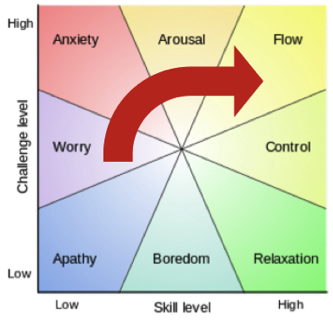
    By gamifying learning and development in business, the participants/learners can continually improve on their soft skills and technical skills. Gamified learning solutions serve as a medium that allows them to tap into the Flow state by arriving at the sweet-spot– by converging the ‘challenge level’ of the game with the participants’ prevailing ‘skill level’. The solutions can also be designed to simulate a marginally tougher and more challenging business environment, causing the participants to progressively learn and pick up more sophisticated skills.

    Source: The Experience Fluctuation Model by Massimini, Csíkszentmihályi and Carli (1987)

    Participants usually begin with an emotional state of ‘Worry’ when they are introduced to the gameplay in a learning simulation. At this stage, guidance is required to teach participants how to play through a series of demo rounds. Throughout the gameplay, participants will increase their level of mastery through course correction and iteration. The simulation difficulty can then be increased in tandem, so that participants move on to higher experiences of ‘Anxiety’, ‘Arousal’, and lastly, ‘Flow’.

    Under the Flow state, participants will be hyper-focused to learn and tackle challenges in various areas of business, such as strategic thinking, problem-solving, sales and marketing, culture and others. This is a highly valuable state where learners become self-motivated to learn. With each successive round comes the opportunity for participants who are “in the zone” will reiterate, tweak and perform ideal business practices and make decisions. This warrants the transferability of learnings from within the simulation, into the real workplace.

    After all, what is the point of putting valuable people through endless training and wasting countless manhours, without seeing actual and measurable business results? As the business mogul, Mary Kay Ash once said “A company is only as good as the people it keeps”, the following may also be true– “A company is only as good as its investment in people is”.

  • Our New Gamified Learning Solutions!

    Our New Gamified Learning Solutions!

    Our team has been hard at work in 2019 coming up with new gamified solutions for corporate training in subject matters such as Performance Management and Business Acumen which are vital for an organisation.

    Below are the details of our new offerings:

    THINKCRUCIAL
    Performance Management Simulation

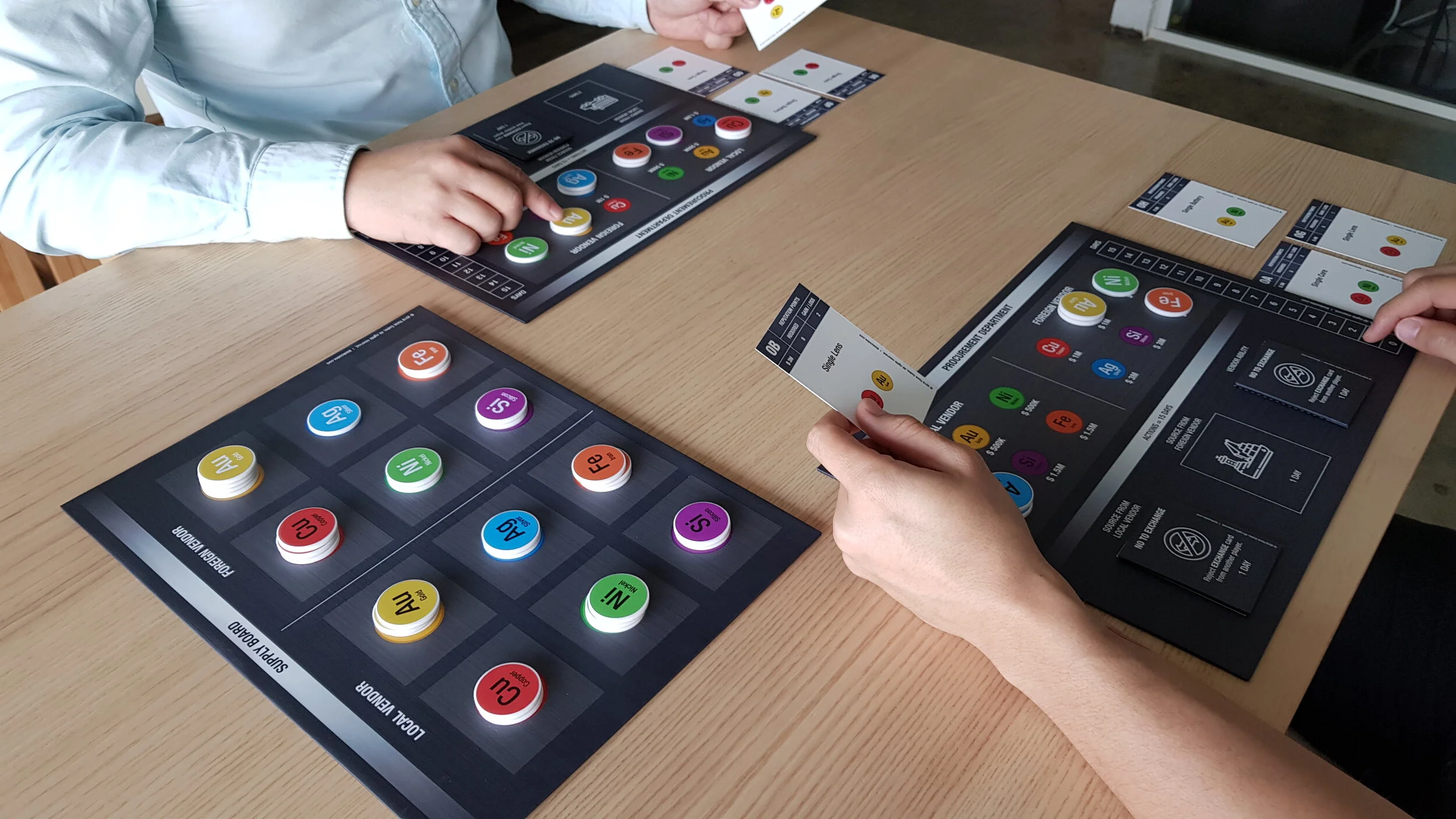
    THINKCRUCIAL is set in the smartphone industry where each team’s goal is to develop the best smartphone in the market by managing performance through effective coaching methods. This is a competitive simulation where participants are placed in teams where they compete with each other to be the best smartphone manufacturers in the market.

    In THINKCRUCIAL, participants learn emotional awareness in order to maintain employee well-being before, during & after the performance management process by utilising the Emotional Intelligence Model


    THINKDISRUPT
    BUSINESS ACUMEN & FINANCIAL MODELLING SIMULATION

    THINKDISRUPT is a competitive simulation where teams are split into 2 categories: big corporates and disruptors, which are then pit against each other to develop and grow their respective businesses and manage their financial health while navigating through an ever changing environment.

    In THINKDISRUPT, participants are able to analyse and understand financial statements, effectively evaluate the financial impact of business decisions, understand the key elements of Business Acumen, including 
    strategy, financial, marketing and sales, operations, and people management.


    We strive to produce world-class gamified learning solutions to empower businesses and organisations across the region as we continue to bring gamification toe the forefront in corporate training.

    Head over the Contact Us page to schedule a chat with us. To know more about our other products click here

  • Gamification in Motivation

    Gamification in Motivation

    Written by: Sufiz Suffian

    Gamification has become a buzz word as of late with many growing interest in the subject, particularly on how gamification could be injected into other areas, be it in learning, product and service design, and more. This has a lot to do with it being closely associated with increasing engagement and fun. But what makes gamification so engaging and fun in the first place? The very idea of gamification doesn’t necessarily mean creating a game, as many would mistakenly believe. If that was so, it wouldn’t be much of a surprise as to why people would find it that enjoyable in the first place. Rather, gamification by definition is taking engaging elements in games and applying them in a different environment. So not exactly a game, yet it is game-like? The best way to possibly approach this is to understand what makes something engaging in the first place.

    An “engaged employee” is said to be someone who is fully absorbed by and enthusiastic about their work and so takes positive action to further the organization’s reputation and interests. In other words, engagement is all about motivation. So, to properly engage people, it is imperative that we understand what motivates people to begin with. Motivation can be broken down in different ways but for all intents and purposes, we will focus on two variances of motivation: extrinsic and intrinsic motivation. When a person is extrinsically motivated, their behaviour is motivated by an external factor pushing him/her to do something in hopes of earning a reward or avoiding a less-than-positive outcome. On the other hand, when a person is intrinsically motivated, their behaviour is motivated by their internal desire to do something for its own sake. Among the two types, most would obviously prefer the latter. Yet if we look at the foundation of today’s world, most of it is built on extrinsic motivation.

    Consider the industrial revolution, where technological developments played a pivotal role in fostering the growth of industry, from railroads to steam engines to electricity. But with new advancements came a new set of challenges, how can these be best managed and maintained for sustainable growth? Businesses were being run haphazardly and incredibly inefficiently. To combat this, a gentleman named Frederick Winslow Taylor invented “scientific management”. In essence, scientific management is a theory of management that analyses and synthesizes workflows. Its main objective is improving economic efficiency, especially labour and employee productivity. The heart of it all? Extrinsic motivation. It promoted the idea of “a fair day’s pay for a fair day’s work”. However, as the years went by and new innovations appeared on humanity’s doorstep through the efforts of brilliant individuals and companies, resulting in a more complex world and increasingly sophisticated inhabitants, we find that we are still stuck in the shadow of scientific management and continue to focus on rewarding the good and punishing the bad.

    This incompatibility comes from the change in how we do work today compared to when scientific management first came into existence. Back then, almost all work was algorithmic where one would merely need to follow a set of established instructions down a single pathway to one conclusion. Today, most of these tasks are either outsourced to cheaper nations, automated, or made obsolete by other advancements in technology. Most of what we do at work today is heuristic in nature, where one would need to experiment with possibilities and devise a novel solution to most problems of today. Scientific management’s carrot and stick ethos works best for algorithmic tasks, but can impair heuristic ones. Some might think paying someone a large amount of currency to do any given task would motivate them significantly, but most often than not the opposite tends to occur.

    Studies have shown that paying or rewarding someone to do good deeds such as donating blood or volunteering would in fact reduce their motivation to do those things compared to when they were not paid to do them in the first place. Countless other studies and experiments have been conducted all over the world where one group of test subjects were given a reward to complete a series of tasks while another group was given no reward for doing the same tasks, and the results were all the same. Rewards impaired motivation. It simply took the joy out of doing the tasks, causing performance to suffer, foster short-term thinking, and sometimes even encourage unethical behaviour and cheating.

    Wikipedia, undeniably the largest encyclopaedia in the world, is free and created and edited by volunteers from around the world. None of its contributors were given financial rewards for their work despite billions of people using it in their own pursuit of knowledge and curiosity. As we’ve learned, rewarding these volunteers would probably lead to the downfall of Wikipedia. So why does intrinsic motivation drive us so much? To create masterpieces of art, to find cures to deadly diseases, and to create the next disruptive innovation? And most importantly, how can we inject intrinsic motivation into our workplace to increase engagement of our employees and managers? The answer lies in one word – Autonomy.

    Autonomy means acting with choice, be it choosing when to go to work, how to solve a problem, and where you do work. Having a sense of autonomy has a tremendous effect on individual performance and attitude. It promotes greater conceptual understanding, better grades, enhanced persistence toward challenges, higher productivity, less burnout, and greater levels of psychological being. In other words, autonomy is creating an environment where people can make their own choices freely, which is something gamification excels in. Sure, some choices they make may not yield the best results immediately. But in the long-term, they’ll make the right choices that work best for them. But with this much autonomy, surely there is room for abuse? Control is needed right? Control leads to compliance, whereas autonomy leads to engagement, and only through autonomy can we truly reach our full potential and even achieve mastery.

    So rather than creating more linear processes for employees to comply to, giving them more freedom to approach work however and whenever they prefer might be better (with some clear boundaries set of course) as this creates the right environment for intrinsic motivation and autonomy to foster and spread.

    Sufiz Suffian is the Chief Business Officer of Think Codex, a Gamification Consultant & Trainer.

    You may reach out to him via https://www.linkedin.com/in/sufizsuffian/

  • ACCA Article: The Gamification at Workplace has Benefits for Everyone.

    ACCA Article: The Gamification at Workplace has Benefits for Everyone.

    Our CEO, Andrew Lau, was recently invited to give his opinion on gamification in an article published by ACCA about the benefits of gamification in the workplace.

    In this article, which includes opinions from other gamification gurus and experts, our CEO talks about the importance of psychology in gamification and how people have false information that gamification involves heavy digitalisation.

    “A lot of people think gamification is all about apps, board games and online stuff. But gamification is 80% psychology; the rest is game mechanics and dynamics,“ he says.

    Gamification is certainly a concept that can be applied in various subject matter depending on your intended goal. Our game-based learning used in business training is made to motivate employees and thus increasing the productivity of employees exponentially.

    Read the full article, written by David Ho, here.

  • Dto-lah (Sime Darby’s first experiential home-owning digital platform)

    Dto-lah (Sime Darby’s first experiential home-owning digital platform)

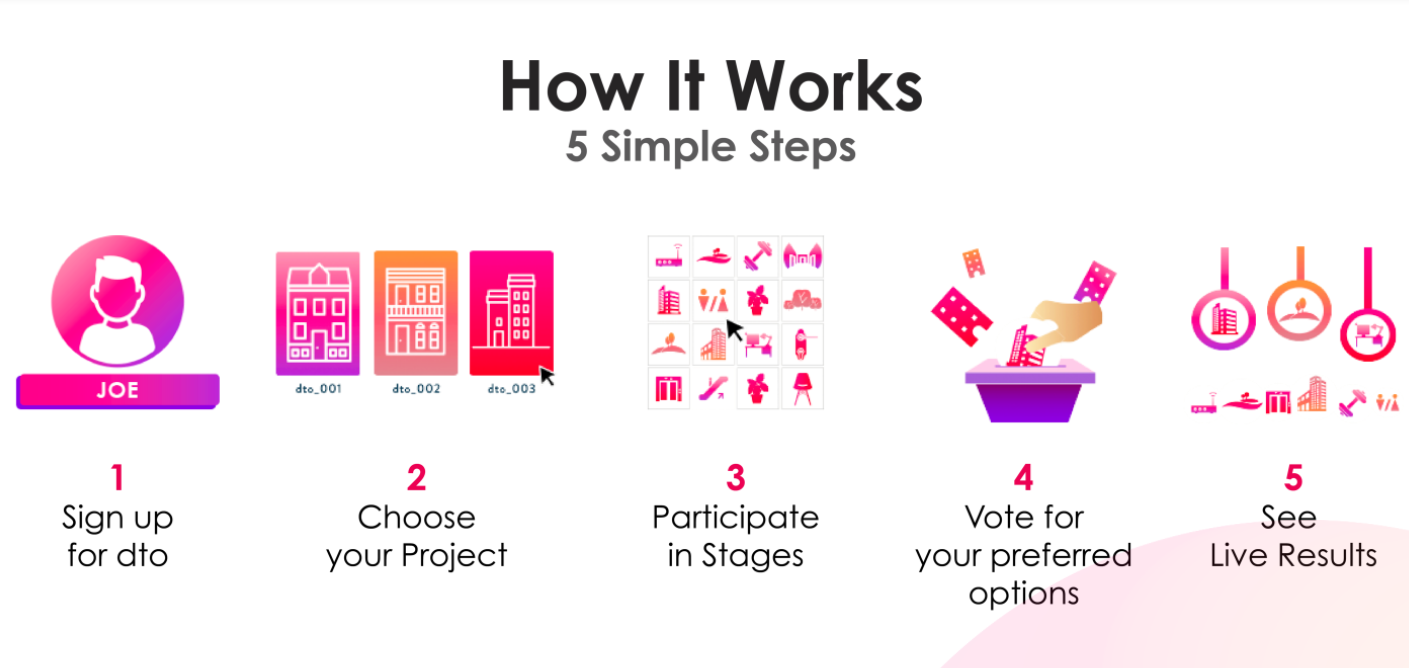
    Recently, we had the opportunity to work with Sime Darby, a leading property developing company in Malaysia on their new and innovative platform, DTO. DTO (pronounced as ditto) lets potential customers take charge of the property that they intend to own.

    Potential customers can choose to design their own future home by choosing the characteristics of the future property such as floor types, kitchen design, and all the way to the pavement of the property. We had the chance to work with Sime Darby and inject gamification into the app in order to increase the participants’ engagement level and also to make the tedious process of choosing the designs fun and addictive.

    We are proud to be involved in this project where we come out of our usual business of gamification in corporate training and L&D. Certainly a new challenge and an experience for us to increase engagement and overall reception towards the project.

    We wish Sime Darby all the best in the success of this project. Do visit their website at https://dtolah.com to experience the excitement yourself.

  • Gamification In Fitness

    Gamification In Fitness

    TAPPING INTO THE CORE DRIVERS OF HUMAN MOTIVATION, CREATING BETTER ATHLETES.

     Written by : Shobana G

    Over the past 5 years, being an adrenaline junkie and someone who loves everything about fitness and sports, I found myself slowly evolving into the person I have always desired to be, in aspects that are beyond the four walls of the gym. This is what involvement in sports and fitness can do to an individual. For me, it has helped build desired habits, character, values and a mindset that enabled me to pull through different situations in everyday life.

    Now, let’s dive into my experience with a gamified intervention that got me highly engaged in my involvement in the gym as an athlete and how it played a significant part in keeping me motivated to perform better over time. 

    When I signed up at a Crossfit gym slighter over 2 years ago, I was introduced to a mobile application called Wodify, a fitness and gym management software that is designed to help gyms grow. Not only that, this function is made compulsory to all gym members and athletes to book workout sessions, keeping ourselves updated with notices from the coaches, tracking fitness performance and many more. 

    Based on my experience interacting with Wodify as a user, I have discovered that the adaptation of gamification in the functions and features of this app has generated an ability to trigger the core drivers of human motivation, as stated in the Octalysis framework which was developed by Yu-Kai Chou. The Octalysis framework talks about the 8 core drivers of human motivation namely, Meaning, Accomplishment, Empowerment, Ownership, Social Influence, Scarcity, Unpredictability and Avoidance [1]. The following gamified features of this app which will be discussed on revolves mainly around four of the core drivers which are Accomplishment, Unpredictability, Scarcity, and Social Influence.


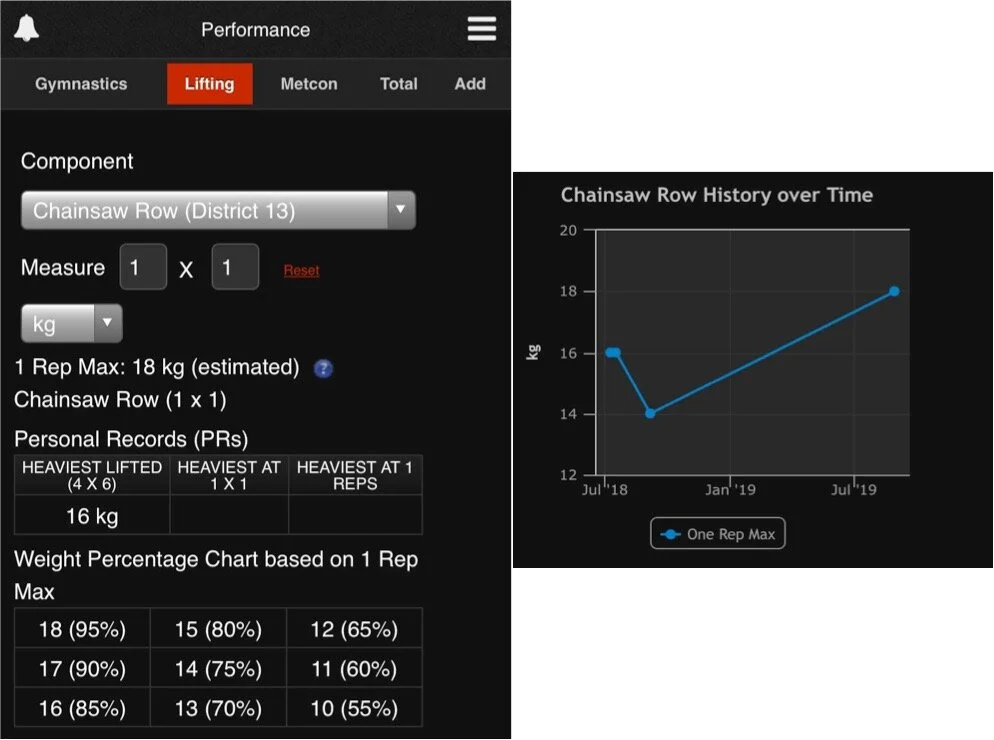
    GUIDING DEVELOPMENT & PROGRESS WITH PERFORMANCE CHARTS

    Images on the left show the tracked performance of a specific exercise known as the “Chainsaw Row” 

    Development and Accomplishment is the internal drive of making progress, developing skills, and eventually overcoming challenges [1]. In most types of fitness activity, we perform so many different exercises and it is almost impossible to keep track of performance in every exercise by remembering them. Manually writing notes and numbers down can be time-consuming and the process of generating a performance chart from manually written notes is a cumbersome process. The best way to make tracking easier is to automate it [2]. Performance charts and other visual forms of measurement on gamified mobile apps show how an athlete performed in comparison with their previous results besides providing individual records. To have good control over certain things, tracking or keeping a record is important, just like how we have credit card statements to control financial expenditures. Gamification creates a sense of control among users, allowing them to decide which milestone to complete next. Likewise, performance tracking in fitness is crucial in ensuring development as it enables one to identify their strengths and weaknesses. On top of that, one of the most satisfying feelings is the feeling of making progress [2].

    BUILDING A SENSE OF ACCOMPLISHMENT THROUGH BADGES & LEADERBOARDS 

    Images above show a “Results” page that displays badges awarded to the user (athlete) and a leaderboard displaying the results of the users in the female category.

    Badges are a visual representation of the athletes’ achievements, in this case, a form a reward obtained when an athlete hits a “Personal Record (PR)” or in simpler terms can lift the heaviest weight in comparison to all the past lifts. A leader-board displays athlete rankings that defines which athlete performs best in the “Workout of the Day (WOD)”. Unlike performance charts that show the performance of one user within a certain period, a leader-board shows the performance of other athletes. Both badges and leaderboards are forms of extrinsic motivation which also creates a sense of accomplishment among athletes. This in return motivates every athlete to work harder and push boundaries to perform better in every training session. On top of that, it fosters competition among the athletes, the healthy kind. Leaderboards that display achievements of other athletes encourage individuals to accomplish more and compare their results with others, triggering the social influence core driver which will be discussed later on in this write-up.

    A NEW DAY, A NEW SET OF CHALLENGES – CREATING UNPREDICTABILITY & CURIOSITY 

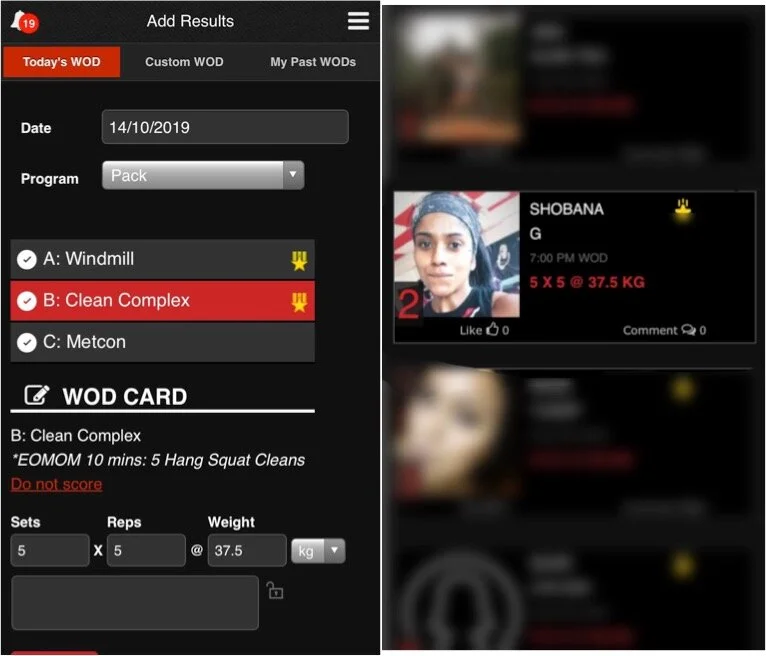
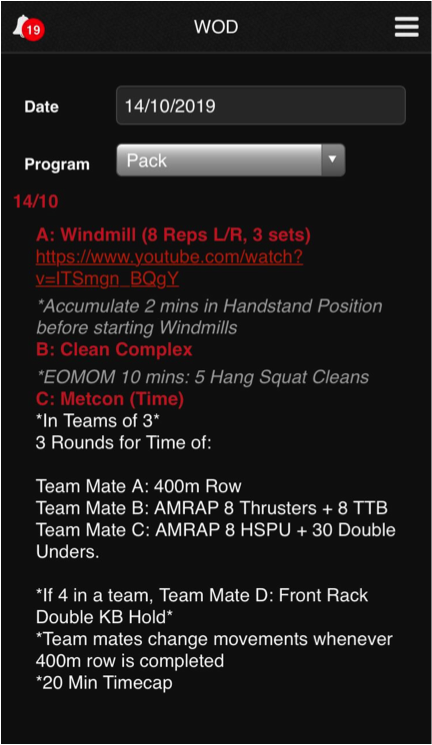
    The image above shows a description of the Workout of the Day (WOD), programmed by a coach. 


    This feature on this app provides a view on what athletes would expect during the training session on a certain day. As the WODis only released past midnight every day, it creates unpredictability and curiosity in individuals who are anxiously waiting to know the“challenges and obstacles” they are about to face. Generally, this is a harmless core drive of wanting to find out what will happen next. If you don’t know what’s going to happen, your brain is engaged and you think about it often [1]. Speaking from my own experience and interaction with this app, there are days when I stay up till the clock strikes 00:00 merely to take a look at the WODor the latest would be one of the first things I do in within the first 30 minutes of starting my day in the morning. In my perspective, having this core drive triggered helps one prepare themselves mentally and physically before facing a certain challenge or task, which is indeed the desired habit to have as a fitness athlete.


    CREATING A SENSE OF URGENCY WITH SCARCITY 

    Images above show the Class Schedule feature which requires reservation and signing-in.


    Moving on, let’s look into this feature of Wodify which allows you to book or “Reserve” your training sessions beforehand. Scarcity in an individual arises when there is something that a person needs but a certain need has a limiting factor to it. For example, all members of the gym can attend the workout or training sessions ONLY if there’s a reservation done and for every session, there’s a capacity limitation attached to it, besides a reservation cut-off time of two hours before the session. Those who fail to reserve their desired time slots will be denied participation. To avoid facing such situation, members are encouraged to reserve slots a day or two in advance. Scarcity creates a sense of urgency, which indeed is an applauded value or habit in a good athlete as it shows their commitment towards the sport and the desire to get better by committing to training sessions. In the words of Professor Todd May, when there is always time for everything, there is no urgency for anything. A life without limits would lose the beauty of its moments, and it would become boring [3].

    BUILDING THE COMMUNITY THROUGH SOCIAL INFLUENCE

    The image above shows the interaction among the gym members based on the achievement of one person.


    Last but not least, this intervention has also tapped into the social influence drive as it allows peers to interact on the platform at the end of the workout session, especially once athletes have keyed in their weights, scores, timings, etc. This includes actions like posting a comment or “Like” the results of an athlete. Acknowledgement, “Likes”, positive comments or compliments from peers can be very empowering and motivating after a long hard day, what more if these positive comments come from your coach! This not only empowers the person on the receiving end but also the person who is executing the action. When you see a friend that is amazing at some skill or owns an extraordinary capability, you become driven to reach the same level [1]. Not only that, these types of interactions make up the building blocks of a strongly-knit fitness community. 


    To sum up, although gamification in mobile apps are often adapted by brands mainly as an effort to increase user engagement as a marketing tool, I believe that gamification has a greater positive impact towards the fitness and sports industry in terms of building motivation and a sense of discipline which at the end of the day forms desirable habits that makes a good athlete. 

  • 3 Great Examples of Gamification in Marketing

    3 Great Examples of Gamification in Marketing

    Written by: Kanes Kulanthavelu

    It is a no brainer that marketing is one of the most crucial elements of any organisation. Be it for profit or non-profit, marketing has been the driving force of many business success stories. Whether it’s for driving traffic to your site, lead generation, sales accumulation, increasing your market reach towards your intended target audience and even for brand building in general, marketing has been a centuries-old cornerstone for businesses to flourish.

     We however exist in an era where change occurs in a blink of an eye; what is important today may be gone tonight. Of course, this implies that the general attention span of your specific target market may be directly proportional to the rate of change. So the question is, how do you ensure your marketing efforts bring forth a lasting impact and audience engagement that withstands the test of time while accomplishing your intended objective?

     Enter Gamification. A revolutionary contributing factor that is a tried and tested tool to help boost your marketing efforts by distinguishing them from the crowd, to be the sole diamond among the stones. 

     In this article, we will look through a few gamified marketing campaigns that I feel has stood out and achieved its intended objective exceptionally. 

    But first, let us dive into what is Gamification in marketing. 

     What is Gamification in Marketing

    Gamification in marketing is the application of game elements that add an addictive ingredient into your marketing efforts. This is to ensure that your marketing campaign is more interactive which boosts up the engagement rate of the intended target market. In a survey done by Demand Gen, it found that 93% of marketers agree that interactive content is effective in educating its buyers compared to 70% who believed that static content does the job.  

     Now that we’re familiar with what Gamification in Marketing is, let us look at a few marketing campaigns that was carried out in Malaysia, and outside of Malaysia, that I believe has stood out amongst the rest. 


    McDonald’s (MCD) Elections

    Whether you are a fan of fast food or not, everyone knows McDonald’s. In recent times, McDonald’s Malaysia came up with its uniquely styled election campaign. In this campaign, diners get to vote for their choice of meals that are currently offered by McDonald’s for its Malaysian customers. The ‘candidates’ were McChicken, Quarter Pounder with Cheese, Double Cheeseburger and the famous Ayam Goreng McD. Between 13-26 June 2019, for every purchase that the customer makes between the four ‘candidates’, a vote goes to the voting meter on the McDonald’s website. This was a great way to get consumers riled up over which of its four contenders deserve the title of Malaysia’s favourite McDonald’s meal. From a marketing perspective, the genius of this campaign was that it managed to exponentially boost up the sales of its set meals.

    The average price of the McChicken set meal, the cheapest set meal out of all the four ‘candidates’ is around RM 7, and it was ‘voted’ by the diners by an astounding 400,000 times (approximately). I’ll let you do the math on how much total revenue was collected at the end of the election campaign. 

    Guerlain KissKiss Campaign

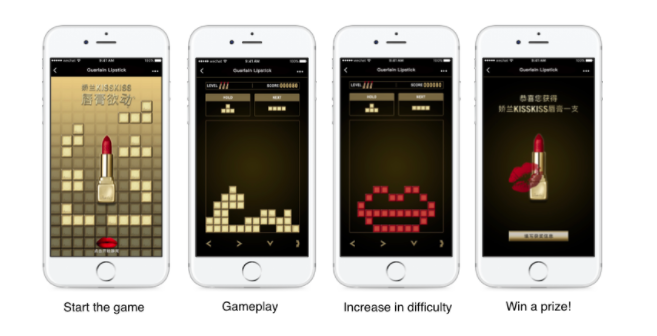
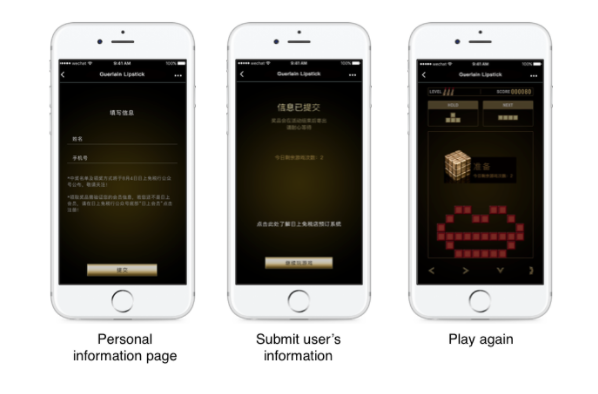
    In a recent attempt to introduce the concept of luxury brands to the youth in China, the luxury skincare and cosmetics brand Guerlain partnered up with Sunrise Duty Free to create a game similar to Tetris which appeared on Sunrise’s WeChat account. The objective of the game was to create engagement and awareness amongst the Chinese Global Shopper. This highly addictive game had a few levels where players complete the game across multiple levels, eventually leveling up towards an end goal. Towards the end of the game, players were asked to submit their information such as their name and phone number to enter a lottery for a chance to win a KissKiss Matte Lipstick. This helped Guerlain build a huge database consisting of potential customers. I have no doubt as to why it would be a successful viral campaign, especially when you are able to win a luxury brand make-up kit by just playing a game. Within 10 days of its launch, the highly addictive Tetris game had attracted 18,582 page views and 10,000 players.

    DTO-lah

    Last, but certainly not least, Think Codex partnered with one of the leading property development companies, Sime Darby, to develop a project called DTO-lah earlier this year. DTO, which is the abbreviation for Design To Own, is a crowdsourcing platform where consumers have the intriguing ability to design their own house where they’d be moving into. This way, consumers have complete control and ownership over their choices, from the wallpapers, kitchen tile, bathroom sink and even the door design to suit their taste and liking. The most popular design will be implemented at the property itself! This is a one of its kind project that empowers first time homeowners to be involved in the process of constructing and dictating the creative element of their first property. 

    Find out more about DTO by visiting their website

    In conclusion, implementing gamification in marketing has proven to be an effective way of driving up engagement and interaction to your content. Its overall approach acts to enthusiastically engage and excite your target market, resulting in you hitting your marketing objectives more effectively. 

  • The Building Blocks Behind Gamification

    The Building Blocks Behind Gamification

    Written by: Bryan Woo

    Video games have been a big part of my childhood ever since I first held a video game controller. I vaguely remember countless late nights spent sneaking out to the living room, loading up some of my favourite video game titles and telling myself that I would go back to sleep once I finish this quest or defeat this final boss. Or so I said. 


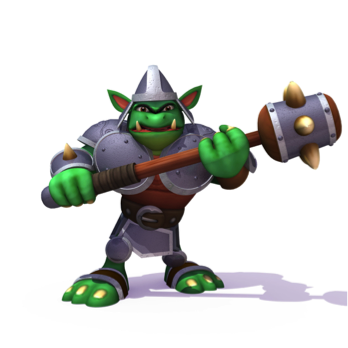
    Looking back, it’s funny how it would take a huge amount of willpower and convincing for me to engage in more “productive” actions, like studying or household chores but when it comes to playing games, it took no convincing of any sort. Fast forward a couple of years, I would come to better understand that I simply wasn’t motivated to do other things as much as I was motivated to beat Ghasty Gnorc from Spyro: A Hero’s Tail.

      (Ghasty Gnorc via Google Images)
    (Ghasty Gnorc via Google Images)

    Motivated being the keyword here. 


    The ability to tap into the power of motivation is why gamification has been recognized as an innovative and promising concept for a wide variety of industries in the past decade (1). The idea behind this is by utilizing various design elements from games as building blocks, and apply these to real-world scenarios to foster and maintain the motivation of its various users (2)


    That being said, to gain the most out of a gamified initiative, one can benefit from looking at commonly used game elements and diving deeper into the psychology and science (or as I like to call it, Psy-ence!) behind how these elements can motivate specific behaviours:


    Points and Badges

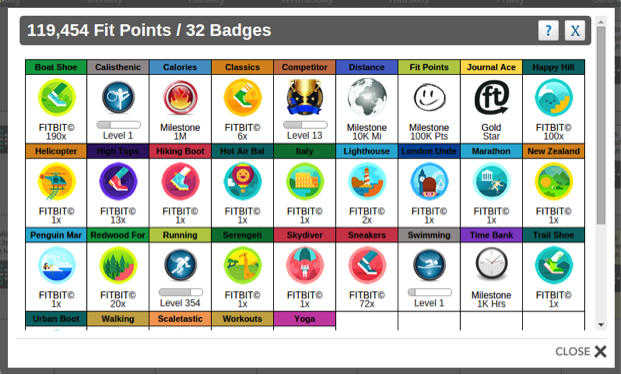
      (Points and badges found in fitness app, “FitBit” via Google Image)
    (Points and badges found in fitness app, “FitBit” via Google Image)

    Considered a basic element of a multitude of games, points are used typically as rewards for users when they successfully perform certain actions as well as providing a numerical representation of a player’s progress (1). Although the action of awarding points can serve a multitude of purposes, I find that points are at its most impactful when used as a form of immediate feedback when users display specific behaviours or actions. 


    We see this commonly in various loyalty programs (i.e. Uber, Grab, etc.), which are designed to encourage its users to perform desired actions or behaviours. Displaying these behaviours will in turn reward users with points which can be used within the platform to obtain various incentives, thereby conditioning its users to repeat the desired actions if they want to earn more points. 

    Points are often paired alongside badges, which are used as a visual representation of a user’s achievements that can be earned within a game or a gamified platform (1). Badges can be used in a variety of functions in a gamified platform, either serving as a goal that a user work towards or to represent status symbols its users to show off. By associating certain challenges or tasks with badges, a user’s actions can be influenced and stir towards completing acts that reward players with these badges.  


    Additionally, another impact badges can bring to games and gamified platforms lie in its ability to tap into social influence. Earning certain badges can be used as a form of symbolizing one’s membership into groups that share the same achievements (3), thus forming a small community among its users. 


    Leaderboards and Progress Graphs

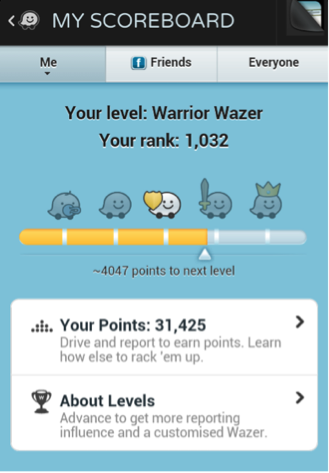
      (Scoreboard found in navigation app, “Waze” via Google Image)
    (Scoreboard found in navigation app, “Waze” via Google Image)

    Humans thrive on feedback, whether if it’s for a project that we are working on or for a hobby that we seek to improve on. Feedback provides us with useful information that helps us determine the rate of our progression. In games and gamified platforms, feedback is often provided in the form of leaderboards and progress graphs.


    The primary function of a leaderboard is to rank users against one another, according to the “success factor” or “winning state” of a game or gamified platform (4). By tapping into the competition as a motivator, implementing a leaderboard can encourage a sense of competitiveness among its users as they compare their performance to that of another user when performing specific tasks.


    That being said, the motivational potential of leaderboards may vary, as it can either be an effective motivator as well as a demotivator. Research in gamification has shown that while competition caused by leaderboards can create social pressure, thus encouraging more user participation, it was found that the positive effects of competition are more likely to occur when users are performing at the relatively same pace or level (1). Likewise, if the majority of a user base is not motivated by competition, a leaderboard may often do more harm than good for a gamified platform. 


    Aside from this, progress graphs also provide feedback about a user’s progress in a platform, by comparing a user’s current performance to that of their own at an earlier stage (5). In contrast to leaderboards, which compares a user’s performance to others, progress graphs only evaluate a user’s performance over time. 


    Progress graphs motivate its users by allowing them to focus on their improvements in a game or a gamified platform, thus creating an environment that allows for learning and mastery to occur. 

    Stories and Player Avatars

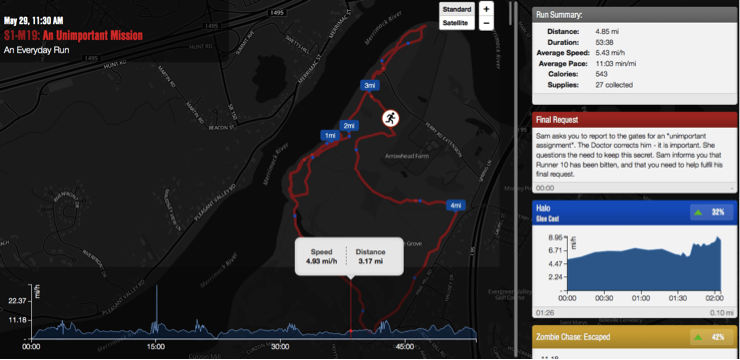
      (Story mission page from fitness app “Zombies, Run!” via Google Images)
    (Story mission page from fitness app “Zombies, Run!” via Google Images)

    Stories have important emotional meaning that creates engagement from people. It captures the imagination of people while tying together an emotional experience. That is why having meaningful stories in games and gamification, and using them consistently can bring great results.


    Stories can be a welcomed addition to a gamified platform as they complement existing elements like points and achievements with added contextual meaning (6). Some examples include adding characters that the users can relate to or even changing the context of an activity found in a gamified platform. A simple walk in the park can now be transformed into a thrilling survival run from attacking zombies. 


    A user may feel inspired and motivated to immerse themselves if a story is engaging and in line with their own interests. 


    Some platforms take this a step further and allow their users to be the main star of the story, by introducing player avatars. These are visual representations of a user within a game or gamified environment (1). More often than not, most platform allows for some level of customization for users to create their avatar to their liking. It helps give a sense of identity for the user and create even more immersion within the platform. Furthermore, allowing users to interact with others using their avatars can encourage social interaction within a platform, thus leading to communities being form.

     
    Every day, we are often exposed to a wide variety of platforms that uses elements of gamification. So the next time you come across some of these elements, you will have a better understanding of why these elements were included in the first place. 

    References

    1)   Werbach, K. & Hunter, D. (2012). For the Win: How game thinking can revolutionize your business. https://www.researchgate.net/publication/273946893_For_the_Win_How_Game_Thinking_can_Revolutionize_your_Business

    2)   Deterding, S., Dixon, D., Khaled, R. & Nacke, L. (2011). Gamification: Toward a Definition. http://gamification-research.org/wp-content/uploads/2011/04/02-Deterding-Khaled-Nacke-Dixon.pdf

    3)   Antin, J. & Churcill, E.F. (2011). Badges in Social Media: A social psychological perspective. http://gamification-research.org/wp-content/uploads/2011/04/03-Antin-Churchill.pdf

    4)   Costa, J. P., Wehbe, R. R., Robb, J. & Nacke, L. E. (2013). Time’s Up: Studying Leaderboards for Engaging Punctual Behaviour. https://www.researchgate.net/publication/257519212_Time’s_Up_Studying_Leaderboards_For_Engaging_Punctual_Behaviour

    5)   Sailer, M., Hense, J., Mandl, H. & Klevers, M. (2013). Psychological Perspectives on Motivation through Gamification https://www.researchgate.net/publication/278672057_Psychological_Perspectives_on_Motivation_through_Gamification

    Kapp, K. M. (2012).The Gamification of Learning and Instruction: Game-Based Methods and Strategies for Training and Educationhttps://www.researchgate.net/publication/273947281_The_gamification_of_learning_and_instruction_Game-based_methods_and_strategies_for_training_and_education_San_Francisco_CA_Pfeiffer

  • Gamification in Parenting

    Gamification in Parenting

    Written by: Sufiz Mohd Suffian

    With the increasing awareness of gamification globally, many organisations have begun injecting gamification into just about everything. From gamifying employee Key Performance Indicators (KPIs), onboarding new recruits, and even purchasing new property. Whether it is by incorporating game elements to elicit competition, slapping on a leaderboard to rank “players”, or curating an engaging experience, these all stem from game thinking and gamification. As most of us know, gamification does not necessarily mean creating a game. Rather, it is incorporating engaging elements in games into a non-game context. With the right application, organisations have yielded positive results in user engagement, revenue generation, and customer satisfaction. With such great results, it’s no wonder organisations are rushing to squeeze gamification into just about anything.

    But apart from the workplace, one wonders if there is a place for gamification in the household. Specifically, in parenting.

    Parenting is akin to an amateur sport with consistent trial and error. Since I’ve become father to a beautiful baby girl, my wife and I have done considerable research utilizing various books on parenting – from understanding the way the brains of babies are wired to how parents have raised successful children in different parts of the globe. In our research, I couldn’t help but notice some similarities between parenting and gamification. Obviously, I am not suggesting parents award points to their babies for taking regular naps, or rank children on a leaderboard. Much rather, I focused on the way parents have successfully engaged with their children to nurture and raise them to become confident and capable members of society.

    So how does gamification relate to parenting then?

    Creating the Right Environment
    This may seem obvious, but what does creating the “right” environment really mean? In gamification, this usually involves creating a safe and engaging environment for “players” to play in. This is especially apparent in game-based learning or serious games where game elements are designed to trigger desired behaviours and reward players for continuously displaying them, which in turn reinforces and builds positive habits. Players can safely make mistakes and fail without any negative repercussions to their personal or professional lives.

    Having a similarly safe and engaging environment is crucial for a child’s development. The human brain is wired to focus on one thing, survival. If our brains think it is in any kind of danger, it will stop its focus on anything else, including learning. Once the brain senses that the danger has passed only then can learning resume. This means that using fear as a motivator to learn is not ideal. This includes rigid and strict parenting practices that force children to perform. Research has found that this has negative effects on a child’s development and results in the child merely becoming a parrot, acting in a manner that pleases their parents but in reality does not actually improve their intelligence, which is known as learned helplessness. Instead, creating an environment filled with positive motivators is best for a child’s development.

    Playing to Learn

    We all can agree that the one thing that children love to do is play. Gamification in essence is about injecting play into pretty much anything to make the experience fun. Although it isn’t exactly like a game of tag or hop scotch, gamification is able to turn something that is mundane or serious into a fun and playful experience. Whether it is through the rush of collecting likes on your latest photo on Instagram, or securing enough sales to land you the top spot on your sale department’s leaderboard, play is what ultimately drives engagement in players.

    For children, play is often seen as a relief from serious learning, when in actuality for children play IS serious learning. Parenting experts (and expert parents) often emphasize on the importance of creative play for children. Free play teaches children to be less anxious and how to cope with stress. In fact, the more they play, the better they become at learning social skills and engaging in social or play contexts. Through pretend play, children are able to understand emotional challenges experienced in different roles and develop empathy.

    Reframing Mindsets
    Gamification has a way of changing the perceptions of players towards different situations, environments, or people by using the right game elements. The playful nature of games allows us reframe our mindsets by creating a safe and fun environment to let our guards down and welcome different possibilities into our minds. Reframing works particularly well with children.

    Reframing with children is mainly about helping them shift their focus from what they cannot do to what they can do. Parents help children see situations from different perspectives, allowing them to focus on the less negative conclusions or outcomes. To do this, parents need to create a safe and positive environment for children that is free from negative labels (e.g. “He is so lazy”) or limiting language (e.g. “I’m not good at that”). Negative labels and limiting language are very defining – the more children hear them, the more negative conclusions about themselves they make. Guiding children to a new, wider and more ambiguous picture about themselves and the world around them helps them to reframe positively.

    Setting Rules of the Game
    Games usually come with a set of rules for players to follow. To get the full experience or the desired results, players would follow these rules throughout the game. Parenting also comes with their own set of rules (and discipline), especially when it comes to raising a moral child. Children generally have an innate sense of right and wrong. However, moral behaviour is something that builds over time and requires a particular kind of guidance. Research has shown that families who raise moral children tend to follow very predictable patterns when it comes to rules and discipline. To sum it up, the recipe to moral children lie in three crucial ingredients: clear, consistent rules and rewards; swift punishment; and rules that are explained.

    Parents need to set clear rules in the household and explain the rationale behind them along with their consequences to the children. If rules are broken, parents should impose punishment (that is emotionally safe and not a form of abuse) quickly, firmly, and consistently, which is then followed by explaining to the children why what they did was wrong. However, if children do follow the rules and display desired behaviours or even refrain from displaying bad behaviour, they should be rewarded or given praise as a form of acknowledgement. This helps children clearly differentiate between what is right and wrong, and ultimately builds their moral compass over time.

    Parenting can be a daunting task especially to new parents. However, even games and gamification can provide useful guidance to the rookie parent in the sport of child development.