Author: andrew

  • 5 Strategic Steps to Align Your L&D with Business Success

    5 Strategic Steps to Align Your L&D with Business Success

    Written by: Raveena Elizabeth

    We’ve seen it all too often. L&D is seen as a support function (a.k.a backup) or a rapid response team (aka fixer) when the business suddenly needs to manage a people gap problem. L&D can be viewed as a secondary infrastructure and called upon only when help is needed. It doesn’t have to be like this. L&D professionals need to understand business strategy and then create an aligned L&D strategy for the business’s success.

    Enter the L&D Strategy and it’s 5 steps

    Do we really have clarity and know the business strategy and needs? Most of us get our understanding from the few lines written inside a Training Needs Analysis document.

    A learning and development (L&D) strategy is a comprehensive plan that outlines how an organization will meet its professional development needs and achieve its business objectives. It is time-bound, meaning it has a specific time frame for completion, and sets measurable goals and objectives. Failure to do this just makes the L&D function out of scope, outdated, and an unwanted distraction from “real” work.

    The goal of an effective L&D strategy is to provide employees with the necessary skills and knowledge to improve their performance, enhance their engagement, and contribute to the overall success of the business. This blog post will explore the different types of business goals and how L&D teams can design and implement an effective learning and development strategy.

    Step 1:  Understand the Types of Business Goals

    The first step in developing an effective L&D strategy is to understand the types of business goals that an organization can have. These goals can be broadly categorized into two kinds: business-related goals and employee-related goals.

    How To
    Often the need of the organization will include both in a single intervention by L&D. Here’s the key, even when it seems like a simple request in an email, always schedule a call with the stakeholders – decision makers, potential participants, and perhaps any other people that the training can impact. Often we will find that there is a notable difference between what is written in an email and what is revealed in a meeting. The details you get in the meeting help you to craft a more focused and accurate L&D solution. Don’t skip the meeting!

    Once you gain clarity, it’s time to move on to Step 2.

    Step 2: Conduct a Skills Gap Analysis
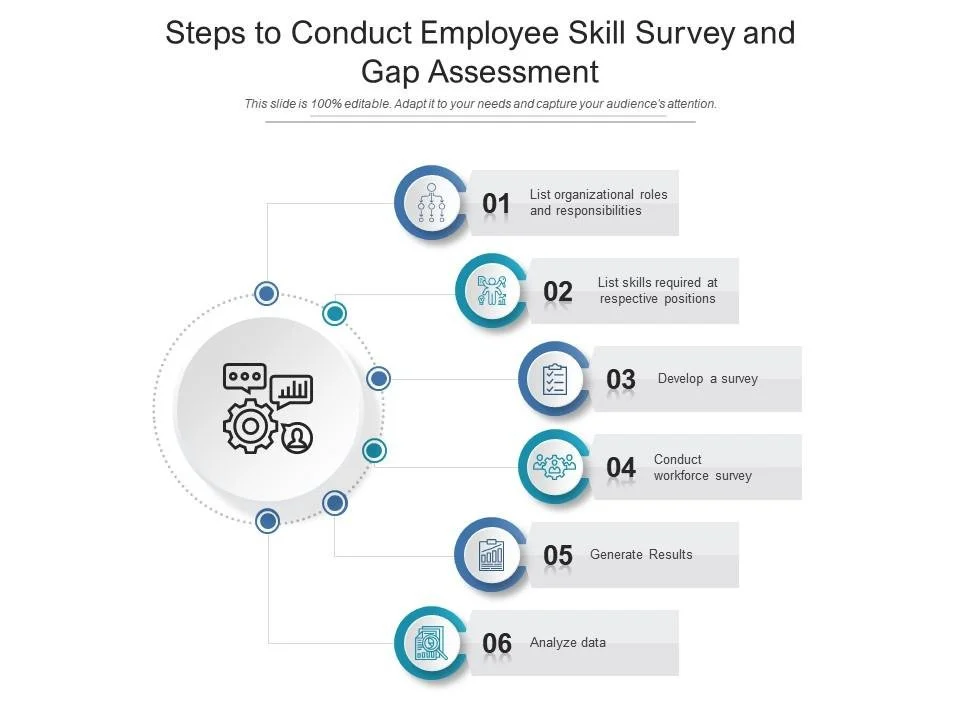
       Steps to conduct employee skill survey and gap assessment
    Steps to conduct employee skill survey and gap assessment

    This involves evaluating the skills and knowledge required to achieve business goals and comparing that to the skills and knowledge currently possessed by employees. The analysis can be conducted using a variety of methods, such as Training Needs Analysis (TNA), surveys, assessments, focus groups, or interviews. Once the skills gap has been identified, organizations can create targeted training and development programs to close the gap.

    How To
    It’s crucial to ask BOTH the employee what they view as their gap and also their line manager to see what is the gap of the employee. Do not communicate the results of the other party to each of them until both of them have completed this process. This is to prevent bias and also groupthink between both the results.

    Step 3: Design Learning Programs
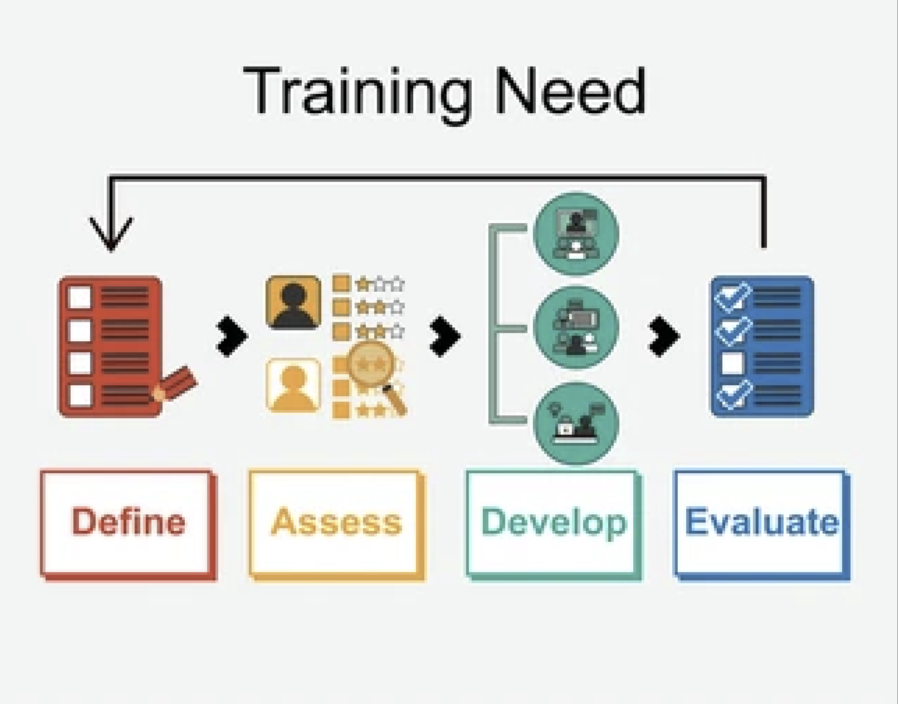
     Training need analysis vector
    Training need analysis vector

    Effective learning programs should be designed in a way that aligns with business goals and addresses the specific needs of the workforce. This involves using various learning methods such as Instructor-Led Training (ILT), eLearning, On-the-Job Training (OJT), Gamification, Simulations, Mobile Learning, and Social Learning to cater to different learning styles and ensure that employees can apply the new knowledge and skills to their jobs.

    How To
    Remember it’s not the type of training that matters – that’s the method only. Use whatever method that gives the best results. Some methodologies may be more suitable for high engagement and practical applications such as gamification based simulations.

    Step 4: Measure and Evaluate L&D Effectiveness
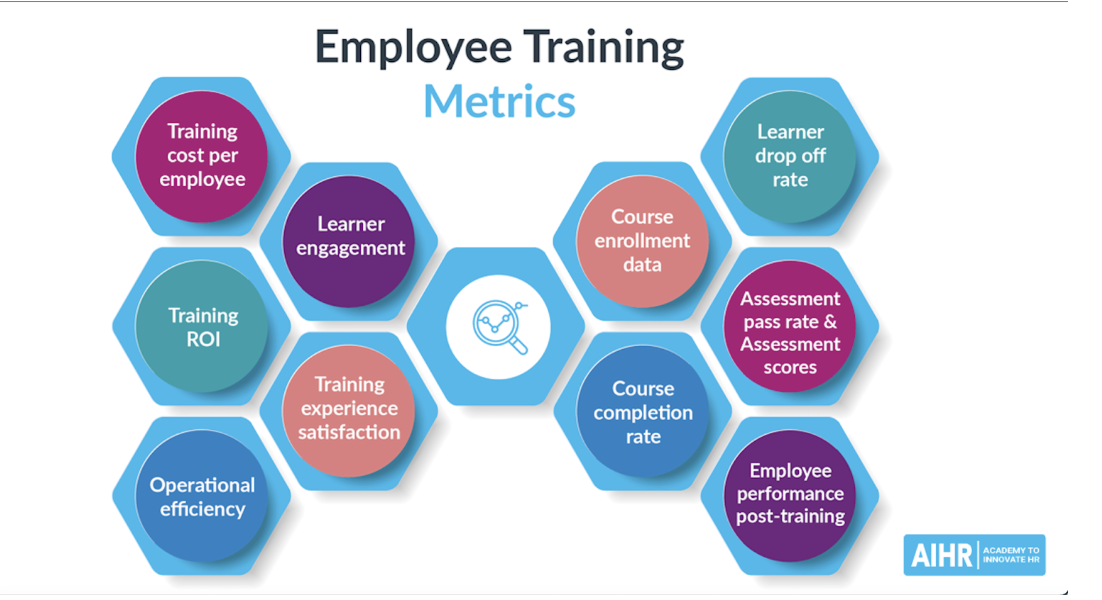
     Source by  AIHR
    Source by AIHR

    To ensure that L&D programs are effective and contribute to business goals, this can be done through various methods, such as surveys, assessments, and performance evaluations. This helps identify areas where improvements can be made and ensures that the organization is getting a return on its investment in L&D.

    Step 5: Communicate and Collaborate with Key Stakeholders and Measure and Evaluate L&D Effectiveness

    Effective communication and collaboration with key stakeholders are critical to the success of aligning L&D strategy with business goals. This includes working closely with senior leaders, managers, and employees to ensure that the training and development programs are aligned with the overall business strategy. Also, help to identify areas where improvements can be made and ensure that L&D efforts are relevant and practical.

    To illustrate the importance of aligning L&D strategy with business goals, let’s take a look at a real-life example (studied by Deloitte, 2023) A major German information and communications technology company faced several challenges: A lack of highly demanded IT skills, a low turnover rate, a high average age of the workforce, and insufficient business performance. 

    To overcome these challenges, the management team of the company decided to kick off a large-scale agile transformation that involved over 60% of its total workforce. By re-up-skilling existing staff into agile roles and adopting agile methodologies, the company not only significantly increased its business performance but also developed a thorough learning culture within the organization that made learning in the flow of work a key pillar of its strategy.

    This case study highlights the importance of aligning L&D strategy with business goals. The IT company recognized the need to re-skill its workforce to meet the demands of the market and improve business performance. By aligning L&D initiatives with the company’s strategic goals, the company was able to achieve a successful transformation and develop a culture of continuous learning within the organization.

    However, if the company had not implemented an L&D strategy that aligned with its business goals, it may have continued to struggle with a lack of skills and insufficient business performance. It may have also missed the opportunity to develop a learning culture that could drive innovation and growth.

    In conclusion, it’s crucial for organizations to align their L&D strategy with their business goals to achieve success. However, it’s equally important to continuously evaluate and update the strategy as the business landscape evolves. I encourage you to take action and regularly assess your L&D strategy to ensure it remains aligned with your business goals and helps drive your organization’s success.

    Need our expertise in helping you to achieve your business goals? Click here for a free consultation!
  • Making Sound Decisions With Critical Thinking

    Making Sound Decisions With Critical Thinking

    Written by: Shobana G.

    “Too often we enjoy the comfort of opinion without the discomfort of thought” – John F. Kennedy

     As we navigate through a fast-paced world of technological change and innovation, on top of managing uncertainties in so many aspects, we often find it a challenge to achieve consistency in making good decisions. Some days we fair well while the other days we fail to meet the mark. Not just in decision making, there are instances we find it a struggle to get or ideas or opinions to be heard or considered. Why aren’t the proposal papers getting approved? Why are our good ideas getting shot down by the management?

    Here in lies the importance of being able to think critically before making decisions or even before blurting out an opinion. Critical thinking is the ability to think clearly and rationally understand the logical connection between ideas, facts, arguments, etc. Critical Thinking requires us to ask questions about what we see, what we hear, what we read and what we experience.

    Are You a Critical Thinker?
    Attributes and abilities portrayed by a critical thinker include:
    ·      Includes different perspectives or opposite sides of the argument.
    ·      Always curious, but thoughtful at the same time asks questions and does not automatically accept everything that is read or told – Why is this a good idea? Is there data that shows that the new way could benefit the business? What metrics can be used to measure results?
    ·      Analyzes the source of information
    ·      Develops reasoned and persuasive arguments.

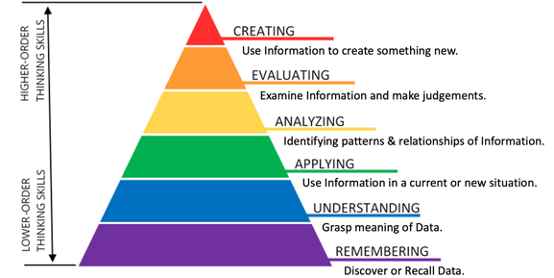
    Bloom’s Taxonomy & Critical Thinking Go Hand In Hand
    Bloom’s Taxonomy is a method created by Benjamin Bloom (1965) to categorize the levels of reasoning skills that students use for effective learning. The framework brings one through a thought process of analysing information or knowledge critically. It begins with a set of lower order thinking skills knowledge and levels up to seek more information based upon a series of levels of questions and keywords that brings out an action on the part of the student.

    It is Simply A Structured Way of Thinking

    Critical thinking is all about having a structured approach from the very beginning of our thinking process right up to communicating the idea, conclusion or even an opinion.

    Firstly, build AWARENESS by STEP I & II:

    (I) Understanding the Objective
    Our utmost priority here is to gain clarity of what is the objective of the task at hand. “What is expected out of me ?”. Without clarity, we end up doing a lot of our re-work because the initial work was misaligned with the objectives. This happens more often than not – so taking that few minutes to clarify the task at hand might save you a few days of re-work.

    (II) Organising information
    It is now no longer an issue to get data if you know where to look. Firstly, understand that there are two ways to look for data – by asking another person or doing research. The second part is to select the right data – what stays in your focus. Always look for data that is aligned with your objective and within the context of the topic. Answering the What, Why , Where, When questions will give you a clear overview of the topic or situation.

    Once awareness is present, we run an ANALYSIS through STEP III & IV:

    (III) Structured Reasoning
    Many people provide opinions but often have weak or don’t have supporting reasons. There is also a lot of data being provided, but without context, the data might not be useful or might lead us to the wrong conclusions. At this part, it’s important to question the data or opinions and the person providing the opinion or data must provide supporting reasons or context. *Tip: Use “WHY” & “HOW” questions to get the reasoning!

    (IV) Considering Evidence
    While people may produce reasons (arguments), we need to see if evidence backs up the reasoning. It usually comes in the form of tangible data, expert opinion, proven research and statistics. The strength of the evidence is tested by the credibility of the source that it comes from. Just any evidence from the internet or a person won’t give you a solid argument.

    Now,  we take ACTION by performing Steps V & VI: 

    (V) Evaluating the Reasoning
    Once all the reasons (arguments) are populated with evidence, it’s time to evaluate which reasons (arguments) should be considered. Ideally there should at least 2- 3 data points from different sources that supports an argument. This ensure there is no bias or skewed data. The strongest arguments are the ones that you will accept as part of the conclusion and moving towards the next step.

    (VI) Deciding on a Conclusion
    Based on Step I: “Understanding the Objective” stage, you can decide on the conclusion. Depending on the topic or situation, the conclusion can be different. Decide on the conclusion based on arguments backed by solid evidence. Failure to do this will result in your conclusion being doubted or rejected during cross examination.

    Lastly, make an ANNOUNCEMENT by the final Step VII:

    (VII) Communicating the Conclusion
    A step that is omitted from most critical thinking models is the whole area of communicating your findings. A great critical thinker is able to communicate their thoughts in a concise and systematic manner. If you stakeholders are unaware of what you have done, you do a disservice to the effort and thinking you’ve put in. So communicate it out in whatever format you see fit.

  • Dealing With The Aftermath Of 2020 (Part 1)

    Dealing With The Aftermath Of 2020 (Part 1)

    Written by: Kerry Wong

    It has only been a little over six months since the year started, but 2020 has exceeded all reasonable expectations. Continuing from 2019, the devastating Australian wildfire was the first large scale crisis of 2020 that dominated the world’s attention. Shortly after that, WHO officially declared Covid-19 as a pandemic and countries began implementing various forms of lockdowns to contain the spread of the virus.

     The magnitude and speed of collapse in activity subsequently caused the world economy to suffer, and both the International Monetary Fund (IMF) and the World Bank have since issued statements that the world is facing its worst economic downturn since the Great Depression in the 1930s. There has also been a movement against police brutality and discrimination across the globe. Honestly, it feels like 2020 is an insanely tricky hidden level I stumbled upon in a game, with boss characters popping up one after another and I am neither equipped nor prepared.

     In this article, I want to explore the impact of the recent events on millennials and Gen Z as consumers through my perspective as a millennial.

    Economic Downturn and Change in Spending Behaviour

    As the world is collectively suffering a severe recession, the global unemployment rate has soared within the past few months. Accounting for a third of the workforce and falling within the younger end of the spectrum, millennials and some GenZs are, unfortunately, the disproportionate holders of the kind of positions disappearing the fastest. On top of that, as most millennials began entering the workforce around the time of the previous financial crisis, most were unable to accumulate wealth and gain the financial security the previous generations enjoyed. As job security is uncertain, millennials are now more likely than ever to be careful with their spending. While they are known to be willing to splurge more on conveniences and comfort, non-vital or impulse purchases should significantly reduce as priority will be focused on surviving and prepping for the unknown.

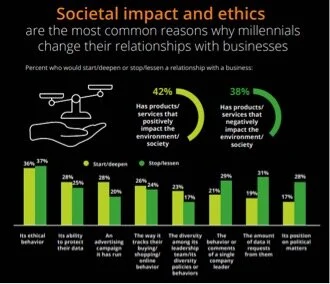
    However, that does not mean that they would entirely give up on all conveniences and comfort. Besides deciding whether a purchase is necessary and the price is justified, millennials and GenZs will likely be more selective with who they decide to do business with as well, especially if there are similar products with similar price points from multiple companies. According to the 2019 Deloitte Global Millennial Survey, millennials and GenZs tend to speak with their wallets. They are willing to start and stop relationships with a business for very personal reasons. The figure below shows some of the reasons why they have started or ended a business relationship.

     Source: Figure 9 – Deloitte Global Millennial Survey 2019
    Source: Figure 9 – Deloitte Global Millennial Survey 2019

    As storytelling is becoming more prevalent and used to engage consumers, a product or service is no longer seen as a standalone offering, and younger consumers are now considering all aspects of the company. They understand that if they want companies to change, the best way to do so would be to stop their relationship and hit the companies where it hurts the most, their bottom-line, as continuous buying would only reward the behaviour and perpetuate the situation.


    Heightened Sense Of Responsibility Towards The Environment And Society

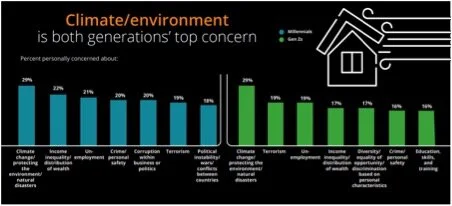
    As can be seen in the figure below, the top personal concerns for both Millennials and Gen Zs is climate change and protecting the environment. With the loss of more than a billion individual animals and thousands of native flora during the Australian wildfire and the heart-breaking imagery and videos shared across the internet, millennials and GenZs are likely to be more concerned about the environment than ever. It is also not comforting that we seem to come across more record-breaking climate phenomena every year, such as “Hottest-Ever Year for The Planet’s Atmosphere” or “UK’s Wettest February On Record Since 1862”.

     Source: Figure 2 – Deloitte Global Millennial Survey 2019
    Source: Figure 2 – Deloitte Global Millennial Survey 2019

    In a survey conducted by YPulse pre-pandemic, 54% of the respondents said that they regularly worry about climate change and 67% of them said that they had already changed some of their behaviours because of it. Even as the pandemic and quarantine are ongoing, young activists are bringing climate strikes and protests online, and many are still having discussions about it. They obviously will not be forgetting about it anytime soon, even in a post-pandemic world.

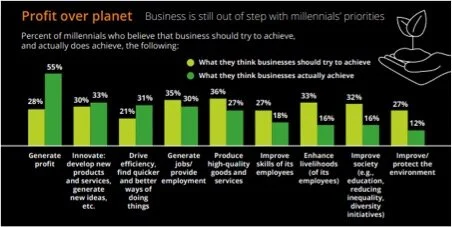
     Besides climate change, millennials also believe that businesses have a responsibility to improve the livelihood of their employees and improve society, on top of running the actual business. The figure below provides some statistics on how millennials perceive companies. As we have observed how the tragic death of George Floyd has sparked a global movement against police brutality and social injustices, it shows that not only are millennials and GenZs active and vocal about issues directly impacting them, but they are also willing to engage on behalf of people who cannot do so for themselves. Growing up with the internet, millennials and GenZs have had access to different viewpoints, cultures, and resources from a much younger age, which have allowed them to be more fluid in the way they perceive the world.

     Source: Figure 4 – Deloitte Global Millennial Survey 2019
    Source: Figure 4 – Deloitte Global Millennial Survey 2019

    What Should Businesses Do?

    First off, it would be a good exercise for a company to evaluate their values, internal processes and see whether it aligns with the priorities of millennial and GenZs. Assuming that a company have evaluated their values and internal processes and made any necessary updates or changes, the next step would be for the company to communicate it to the public. At this stage, companies can incorporate some gamification to engage the consumer further and motivate them to select their company over their competitors.

    The 2 core drives of gamification I would be touching on would be Epic Meaning & Calling and Social Influence & Relatedness. Epic Meaning & Callingis the Core Drive where a person believes that they are doing something greater than themselves or they were “chosen” to do something; while Social Influence & Relatednessis the Core Drive that incorporates all the social elements that drive people such as mentorship, acceptance, social responses, companionship, as well as competition and envy.

     An example of a business that has incorporated both core drives in their brand is Body Shop. By announcing and promoting their various endeavours such as their “Forever Against Animal Testing” campaign and “Community Trade”, their commitment to trade fairly with suppliers and ethically source ingredients, they have essentially attached a world mission, an epic calling, to their products. In an industry where these are common issues, which some people are genuinely against and concerned about, the idea that buying your skincare products from Body Shop will help support the community is extremely motivating.

     Besides that, as social creatures, we are very much influenced by what our peers feel and think about us. When we perceive a behaviour to be a widely accepted social norm, we tend to have a stronger urge to do the same as we want to be part of it. Referring back to Body Shop, if more people around you start using the products, and talking about the causes and impact it has on society, it will create a compelling situation that will motivate you to look into the brand as well.

     However, with that said, while gamification can assist with getting a consumer engaged and more motivated to check out your brand, if your product is of bad quality or you were not transparent and honest, millennials and GenZs will call the bluff and walk away. Companies need to walk the talk.

     Stay tuned for my next article as I will be exploring the impact of the recent events on millennials and Gen Z as employees.


    References

     https://www2.deloitte.com/content/dam/Deloitte/global/Documents/About-Deloitte/deloitte-2019-millennial-survey.pdf

    https://www.ypulse.com/article/2020/04/22/climate-change-will-still-matter-to-gen-z-millennials-heres-how-we-know/

    https://www.inc.com/peter-economy/a-new-study-of-150000-millennials-revealed-that-they-have-these-10-surprising-things-in-common.html

     https://www.forbes.com/sites/ankurmodi/2019/12/26/the-untold-side-of-remote-working-isolation-and-lack-of-career-progression/#3a7b3f0e68c7

  • The Realities of Remote Working during a Pandemic.

    The Realities of Remote Working during a Pandemic.

    Written by: Bryan Woo

    Amidst the Covid-19 pandemic, several governments across the globe have implemented some form of quarantine order in their respective countries, to minimize the spread of the disease. Malaysia is no different, as our government has issued a Movement Control Order (MCO), reinforcing stringent social distancing amongst its citizens in order to cope with this pandemic.

    As a result, many organizations have no choice but to adopt compulsory remote working into their work culture. To say that this change in working style and environment has been disruptive would be an understatement, as many employees have their fair share of struggles balancing between work and home commitments, all while in the confines of their own homes. 

     At the time of writing, we are well over 3 months since the MCO has been implemented. Throughout this period, we have been receiving requests from clients of various backgrounds on solutions that may help their employees cope with their new working environments. 

    With that being said, let’s take a look at some areas that will heavily be impacted by long-term, compulsory remote working and what can be done to help individuals better adjust:

    Productivity & Engagement

    Workplace productivity typically describes the amount of work your staff can do within a certain number of hours or amount of labor cost. Most established organizations would have set up ways to measure and track productivity in their workforce, including staff who primarily work remotely. Furthermore, it is important that these measures are implemented in a manner that is within an atmosphere of trust and let employees feel that they are not being spied upon.

    Unfortunately, even the most sophisticated measures can still be challenged by an ongoing pandemic, causing many organizations to be concerned with maintaining productivity as well as employee engagement. As the lines between work and non-work hours begin to blur, many firms will be at substantial risk of long term employee burnout. Research has shown that employees will feel that they are compelled to always be responsive to work-related duties, even if it is not urgent (1). This may be further amplified due to ongoing worries over COVID-19.

    With that being said, our team at Think Codex has identified key areas of productivity that play a crucial role in keeping employees engaged with their work while not sidelining their mental and physical wellbeing: Clarity, Routine, Focus and Wellness

    i) Clarity

    When people are unclear, time and effort are wasted. Ask yourselves, are you able to set clear goals with your team? Are these goals being measured and to what extent? Daily? Weekly? And lastly, what is being done to keep employees accountable and transparent to their goals?

    Having a system that states what is expected of employees on a daily or weekly basis will ensure that goals are being measured in a clear and concise manner. 

    ii) Routine 

    Clear routine gives a sense of purpose as a motivator so that employees understand what their objectives are for the day. Furthermore, this helps them better plan out their workdays and set clear distinctions between hours dedicated to work commitments and hours solely for rest and family. 

    Granted, it will take some time for many individuals to ease into a routine, especially those with demanding family responsibilities. That is why a strong support system must be made available to help these individuals settle into their new routines with minimal complications.

    iii) Focus

    People who are not focused end up spending their time doing anything but their most important work. Hence, it is important that boundaries are set in place to minimize distractions. It can be as simple as setting up physical boundaries such as dedicating a room or a spot at home solely for work purposes and nothing more.

    Aside from this, organizing work based on priority will allow individuals to accomplish their most important tasks in an order that best fits their schedule. 

    iv) Wellness

    It has become increasingly common for many organizations to prioritize employee welfare, thus implementing healthy workplace practices to help foster a culture of wellness. Unfortunately, in the case of remote working, this can sometimes be often overlooked mostly due to distance and a lack of visibility amongst employees.

    That is why it is crucial for employers to encourage a culture of support, where employees are able to rely upon and communicate with one another when needed as well as emphasizing the importance of self-care practices. After all, good work is associated with better physical and mental health, and even less absenteeism. 

    Team Dynamics & Collaboration

    In any work setting where shared goals are the norm, team dynamics can either make or break an organization. Because each member is reliant on each other for success, it is imperative that clear communication as well as equal participation are present in a team, so that a culture of collaboration can be fostered.

    However, employees who belong in full-time remote teams may struggle as they rarely meet up in person, yet often work on multiple shared projects together. Furthermore, efforts to collaborate within remote teams are often subjected to virtual distance, in which an over-reliance on smart, digital devices to communicate may lead to teams disconnecting (2).

    With all this in mind, we can see that there are two main factors at play in shaping effective remote working teams: Communication and Team Identity.

    i) Communication

    Workplace communication is an uncommon challenge in many organizations, more so in the case of remote working. Any team that lacks effective communication will hinder efforts to achieve collaboration and productivity. Fortunately, there are some best practices that we can refer to, in order to minimize poor communication.

    Firstly, it is highly recommended to establish communication norms by being explicit about how your team should communicate. Doing so will not only remove the ambiguity that so often surrounds workplace communication, it also provides a helpful guide on how team members are expected to interact with each other. Aside from this, organizations can even take a step further by incorporating virtual “water cooler” sessions by allowing team members to dedicate time to talk about non-work related matters. These can include things about their interests or even to check up on one another.

    Aside from this, remote teams will benefit from identifying mediums/tools to best promote communication and collaboration. Not only will it provide an outline of what kind of messages should be sent through which mediums (e.g. emails, WhatsApp, etc.) , but also prevent team members from being bombarded and overwhelmed by multiple work messages from too many channels.

    Lastly, organizations can also look into channels that reduce a sense of distance among team members, such as switching remote communication to regular video calls, which may be better for establishing rapport and creating empathy.

    ii) Team Identity

    When people feel a sense of community, they are more comfortable reaching out to others and more likely to share knowledge. Hence, team members who share a strong team identity will encourage a culture of trust and support among its members.

    The first step to achieving a strong team identity is to clearly define and establish a shared goal. This can be done by clearly defining their goals, timeline as well as the level of authority among team members in relation to a project. Doing so will encourage a sense of unity as well as the accountability that will help push teams to succeed. This will also make developing processes to help team members keep each other in check much easier. 

    Naturally, having a strong team identity can encourage more collaboration among team members through idea sharing and brainstorming to accomplish a common goal, providing everyone an avenue to equally participate. Furthermore, this will provide an avenue for employees to build relationships, communicate well and resolve conflicts creatively, which can have a major impact on team collaboration. 

    As the Covid-19 pandemic rages on, many organizations are forced to be agile in order to create opportunities during this time of uncertainty. We at Think Codex are no different. In fact, our newly developed gamified digital programs are created with the sole purpose of helping organizations address the challenges presented in this article. If you find this relevant to your organization, please contact us at contact@thinkcodex.com.

    We look forward to working with you and helping your organization overcome whatever challenges this pandemic might bring to your workforce. 


     References:

    1.    https://hbr.org/2020/04/3-tips-to-avoid-wfh-burnout

    2.    https://virtualdistance.com/

  • If COVID-19 is A Game

    If COVID-19 is A Game

    Written by: Gabriel Goh

    Before you start reading, imagine yourselves in the future. The concept written here is hypothetical.   

    Time Travel 

     In 2047, Covid-19 has simmered down and as many real-life epidemics and tragic incidents, games are created based on the real events that happened in the past so that people could learn from these incidents even though they do not live through them. In 2047, there is ONE online game that always remains #1 on the Top 10 Games Chart since the first day it was published.   

    The game would be known as “Pandemic – COVID19”.  

    This would a cooperative game that requires players to work cooperatively to stop the spread of the coronavirus. In this game, each player will be given a region of their own to manage. To win the game, they will need to discover a cure in getting rid of COVID-19, while minimising loss of life and maintaining citizens’ well-being in their respective regions.

    Now, let us dive in and see how this game would be the number one game, hypothetically. You might think it’s the game mechanics that will be making it a top seller. You’re partially correct, but what would play a bigger role are the core drives that are being implemented in the game.

    What is core drive? According to Yu Kai Chou’s Octalysis framework, 8 core drives motivates human behaviours. They are the “why” that makes us perform certain actions. In this game, you will discover 3 core drives, namely Loss & Avoidance, Social Influence & Relatedness and Empowerment. 

    Core Drive 8 – Loss & Avoidance 

    This is the drive where people are motivated through the fear of losing something or having undesirable events transpire. This core drive is intended to motivate players to keep playing the game.

    Source: Loss & Avoidance Design: Ultimate Loss vs Executable Loss by Yu-Kai Chou

    In this game, COVID-19 (the antagonist) is contagious and it spreads rapidly from one person to another. It will demands the players to constantly log in to the game so that they could perform in-game actions to ensure the citizens in their regions are safe. Other than COVID-19, players would also need to manage social issues such as groceries hoarding and rebellious citizens. 

     If they don’t return to the game, they will lose when the impact of COVID-19 is accumulated and becomes out of control. These incidents might intrinsically motivate the players, compelling them to proactively be involved in the game to avoid these negative outcomes. 


    Core Drive 5 – Social Influence & Relatedness

    This core drive incorporates all the social elements in driving people, including competition, companionship and so on. As humans are social animals, this core drive works well by tapping into our desires to connect and compare with one another. 

    In the game, there will be a real-time tracker that shows the number of infected citizens and the last thing players want is to see their regions appear on the top of the tracker. Due to social pressure, they are to invest more time and effort in making sure they are off the tracker. 

    Alternatively, the tracker is also be used to motivate the players to offer help. As humans are empathetic creatures, they are naturally driven to support those who are struggling to perform well in the game based on the tracker. 

    Besides that, there is also a forum where players could exchange tips on how they manage their regions with one another. At this point, they could receive different forms of help to eradicate the disease that could not be achieved on their own. Players are less likely to lose interest once a sense of community is achieved in this game. 

    Source: Detroit Institute of Arts


    Core Drive 3 – Empowerment of Creativity & Feedback 

    This core drive emphasises on “play”. Players who are driven by this core drive tend to be creative and always experiment with new ideas through trial and error. 

    This game will allow room for creativity as players get to bring their imaginations to life. Players get to be creative in coming up with different rules & regulations to keep their regions safe from social issues and prevent the spread of COVID-19. Additionally, they will have the chance to invent and experiment with a variety of technologies in discovering a cure for the virus. 

    However, how will they know their actions are effective? Fortunately, a comprehensive feedback mechanism is designed in the game to answer this question. With the feedback mechanism, players will be constantly driven in coming up with improvisations to replace methods that don’t work based on the information derived from the real-time tracker, citizen panic level, region status and other indicators! 

    This will be a great game as it taps into players’ innate desire to create and affect the environment around them through their imaginations.

    Source: Why Giving Feedback Matters by Lucidchart

    Conclusion 

    What keeps the players engaged in the game isn’t really all about the game mechanics, but the core drives underlying them. This game serves as an example on how designers utilise the power of gamification to keep players engaged all the time.  

     Will you give this game a try? 


  • Flow In Learning Gamification

    Flow In Learning Gamification

    Written by: Edward Teoh

    Minute upon minute, and hour upon hour, the undiscerning video gamer lost track of all sense of time, hunger, thirst and fatigue. It is already midnight, his face lit only by the morphing screen in a dark room, yet nothing else in the world seemed to matter to him.

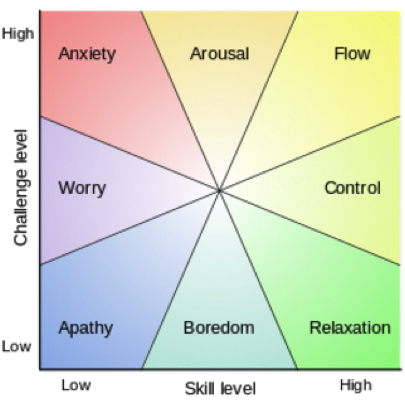
    Fascinated by the way artists lose themselves at work– their singular focus at producing art, how both brushstroke and painter merge as one, and how they lose the perception of time; Mihály Csíkszentmihályi coined the term ‘Flow’ in 1975. Flow is often described as a state of hyper-focus, when one is fully immersed in performing a task at hand. The Flow state is achieved when both the ‘skill level’ and ‘challenge level’ of a task is matched (at a high level).

    Source: The Experience Fluctuation Model by Massimini, Csíkszentmihályi and Carli (1987)

    Games are a powerful medium through which the flow state has been induced successfully without fail, for millennia. The sweet-spot of converging the ‘challenge level’ of the game with the player’s ‘skill level’ is continually achieved through the “scaffolding” phase– where the game difficulty is ever-marginally increased to match the player’s improved skill levels. The neurochemistry at work in our brain’s hardwiring makes us indefensible towards the highly addictive elements of operating under game-like environments.

    We have come a long way in our ability to create fun and addictive games, helping people tap into the Flow state. This led to the intuition and realisation that we could harness the power of games, and “gamify” other areas that matter to us as a society. Gamification has in recent years experienced an exponential rate of adoption in various areas, as people can now be self-motivated (in the Flow state) to perform certain actions to achieve desired outcomes– an ‘autotelic’ response.

    One area of gamification that has gained traction can be found in the corporate training and the learning & development area. Various gamified learning solutions were designed to simulate the real workplace and business situations, to allow both business leaders and team members to learn experientially through gamification. These gamified learning solutions temporarily extract workers from their day-to-day work environments, and allow the participants to play, test out ideas and put into practice newly learnt theories. This playground of sorts allows participants to play without fear or restrain, as the simulation mitigates the risks incurred by making mistakes and nullifies the opportunity cost of making wrong decisions.

    By gamifying learning and development in business, the participants/learners can continually improve on their soft skills and technical skills. Gamified learning solutions serve as a medium that allows them to tap into the Flow state by arriving at the sweet-spot– by converging the ‘challenge level’ of the game with the participants’ prevailing ‘skill level’. The solutions can also be designed to simulate a marginally tougher and more challenging business environment, causing the participants to progressively learn and pick up more sophisticated skills.

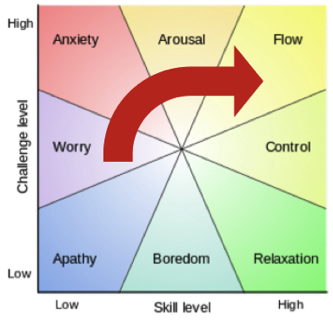
    Source: The Experience Fluctuation Model by Massimini, Csíkszentmihályi and Carli (1987)

    Participants usually begin with an emotional state of ‘Worry’ when they are introduced to the gameplay in a learning simulation. At this stage, guidance is required to teach participants how to play through a series of demo rounds. Throughout the gameplay, participants will increase their level of mastery through course correction and iteration. The simulation difficulty can then be increased in tandem, so that participants move on to higher experiences of ‘Anxiety’, ‘Arousal’, and lastly, ‘Flow’.

    Under the Flow state, participants will be hyper-focused to learn and tackle challenges in various areas of business, such as strategic thinking, problem-solving, sales and marketing, culture and others. This is a highly valuable state where learners become self-motivated to learn. With each successive round comes the opportunity for participants who are “in the zone” will reiterate, tweak and perform ideal business practices and make decisions. This warrants the transferability of learnings from within the simulation, into the real workplace.

    After all, what is the point of putting valuable people through endless training and wasting countless manhours, without seeing actual and measurable business results? As the business mogul, Mary Kay Ash once said “A company is only as good as the people it keeps”, the following may also be true– “A company is only as good as its investment in people is”.

  • Our New Gamified Learning Solutions!

    Our New Gamified Learning Solutions!

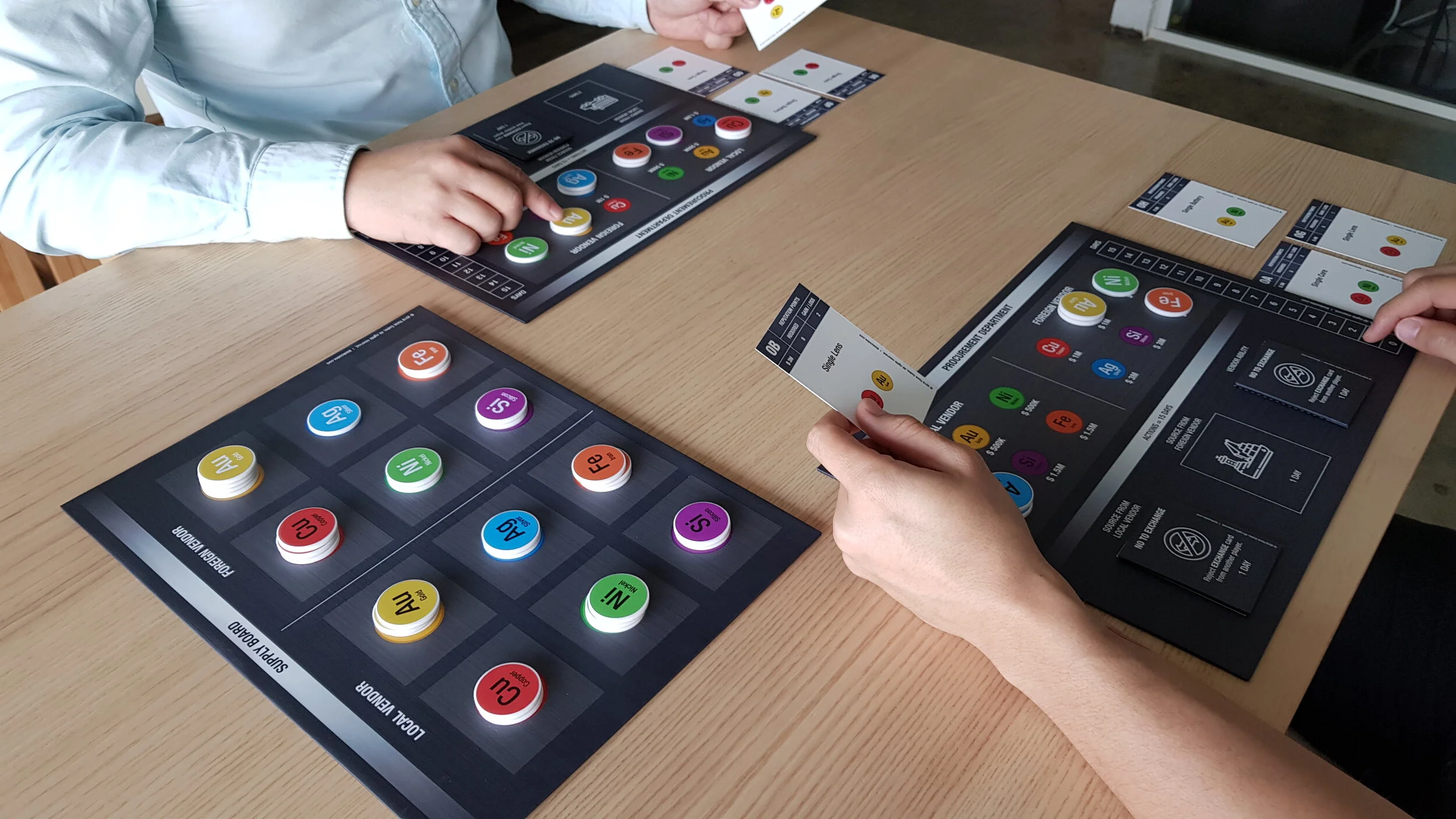
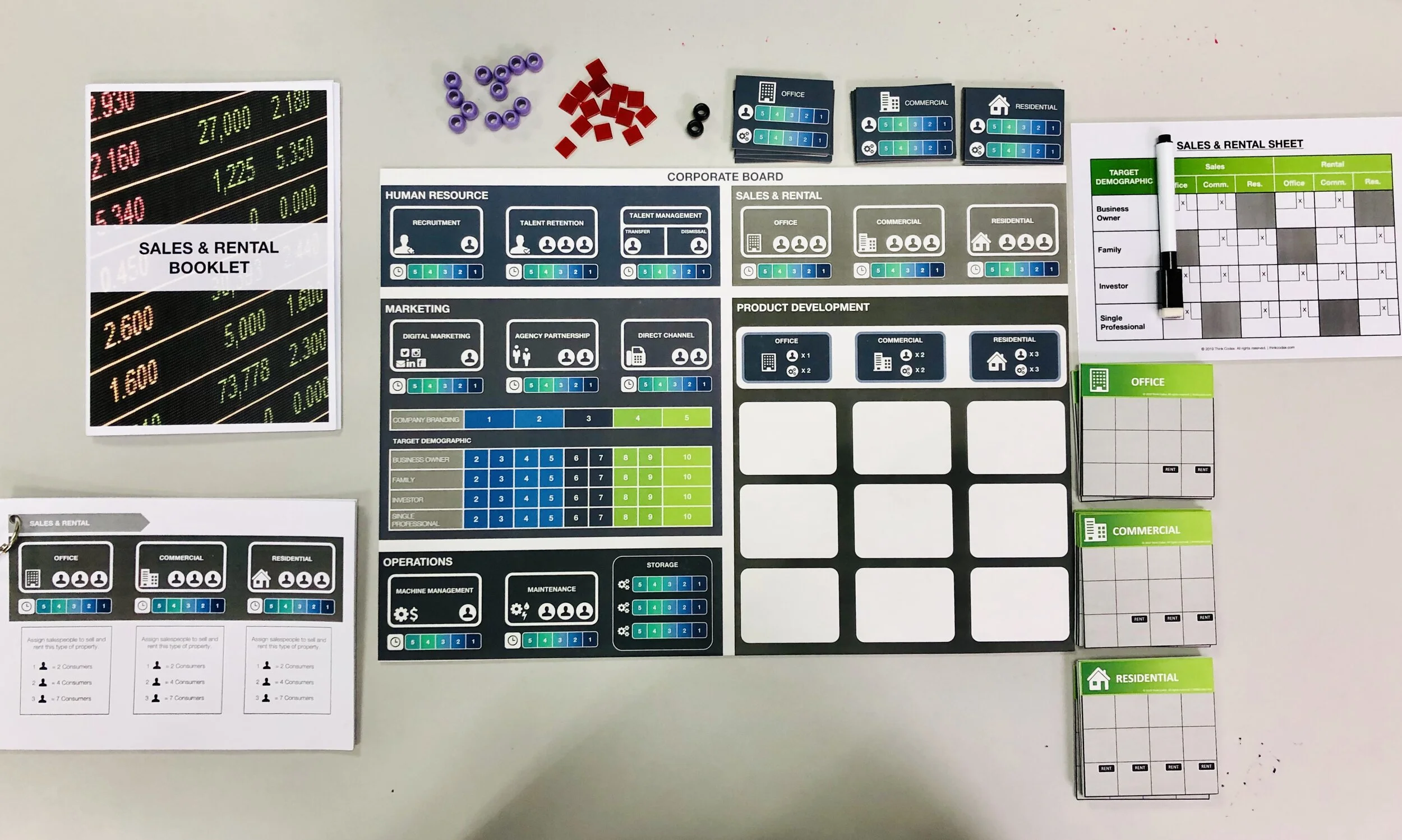
    Our team has been hard at work in 2019 coming up with new gamified solutions for corporate training in subject matters such as Performance Management and Business Acumen which are vital for an organisation.

    Below are the details of our new offerings:

    THINKCRUCIAL
    Performance Management Simulation

    THINKCRUCIAL is set in the smartphone industry where each team’s goal is to develop the best smartphone in the market by managing performance through effective coaching methods. This is a competitive simulation where participants are placed in teams where they compete with each other to be the best smartphone manufacturers in the market.

    In THINKCRUCIAL, participants learn emotional awareness in order to maintain employee well-being before, during & after the performance management process by utilising the Emotional Intelligence Model


    THINKDISRUPT
    BUSINESS ACUMEN & FINANCIAL MODELLING SIMULATION

    THINKDISRUPT is a competitive simulation where teams are split into 2 categories: big corporates and disruptors, which are then pit against each other to develop and grow their respective businesses and manage their financial health while navigating through an ever changing environment.

    In THINKDISRUPT, participants are able to analyse and understand financial statements, effectively evaluate the financial impact of business decisions, understand the key elements of Business Acumen, including 
    strategy, financial, marketing and sales, operations, and people management.


    We strive to produce world-class gamified learning solutions to empower businesses and organisations across the region as we continue to bring gamification toe the forefront in corporate training.

    Head over the Contact Us page to schedule a chat with us. To know more about our other products click here

  • Gamification in Motivation

    Gamification in Motivation

    Written by: Sufiz Suffian

    Gamification has become a buzz word as of late with many growing interest in the subject, particularly on how gamification could be injected into other areas, be it in learning, product and service design, and more. This has a lot to do with it being closely associated with increasing engagement and fun. But what makes gamification so engaging and fun in the first place? The very idea of gamification doesn’t necessarily mean creating a game, as many would mistakenly believe. If that was so, it wouldn’t be much of a surprise as to why people would find it that enjoyable in the first place. Rather, gamification by definition is taking engaging elements in games and applying them in a different environment. So not exactly a game, yet it is game-like? The best way to possibly approach this is to understand what makes something engaging in the first place.

    An “engaged employee” is said to be someone who is fully absorbed by and enthusiastic about their work and so takes positive action to further the organization’s reputation and interests. In other words, engagement is all about motivation. So, to properly engage people, it is imperative that we understand what motivates people to begin with. Motivation can be broken down in different ways but for all intents and purposes, we will focus on two variances of motivation: extrinsic and intrinsic motivation. When a person is extrinsically motivated, their behaviour is motivated by an external factor pushing him/her to do something in hopes of earning a reward or avoiding a less-than-positive outcome. On the other hand, when a person is intrinsically motivated, their behaviour is motivated by their internal desire to do something for its own sake. Among the two types, most would obviously prefer the latter. Yet if we look at the foundation of today’s world, most of it is built on extrinsic motivation.

    Consider the industrial revolution, where technological developments played a pivotal role in fostering the growth of industry, from railroads to steam engines to electricity. But with new advancements came a new set of challenges, how can these be best managed and maintained for sustainable growth? Businesses were being run haphazardly and incredibly inefficiently. To combat this, a gentleman named Frederick Winslow Taylor invented “scientific management”. In essence, scientific management is a theory of management that analyses and synthesizes workflows. Its main objective is improving economic efficiency, especially labour and employee productivity. The heart of it all? Extrinsic motivation. It promoted the idea of “a fair day’s pay for a fair day’s work”. However, as the years went by and new innovations appeared on humanity’s doorstep through the efforts of brilliant individuals and companies, resulting in a more complex world and increasingly sophisticated inhabitants, we find that we are still stuck in the shadow of scientific management and continue to focus on rewarding the good and punishing the bad.

    This incompatibility comes from the change in how we do work today compared to when scientific management first came into existence. Back then, almost all work was algorithmic where one would merely need to follow a set of established instructions down a single pathway to one conclusion. Today, most of these tasks are either outsourced to cheaper nations, automated, or made obsolete by other advancements in technology. Most of what we do at work today is heuristic in nature, where one would need to experiment with possibilities and devise a novel solution to most problems of today. Scientific management’s carrot and stick ethos works best for algorithmic tasks, but can impair heuristic ones. Some might think paying someone a large amount of currency to do any given task would motivate them significantly, but most often than not the opposite tends to occur.

    Studies have shown that paying or rewarding someone to do good deeds such as donating blood or volunteering would in fact reduce their motivation to do those things compared to when they were not paid to do them in the first place. Countless other studies and experiments have been conducted all over the world where one group of test subjects were given a reward to complete a series of tasks while another group was given no reward for doing the same tasks, and the results were all the same. Rewards impaired motivation. It simply took the joy out of doing the tasks, causing performance to suffer, foster short-term thinking, and sometimes even encourage unethical behaviour and cheating.

    Wikipedia, undeniably the largest encyclopaedia in the world, is free and created and edited by volunteers from around the world. None of its contributors were given financial rewards for their work despite billions of people using it in their own pursuit of knowledge and curiosity. As we’ve learned, rewarding these volunteers would probably lead to the downfall of Wikipedia. So why does intrinsic motivation drive us so much? To create masterpieces of art, to find cures to deadly diseases, and to create the next disruptive innovation? And most importantly, how can we inject intrinsic motivation into our workplace to increase engagement of our employees and managers? The answer lies in one word – Autonomy.

    Autonomy means acting with choice, be it choosing when to go to work, how to solve a problem, and where you do work. Having a sense of autonomy has a tremendous effect on individual performance and attitude. It promotes greater conceptual understanding, better grades, enhanced persistence toward challenges, higher productivity, less burnout, and greater levels of psychological being. In other words, autonomy is creating an environment where people can make their own choices freely, which is something gamification excels in. Sure, some choices they make may not yield the best results immediately. But in the long-term, they’ll make the right choices that work best for them. But with this much autonomy, surely there is room for abuse? Control is needed right? Control leads to compliance, whereas autonomy leads to engagement, and only through autonomy can we truly reach our full potential and even achieve mastery.

    So rather than creating more linear processes for employees to comply to, giving them more freedom to approach work however and whenever they prefer might be better (with some clear boundaries set of course) as this creates the right environment for intrinsic motivation and autonomy to foster and spread.

    Sufiz Suffian is the Chief Business Officer of Think Codex, a Gamification Consultant & Trainer.

    You may reach out to him via https://www.linkedin.com/in/sufizsuffian/

  • ACCA Article: The Gamification at Workplace has Benefits for Everyone.

    ACCA Article: The Gamification at Workplace has Benefits for Everyone.

    Our CEO, Andrew Lau, was recently invited to give his opinion on gamification in an article published by ACCA about the benefits of gamification in the workplace.

    In this article, which includes opinions from other gamification gurus and experts, our CEO talks about the importance of psychology in gamification and how people have false information that gamification involves heavy digitalisation.

    “A lot of people think gamification is all about apps, board games and online stuff. But gamification is 80% psychology; the rest is game mechanics and dynamics,“ he says.

    Gamification is certainly a concept that can be applied in various subject matter depending on your intended goal. Our game-based learning used in business training is made to motivate employees and thus increasing the productivity of employees exponentially.

    Read the full article, written by David Ho, here.

  • Dto-lah (Sime Darby’s first experiential home-owning digital platform)

    Dto-lah (Sime Darby’s first experiential home-owning digital platform)

    Recently, we had the opportunity to work with Sime Darby, a leading property developing company in Malaysia on their new and innovative platform, DTO. DTO (pronounced as ditto) lets potential customers take charge of the property that they intend to own.

    Potential customers can choose to design their own future home by choosing the characteristics of the future property such as floor types, kitchen design, and all the way to the pavement of the property. We had the chance to work with Sime Darby and inject gamification into the app in order to increase the participants’ engagement level and also to make the tedious process of choosing the designs fun and addictive.

    We are proud to be involved in this project where we come out of our usual business of gamification in corporate training and L&D. Certainly a new challenge and an experience for us to increase engagement and overall reception towards the project.

    We wish Sime Darby all the best in the success of this project. Do visit their website at https://dtolah.com to experience the excitement yourself.