Author: andrew

  • Gamification In Fitness

    Gamification In Fitness

    TAPPING INTO THE CORE DRIVERS OF HUMAN MOTIVATION, CREATING BETTER ATHLETES.

     Written by : Shobana G

    Over the past 5 years, being an adrenaline junkie and someone who loves everything about fitness and sports, I found myself slowly evolving into the person I have always desired to be, in aspects that are beyond the four walls of the gym. This is what involvement in sports and fitness can do to an individual. For me, it has helped build desired habits, character, values and a mindset that enabled me to pull through different situations in everyday life.

    Now, let’s dive into my experience with a gamified intervention that got me highly engaged in my involvement in the gym as an athlete and how it played a significant part in keeping me motivated to perform better over time. 

    When I signed up at a Crossfit gym slighter over 2 years ago, I was introduced to a mobile application called Wodify, a fitness and gym management software that is designed to help gyms grow. Not only that, this function is made compulsory to all gym members and athletes to book workout sessions, keeping ourselves updated with notices from the coaches, tracking fitness performance and many more. 

    Based on my experience interacting with Wodify as a user, I have discovered that the adaptation of gamification in the functions and features of this app has generated an ability to trigger the core drivers of human motivation, as stated in the Octalysis framework which was developed by Yu-Kai Chou. The Octalysis framework talks about the 8 core drivers of human motivation namely, Meaning, Accomplishment, Empowerment, Ownership, Social Influence, Scarcity, Unpredictability and Avoidance [1]. The following gamified features of this app which will be discussed on revolves mainly around four of the core drivers which are Accomplishment, Unpredictability, Scarcity, and Social Influence.


    GUIDING DEVELOPMENT & PROGRESS WITH PERFORMANCE CHARTS
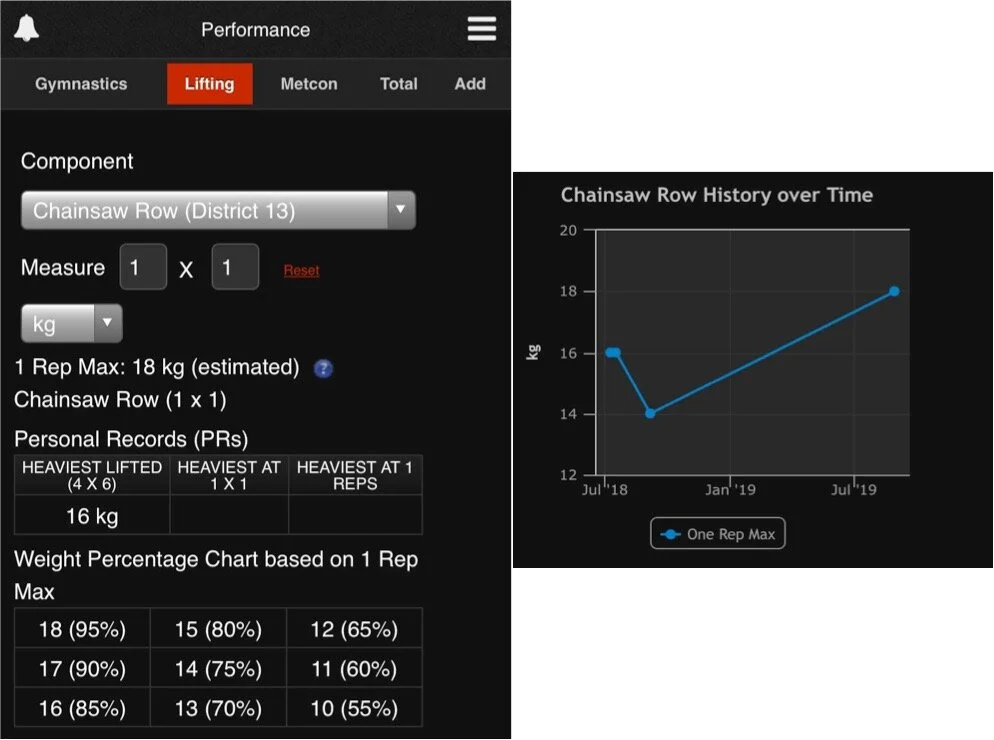
    Images on the left show the tracked performance of a specific exercise known as the “Chainsaw Row” 

    Development and Accomplishment is the internal drive of making progress, developing skills, and eventually overcoming challenges [1]. In most types of fitness activity, we perform so many different exercises and it is almost impossible to keep track of performance in every exercise by remembering them. Manually writing notes and numbers down can be time-consuming and the process of generating a performance chart from manually written notes is a cumbersome process. The best way to make tracking easier is to automate it [2]. Performance charts and other visual forms of measurement on gamified mobile apps show how an athlete performed in comparison with their previous results besides providing individual records. To have good control over certain things, tracking or keeping a record is important, just like how we have credit card statements to control financial expenditures. Gamification creates a sense of control among users, allowing them to decide which milestone to complete next. Likewise, performance tracking in fitness is crucial in ensuring development as it enables one to identify their strengths and weaknesses. On top of that, one of the most satisfying feelings is the feeling of making progress [2].

    BUILDING A SENSE OF ACCOMPLISHMENT THROUGH BADGES & LEADERBOARDS 
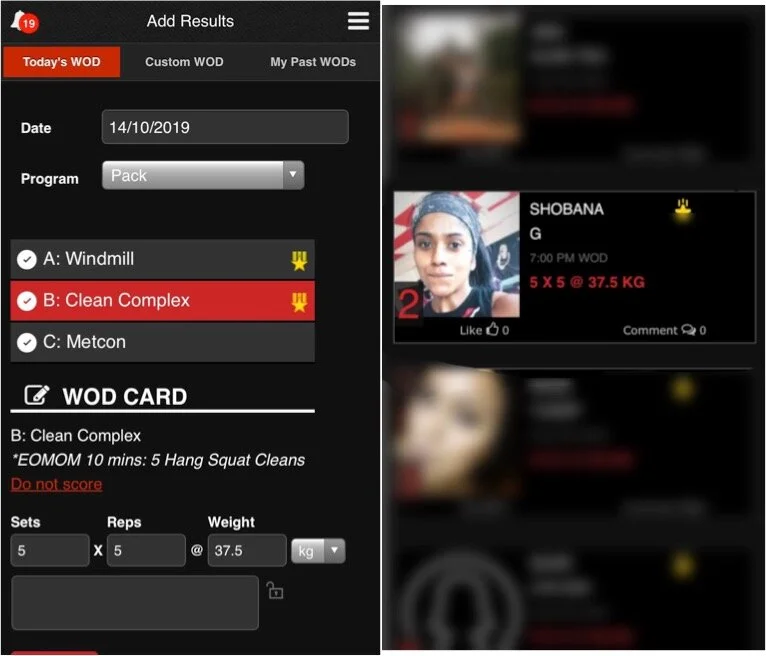
    Images above show a “Results” page that displays badges awarded to the user (athlete) and a leaderboard displaying the results of the users in the female category.

    Badges are a visual representation of the athletes’ achievements, in this case, a form a reward obtained when an athlete hits a “Personal Record (PR)” or in simpler terms can lift the heaviest weight in comparison to all the past lifts. A leader-board displays athlete rankings that defines which athlete performs best in the “Workout of the Day (WOD)”. Unlike performance charts that show the performance of one user within a certain period, a leader-board shows the performance of other athletes. Both badges and leaderboards are forms of extrinsic motivation which also creates a sense of accomplishment among athletes. This in return motivates every athlete to work harder and push boundaries to perform better in every training session. On top of that, it fosters competition among the athletes, the healthy kind. Leaderboards that display achievements of other athletes encourage individuals to accomplish more and compare their results with others, triggering the social influence core driver which will be discussed later on in this write-up.

    A NEW DAY, A NEW SET OF CHALLENGES – CREATING UNPREDICTABILITY & CURIOSITY 

    The image above shows a description of the Workout of the Day (WOD), programmed by a coach. 


    This feature on this app provides a view on what athletes would expect during the training session on a certain day. As the WODis only released past midnight every day, it creates unpredictability and curiosity in individuals who are anxiously waiting to know the“challenges and obstacles” they are about to face. Generally, this is a harmless core drive of wanting to find out what will happen next. If you don’t know what’s going to happen, your brain is engaged and you think about it often [1]. Speaking from my own experience and interaction with this app, there are days when I stay up till the clock strikes 00:00 merely to take a look at the WODor the latest would be one of the first things I do in within the first 30 minutes of starting my day in the morning. In my perspective, having this core drive triggered helps one prepare themselves mentally and physically before facing a certain challenge or task, which is indeed the desired habit to have as a fitness athlete.


    CREATING A SENSE OF URGENCY WITH SCARCITY 
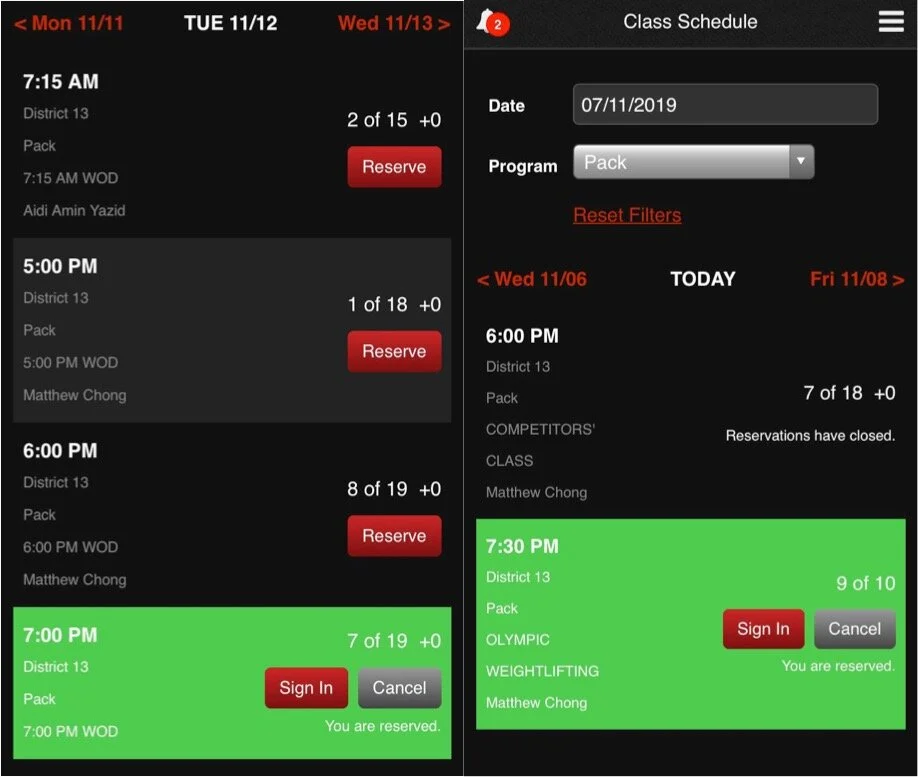
    Images above show the Class Schedule feature which requires reservation and signing-in.


    Moving on, let’s look into this feature of Wodify which allows you to book or “Reserve” your training sessions beforehand. Scarcity in an individual arises when there is something that a person needs but a certain need has a limiting factor to it. For example, all members of the gym can attend the workout or training sessions ONLY if there’s a reservation done and for every session, there’s a capacity limitation attached to it, besides a reservation cut-off time of two hours before the session. Those who fail to reserve their desired time slots will be denied participation. To avoid facing such situation, members are encouraged to reserve slots a day or two in advance. Scarcity creates a sense of urgency, which indeed is an applauded value or habit in a good athlete as it shows their commitment towards the sport and the desire to get better by committing to training sessions. In the words of Professor Todd May, when there is always time for everything, there is no urgency for anything. A life without limits would lose the beauty of its moments, and it would become boring [3].

    BUILDING THE COMMUNITY THROUGH SOCIAL INFLUENCE
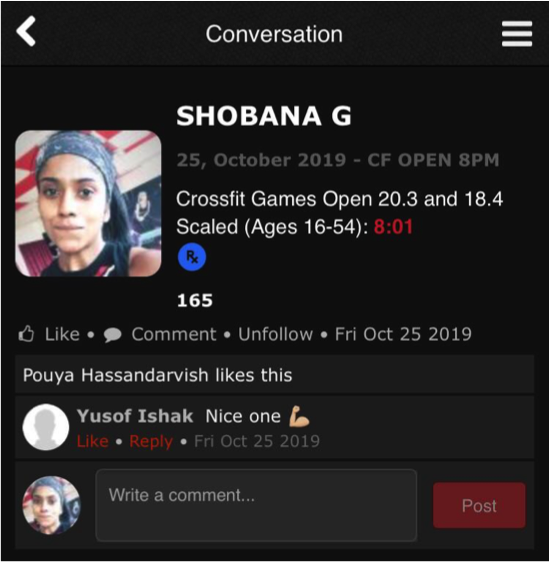
    The image above shows the interaction among the gym members based on the achievement of one person.


    Last but not least, this intervention has also tapped into the social influence drive as it allows peers to interact on the platform at the end of the workout session, especially once athletes have keyed in their weights, scores, timings, etc. This includes actions like posting a comment or “Like” the results of an athlete. Acknowledgement, “Likes”, positive comments or compliments from peers can be very empowering and motivating after a long hard day, what more if these positive comments come from your coach! This not only empowers the person on the receiving end but also the person who is executing the action. When you see a friend that is amazing at some skill or owns an extraordinary capability, you become driven to reach the same level [1]. Not only that, these types of interactions make up the building blocks of a strongly-knit fitness community. 


    To sum up, although gamification in mobile apps are often adapted by brands mainly as an effort to increase user engagement as a marketing tool, I believe that gamification has a greater positive impact towards the fitness and sports industry in terms of building motivation and a sense of discipline which at the end of the day forms desirable habits that makes a good athlete. 

  • 3 Great Examples of Gamification in Marketing

    3 Great Examples of Gamification in Marketing

    Written by: Kanes Kulanthavelu

    It is a no brainer that marketing is one of the most crucial elements of any organisation. Be it for profit or non-profit, marketing has been the driving force of many business success stories. Whether it’s for driving traffic to your site, lead generation, sales accumulation, increasing your market reach towards your intended target audience and even for brand building in general, marketing has been a centuries-old cornerstone for businesses to flourish.

     We however exist in an era where change occurs in a blink of an eye; what is important today may be gone tonight. Of course, this implies that the general attention span of your specific target market may be directly proportional to the rate of change. So the question is, how do you ensure your marketing efforts bring forth a lasting impact and audience engagement that withstands the test of time while accomplishing your intended objective?

     Enter Gamification. A revolutionary contributing factor that is a tried and tested tool to help boost your marketing efforts by distinguishing them from the crowd, to be the sole diamond among the stones. 

     In this article, we will look through a few gamified marketing campaigns that I feel has stood out and achieved its intended objective exceptionally. 

    But first, let us dive into what is Gamification in marketing. 

     What is Gamification in Marketing

    Gamification in marketing is the application of game elements that add an addictive ingredient into your marketing efforts. This is to ensure that your marketing campaign is more interactive which boosts up the engagement rate of the intended target market. In a survey done by Demand Gen, it found that 93% of marketers agree that interactive content is effective in educating its buyers compared to 70% who believed that static content does the job.  

     Now that we’re familiar with what Gamification in Marketing is, let us look at a few marketing campaigns that was carried out in Malaysia, and outside of Malaysia, that I believe has stood out amongst the rest. 


    McDonald’s (MCD) Elections

    Whether you are a fan of fast food or not, everyone knows McDonald’s. In recent times, McDonald’s Malaysia came up with its uniquely styled election campaign. In this campaign, diners get to vote for their choice of meals that are currently offered by McDonald’s for its Malaysian customers. The ‘candidates’ were McChicken, Quarter Pounder with Cheese, Double Cheeseburger and the famous Ayam Goreng McD. Between 13-26 June 2019, for every purchase that the customer makes between the four ‘candidates’, a vote goes to the voting meter on the McDonald’s website. This was a great way to get consumers riled up over which of its four contenders deserve the title of Malaysia’s favourite McDonald’s meal. From a marketing perspective, the genius of this campaign was that it managed to exponentially boost up the sales of its set meals.
    The average price of the McChicken set meal, the cheapest set meal out of all the four ‘candidates’ is around RM 7, and it was ‘voted’ by the diners by an astounding 400,000 times (approximately). I’ll let you do the math on how much total revenue was collected at the end of the election campaign. 

    Guerlain KissKiss Campaign

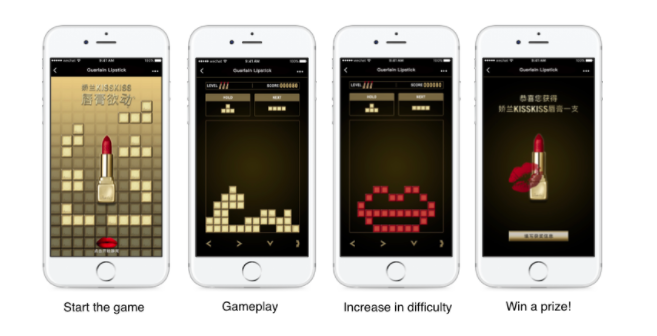
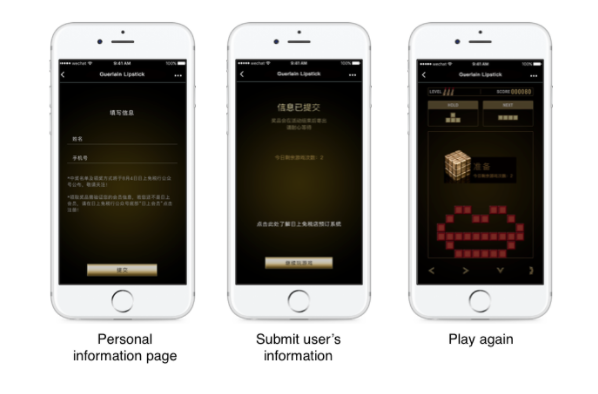
    In a recent attempt to introduce the concept of luxury brands to the youth in China, the luxury skincare and cosmetics brand Guerlain partnered up with Sunrise Duty Free to create a game similar to Tetris which appeared on Sunrise’s WeChat account. The objective of the game was to create engagement and awareness amongst the Chinese Global Shopper. This highly addictive game had a few levels where players complete the game across multiple levels, eventually leveling up towards an end goal. Towards the end of the game, players were asked to submit their information such as their name and phone number to enter a lottery for a chance to win a KissKiss Matte Lipstick. This helped Guerlain build a huge database consisting of potential customers. I have no doubt as to why it would be a successful viral campaign, especially when you are able to win a luxury brand make-up kit by just playing a game. Within 10 days of its launch, the highly addictive Tetris game had attracted 18,582 page views and 10,000 players.


    DTO-lah

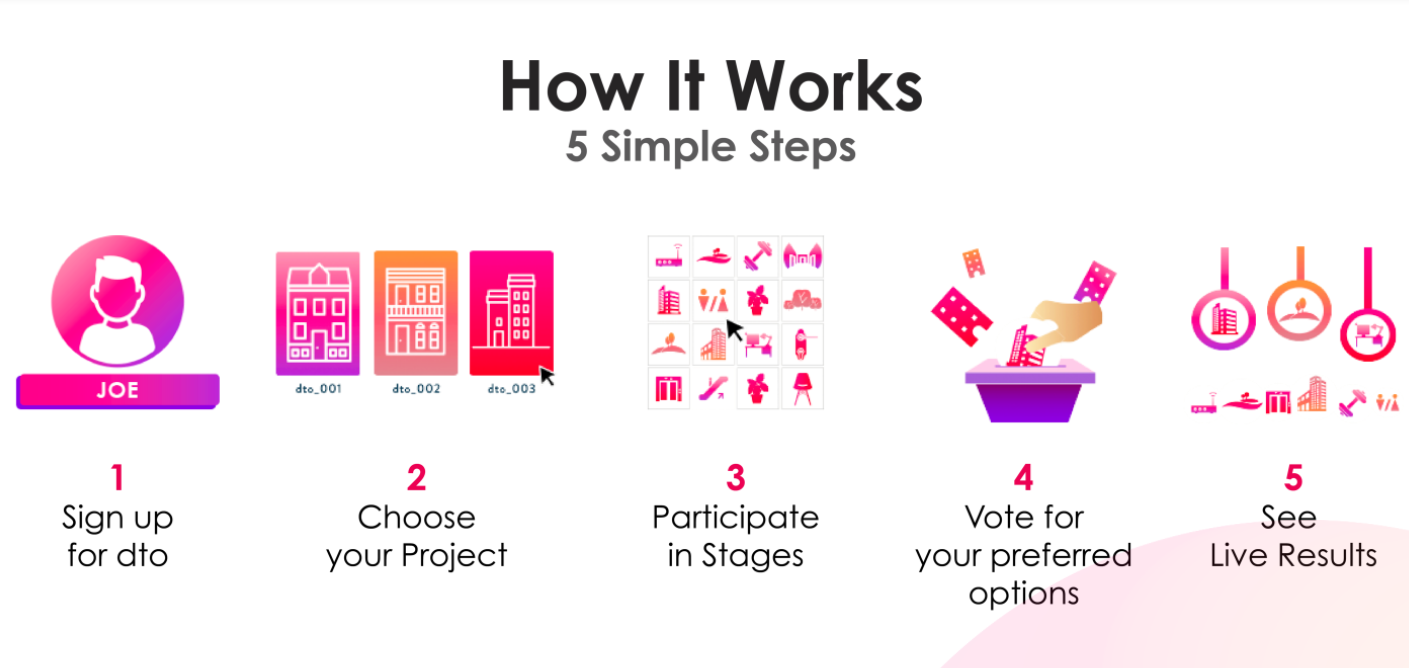
    Last, but certainly not least, Think Codex partnered with one of the leading property development companies, Sime Darby, to develop a project called DTO-lah earlier this year. DTO, which is the abbreviation for Design To Own, is a crowdsourcing platform where consumers have the intriguing ability to design their own house where they’d be moving into. This way, consumers have complete control and ownership over their choices, from the wallpapers, kitchen tile, bathroom sink and even the door design to suit their taste and liking. The most popular design will be implemented at the property itself! This is a one of its kind project that empowers first time homeowners to be involved in the process of constructing and dictating the creative element of their first property. 

    Find out more about DTO by visiting their website

    In conclusion, implementing gamification in marketing has proven to be an effective way of driving up engagement and interaction to your content. Its overall approach acts to enthusiastically engage and excite your target market, resulting in you hitting your marketing objectives more effectively. 

  • The Building Blocks Behind Gamification

    The Building Blocks Behind Gamification

    Written by: Bryan Woo

    Video games have been a big part of my childhood ever since I first held a video game controller. I vaguely remember countless late nights spent sneaking out to the living room, loading up some of my favourite video game titles and telling myself that I would go back to sleep once I finish this quest or defeat this final boss. Or so I said. 


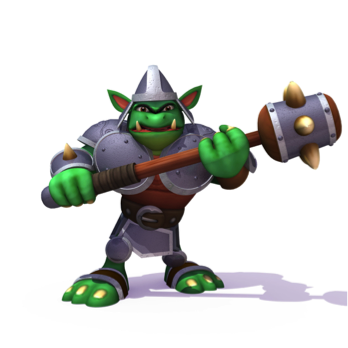
    Looking back, it’s funny how it would take a huge amount of willpower and convincing for me to engage in more “productive” actions, like studying or household chores but when it comes to playing games, it took no convincing of any sort. Fast forward a couple of years, I would come to better understand that I simply wasn’t motivated to do other things as much as I was motivated to beat Ghasty Gnorc from Spyro: A Hero’s Tail.

      (Ghasty Gnorc via Google Images)
    (Ghasty Gnorc via Google Images)

    Motivated being the keyword here. 


    The ability to tap into the power of motivation is why gamification has been recognized as an innovative and promising concept for a wide variety of industries in the past decade (1). The idea behind this is by utilizing various design elements from games as building blocks, and apply these to real-world scenarios to foster and maintain the motivation of its various users (2)


    That being said, to gain the most out of a gamified initiative, one can benefit from looking at commonly used game elements and diving deeper into the psychology and science (or as I like to call it, Psy-ence!) behind how these elements can motivate specific behaviours:


    Points and Badges

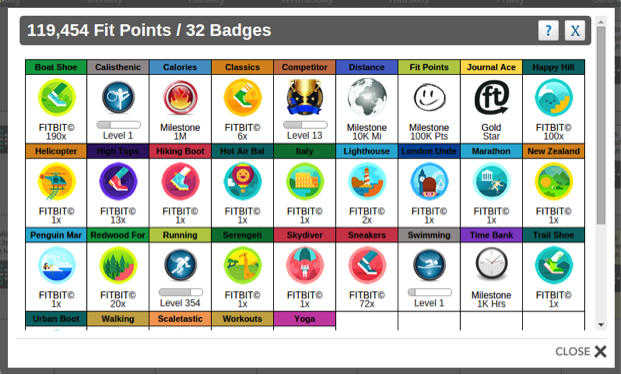
      (Points and badges found in fitness app, “FitBit” via Google Image)
    (Points and badges found in fitness app, “FitBit” via Google Image)

    Considered a basic element of a multitude of games, points are used typically as rewards for users when they successfully perform certain actions as well as providing a numerical representation of a player’s progress (1). Although the action of awarding points can serve a multitude of purposes, I find that points are at its most impactful when used as a form of immediate feedback when users display specific behaviours or actions. 


    We see this commonly in various loyalty programs (i.e. Uber, Grab, etc.), which are designed to encourage its users to perform desired actions or behaviours. Displaying these behaviours will in turn reward users with points which can be used within the platform to obtain various incentives, thereby conditioning its users to repeat the desired actions if they want to earn more points. 

    Points are often paired alongside badges, which are used as a visual representation of a user’s achievements that can be earned within a game or a gamified platform (1). Badges can be used in a variety of functions in a gamified platform, either serving as a goal that a user work towards or to represent status symbols its users to show off. By associating certain challenges or tasks with badges, a user’s actions can be influenced and stir towards completing acts that reward players with these badges.  


    Additionally, another impact badges can bring to games and gamified platforms lie in its ability to tap into social influence. Earning certain badges can be used as a form of symbolizing one’s membership into groups that share the same achievements (3), thus forming a small community among its users. 


    Leaderboards and Progress Graphs

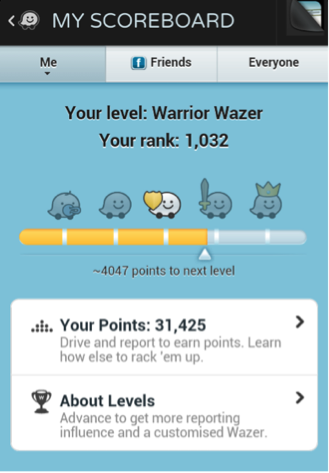
      (Scoreboard found in navigation app, “Waze” via Google Image)
    (Scoreboard found in navigation app, “Waze” via Google Image)

    Humans thrive on feedback, whether if it’s for a project that we are working on or for a hobby that we seek to improve on. Feedback provides us with useful information that helps us determine the rate of our progression. In games and gamified platforms, feedback is often provided in the form of leaderboards and progress graphs.


    The primary function of a leaderboard is to rank users against one another, according to the “success factor” or “winning state” of a game or gamified platform (4). By tapping into the competition as a motivator, implementing a leaderboard can encourage a sense of competitiveness among its users as they compare their performance to that of another user when performing specific tasks.


    That being said, the motivational potential of leaderboards may vary, as it can either be an effective motivator as well as a demotivator. Research in gamification has shown that while competition caused by leaderboards can create social pressure, thus encouraging more user participation, it was found that the positive effects of competition are more likely to occur when users are performing at the relatively same pace or level (1). Likewise, if the majority of a user base is not motivated by competition, a leaderboard may often do more harm than good for a gamified platform. 


    Aside from this, progress graphs also provide feedback about a user’s progress in a platform, by comparing a user’s current performance to that of their own at an earlier stage (5). In contrast to leaderboards, which compares a user’s performance to others, progress graphs only evaluate a user’s performance over time. 


    Progress graphs motivate its users by allowing them to focus on their improvements in a game or a gamified platform, thus creating an environment that allows for learning and mastery to occur. 

    Stories and Player Avatars

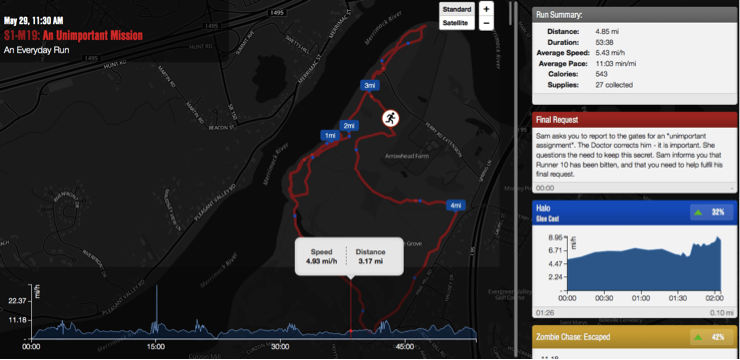
      (Story mission page from fitness app “Zombies, Run!” via Google Images)
    (Story mission page from fitness app “Zombies, Run!” via Google Images)

    Stories have important emotional meaning that creates engagement from people. It captures the imagination of people while tying together an emotional experience. That is why having meaningful stories in games and gamification, and using them consistently can bring great results.


    Stories can be a welcomed addition to a gamified platform as they complement existing elements like points and achievements with added contextual meaning (6). Some examples include adding characters that the users can relate to or even changing the context of an activity found in a gamified platform. A simple walk in the park can now be transformed into a thrilling survival run from attacking zombies. 


    A user may feel inspired and motivated to immerse themselves if a story is engaging and in line with their own interests. 


    Some platforms take this a step further and allow their users to be the main star of the story, by introducing player avatars. These are visual representations of a user within a game or gamified environment (1). More often than not, most platform allows for some level of customization for users to create their avatar to their liking. It helps give a sense of identity for the user and create even more immersion within the platform. Furthermore, allowing users to interact with others using their avatars can encourage social interaction within a platform, thus leading to communities being form.

     
    Every day, we are often exposed to a wide variety of platforms that uses elements of gamification. So the next time you come across some of these elements, you will have a better understanding of why these elements were included in the first place. 

    References

    1)   Werbach, K. & Hunter, D. (2012). For the Win: How game thinking can revolutionize your business. https://www.researchgate.net/publication/273946893_For_the_Win_How_Game_Thinking_can_Revolutionize_your_Business

    2)   Deterding, S., Dixon, D., Khaled, R. & Nacke, L. (2011). Gamification: Toward a Definition. http://gamification-research.org/wp-content/uploads/2011/04/02-Deterding-Khaled-Nacke-Dixon.pdf

    3)   Antin, J. & Churcill, E.F. (2011). Badges in Social Media: A social psychological perspective. http://gamification-research.org/wp-content/uploads/2011/04/03-Antin-Churchill.pdf

    4)   Costa, J. P., Wehbe, R. R., Robb, J. & Nacke, L. E. (2013). Time’s Up: Studying Leaderboards for Engaging Punctual Behaviour. https://www.researchgate.net/publication/257519212_Time’s_Up_Studying_Leaderboards_For_Engaging_Punctual_Behaviour

    5)   Sailer, M., Hense, J., Mandl, H. & Klevers, M. (2013). Psychological Perspectives on Motivation through Gamification https://www.researchgate.net/publication/278672057_Psychological_Perspectives_on_Motivation_through_Gamification

    Kapp, K. M. (2012).The Gamification of Learning and Instruction: Game-Based Methods and Strategies for Training and Educationhttps://www.researchgate.net/publication/273947281_The_gamification_of_learning_and_instruction_Game-based_methods_and_strategies_for_training_and_education_San_Francisco_CA_Pfeiffer

  • Gamification in Parenting

    Gamification in Parenting

    Written by: Sufiz Mohd Suffian

    With the increasing awareness of gamification globally, many organisations have begun injecting gamification into just about everything. From gamifying employee Key Performance Indicators (KPIs), onboarding new recruits, and even purchasing new property. Whether it is by incorporating game elements to elicit competition, slapping on a leaderboard to rank “players”, or curating an engaging experience, these all stem from game thinking and gamification. As most of us know, gamification does not necessarily mean creating a game. Rather, it is incorporating engaging elements in games into a non-game context. With the right application, organisations have yielded positive results in user engagement, revenue generation, and customer satisfaction. With such great results, it’s no wonder organisations are rushing to squeeze gamification into just about anything.

    But apart from the workplace, one wonders if there is a place for gamification in the household. Specifically, in parenting.

    Parenting is akin to an amateur sport with consistent trial and error. Since I’ve become father to a beautiful baby girl, my wife and I have done considerable research utilizing various books on parenting – from understanding the way the brains of babies are wired to how parents have raised successful children in different parts of the globe. In our research, I couldn’t help but notice some similarities between parenting and gamification. Obviously, I am not suggesting parents award points to their babies for taking regular naps, or rank children on a leaderboard. Much rather, I focused on the way parents have successfully engaged with their children to nurture and raise them to become confident and capable members of society.

    So how does gamification relate to parenting then?

    Creating the Right Environment
    This may seem obvious, but what does creating the “right” environment really mean? In gamification, this usually involves creating a safe and engaging environment for “players” to play in. This is especially apparent in game-based learning or serious games where game elements are designed to trigger desired behaviours and reward players for continuously displaying them, which in turn reinforces and builds positive habits. Players can safely make mistakes and fail without any negative repercussions to their personal or professional lives.

    Having a similarly safe and engaging environment is crucial for a child’s development. The human brain is wired to focus on one thing, survival. If our brains think it is in any kind of danger, it will stop its focus on anything else, including learning. Once the brain senses that the danger has passed only then can learning resume. This means that using fear as a motivator to learn is not ideal. This includes rigid and strict parenting practices that force children to perform. Research has found that this has negative effects on a child’s development and results in the child merely becoming a parrot, acting in a manner that pleases their parents but in reality does not actually improve their intelligence, which is known as learned helplessness. Instead, creating an environment filled with positive motivators is best for a child’s development.

    Playing to Learn

    We all can agree that the one thing that children love to do is play. Gamification in essence is about injecting play into pretty much anything to make the experience fun. Although it isn’t exactly like a game of tag or hop scotch, gamification is able to turn something that is mundane or serious into a fun and playful experience. Whether it is through the rush of collecting likes on your latest photo on Instagram, or securing enough sales to land you the top spot on your sale department’s leaderboard, play is what ultimately drives engagement in players.

    For children, play is often seen as a relief from serious learning, when in actuality for children play IS serious learning. Parenting experts (and expert parents) often emphasize on the importance of creative play for children. Free play teaches children to be less anxious and how to cope with stress. In fact, the more they play, the better they become at learning social skills and engaging in social or play contexts. Through pretend play, children are able to understand emotional challenges experienced in different roles and develop empathy.

    Reframing Mindsets
    Gamification has a way of changing the perceptions of players towards different situations, environments, or people by using the right game elements. The playful nature of games allows us reframe our mindsets by creating a safe and fun environment to let our guards down and welcome different possibilities into our minds. Reframing works particularly well with children.

    Reframing with children is mainly about helping them shift their focus from what they cannot do to what they can do. Parents help children see situations from different perspectives, allowing them to focus on the less negative conclusions or outcomes. To do this, parents need to create a safe and positive environment for children that is free from negative labels (e.g. “He is so lazy”) or limiting language (e.g. “I’m not good at that”). Negative labels and limiting language are very defining – the more children hear them, the more negative conclusions about themselves they make. Guiding children to a new, wider and more ambiguous picture about themselves and the world around them helps them to reframe positively.

    Setting Rules of the Game
    Games usually come with a set of rules for players to follow. To get the full experience or the desired results, players would follow these rules throughout the game. Parenting also comes with their own set of rules (and discipline), especially when it comes to raising a moral child. Children generally have an innate sense of right and wrong. However, moral behaviour is something that builds over time and requires a particular kind of guidance. Research has shown that families who raise moral children tend to follow very predictable patterns when it comes to rules and discipline. To sum it up, the recipe to moral children lie in three crucial ingredients: clear, consistent rules and rewards; swift punishment; and rules that are explained.

    Parents need to set clear rules in the household and explain the rationale behind them along with their consequences to the children. If rules are broken, parents should impose punishment (that is emotionally safe and not a form of abuse) quickly, firmly, and consistently, which is then followed by explaining to the children why what they did was wrong. However, if children do follow the rules and display desired behaviours or even refrain from displaying bad behaviour, they should be rewarded or given praise as a form of acknowledgement. This helps children clearly differentiate between what is right and wrong, and ultimately builds their moral compass over time.

    Parenting can be a daunting task especially to new parents. However, even games and gamification can provide useful guidance to the rookie parent in the sport of child development.

  • The Power of Habits

    The Power of Habits

    Research has found that we make thousands of decisions in a day (Sahakian & Labuzeta, 2013). How is that even possible? It’s not possible, because our brain will overload & shut down. However the brain has a secret weapon – it’s called habits. Up to 40% of decisions made by the brain are using habits (Verplanken & Wood, 2006), which greatly reduces the amount of active processing power the brain requires.

    How Do Habits Work?

    Habits work in loops. So each habit loop starts with a trigger/event. The brain then decides if this requires active thinking or recalling a habit that is stored. Once decided, an action is executed and the brain waits for feedback. If the feedback is good (reward)- it reinforces the habit, if the feedback is bad (pain/negativity), it starts to diminish the habit in the brain. In gamification, game designers use game mechanics that apply habit loops to reinforce the type of behaviours they want to see. If designed properly, gamification can help to enhance positive and constructive behaviours.

    Now that we know how habits work, the next question is, what type of decisions and actions are hard coded into habits by our brain? Most of us have this idea that habits are for actions like which hand we use to hold our toothbrush or which route we take to work. We think that habits are formed for the mundane and low level decisions or actions. However, habits are formed based on which decisions or actions that is the most frequently used. The more times we repeat a decision/action, the more likely it will form habits. As such, for a sales professional, the habits that will form are; pitching to clients, handling objections, making cold calls, etc.  This means habits often take over the core functions of a person’s job.

    Habits In Business Context

    Here’s the all important question. Why does a lot of business growth or culture change fail in organisations? It’s because habits overpower any external effort to change the default mode of habits – often known as comfort zones. As such, unless we focus on the behavioural components of habits, any transformation programme will yield little results. 

    Why does training/e-learning sessions have a high failure rate of retention and sustainability in the workplace? The main reason is habits overpower any attempt by the person to apply new learning in the workplace. Participants need a space where they can unlearn, relearn and then apply the learnings while building new habits – all done before they go back to the workplace.

    So then, what do we do? Habits are very hard to break, so we create new habits instead. By using gamified simulations, habit building models, and iterative techniques – we allow people to practice and rapidly develop the target behaviours and habits.

    How effective is gamification in the context of learning? With one of our Fortune 500 client, their finance team reported a sales increase of 266% across the board for 300 staff that attended or sales simulations. The way we did it was by building the right habits so that when an event or trigger happens in the workplace, the brain will access the new habits as opposed to the old habits.

    So if you are looking for business or behavioural results, make gamification your top consideration when implementing a solution.

  • An Effective Behavioural Change is Only 3 Steps Away

    An Effective Behavioural Change is Only 3 Steps Away

    Written by: Gabriel Goh, Gamification Designer

    This is an interactive article and I would like to invite you to take part in this – creating behavioural change in yourself.

    Everyone longs for change. When I say change, it refers to a desirable change. For instance, John has been overworked doing everything by himself and he needs to learn to delegate his tasks to others. However, not everyone is willing to commit to change, simply because they think it is hard.

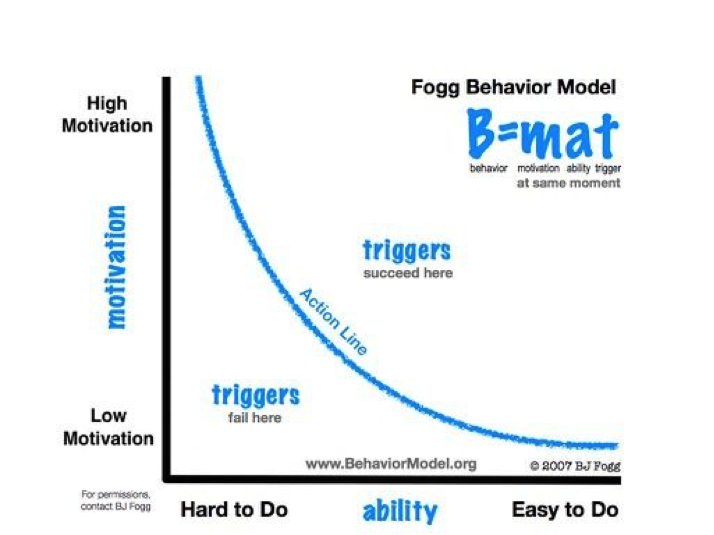
    Before we talk about creating behavioural change, let us take a step back, how does an individual’s behaviour change occur? According to Fogg’s Behaviour Model, behavioural change occurs when the 3 components, namely Motivation, Ability, and Trigger are present at the same time.

    Behavioural change = Motivation x Ability x Trigger

    Before we dive into the components separately, here is my first question to you:


    “What is the ONE behavioural change you would like to see in yourself?”

    Motivational

    According to Fogg, there are 3 types of motivations, which are physical, emotional and social motivations. Let’s take John as an example and I will demonstrate how to apply gamification in the journey of delegating tasks. If you are wondering what gamification is, basically it is the use of game elements in non-game applications (in this case, to stop overworking) to keep you motivated and engaged in the task.

    Physical

    From my point of view, another term for physical motivation is extrinsic motivation. As human beings, we have the tendency to seek pleasure and avoid pain. Hence, we are inclined to do certain actions only if we know we will be rewarded. Tying back to the example, in order to make sure John starts delegating his tasks, we can reward him by offering tangible rewards that act as instant gratifications, such as free vouchers for a romantic getaway with his loved one, lunch opportunities with a CEO, etc.

    Emotional

    From my point of view, emotional motivation refers to intrinsic motivation. According to Growth Engineering, hope is the most powerful motivator in making sure learners are engaged in the task. For instance, give him an Epic Meaning for delegating tasks. What does it mean to him if John changes his current behaviour? By doing so, it gives him a sense of purpose in taking part in something that is meaningful to him.

    On the other hand, we could also use fear as another emotion to make sure that he is on track. For instance, we could leverage his fear of burning out mentally, fear of physical exhaustion, etc. Remember why was it so effective when your parents banned you from watching TV or eating dessert if you did not do what they wanted you to do? They utilised your fear of being deprived of the things that you desire as a “motivation”. It can normally be seen in games like Monopoly. For you to win, you need to keep yourself from falling into bankruptcy.

    Social

    Social motivation is also known as the motivation for belonging. According to Maslow’s Hierarchy of Needs, a sense of belonging is a basic human need and we cannot survive without it. This explains why prisoners are punished by being placed into solitary confinement as this is against human’s instinct to live alone.

    Hence, it is common to see a lot of game developers create games that allow players to compete against or cooperate with one another. Besides that, they also include social elements into their games, such as leaderboards, forums, etc.

    If John is motivated by having a sense of belongingness and relatedness, you can invite him to join a focus group where he could connect and share stories with colleagues or peers who have had a similar experience.

    Here is another question for you: “What motivates you the most?”

    Ability

    In this model, the ability doesn’t refer to someone’s competency for a particular task. Fogg defines ability as to how simple it is to do a certain task. Simplicity is the key here as the more complicated a task is, the more motivation is required. Here are the 6 key elements that you should take note of when you are minimising your task. Before you proceed to the next question, do check out Fogg’s “Six Elements of Simplicity”.

    If John was told to delegate all of his tasks on the very first day, it would seem almost impossible for him. As a result, he might not even start to change as the stakes are too high. It would be so much easier if the task is broken down into parts. Firstly, start with delegating 20% of his tasks, followed with 40%, 60% and so on.

    “How would you make your task simpler?”

    You’re almost there……

    Trigger/Prompts

    One last step. If we want to break out from our old lifestyles and achieve something new, we will need a reminder as a trigger. For instance, place post-it notes on your desktop or ask someone to be accountable for your change. As for John’s example, we could ask him to declare the changes he is going to make in front of his colleagues so that they can hold him accountable of his actions by reminding him from time to time.

    Here is my last question for you: “What will you be using as your trigger?”

    Or, “Who will hold you accountable?”

    In a nutshell, make sure that the changes you want to implement really matters to you (motivation), the behaviours are as simple as possible (ability) and prompt yourself to take action in the right way (motivation). Most importantly, find out what keeps you engaged and gamify your process, I can assure you the path towards change is not as hard as it seems anymore.

  • 3 Gamification Trends To Look Out For In 2019

    3 Gamification Trends To Look Out For In 2019

    Written by: Kerry Wong, Head of Gamification Design

    The use of “Gamification” is becoming more widespread, as many organisations around the world are adopting the methodology to create positive behavioural change, strong organisational culture, better education and training. Gamification is here to stay but the job is still half done as it is still undergoing massive innovation. Here are 3 trends you need to look out for in gamification.


    Gamification in Politics?

    Gabe Zichermann, author of The Gamification Revolution(2013), Gamification by Design (2011) and Game-Based Marketing (2010), says that gamification will gain popularity in politics and civic organisations.

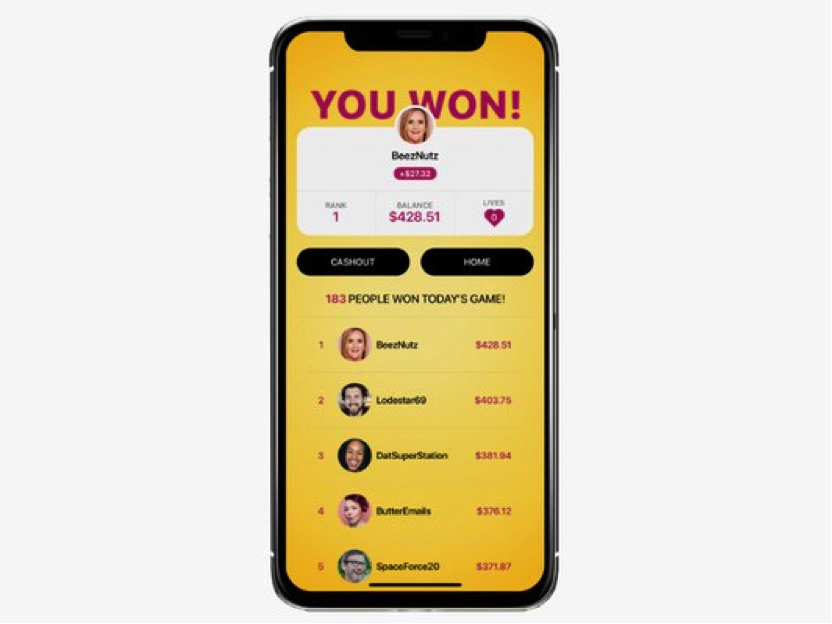
    In the recent 2018 mid-term US elections, Gabe Zichermann collaborated with TBS’s Full Frontal with Samantha Bee, a late-night talk and news satire programme, and launched a smartphone app called This Is Not a Game: The Game. The purpose of the app was to educate US citizens about the political sphere, test the electorate’s knowledge, and encourage players to vote.

    Leading up to the big day, the app offered a daily trivia game, where players answer questions centred on the midterm elections, after which an inaugural pot of $5,000 will then be split among the winners. When players were knocked out, they could earn second chances by completing challenges such as registering as a voter and signing up for election reminders.

      Source: Full Frontal with Samantha Bee
    Source: Full Frontal with Samantha Bee

    It is what’s inside that counts.

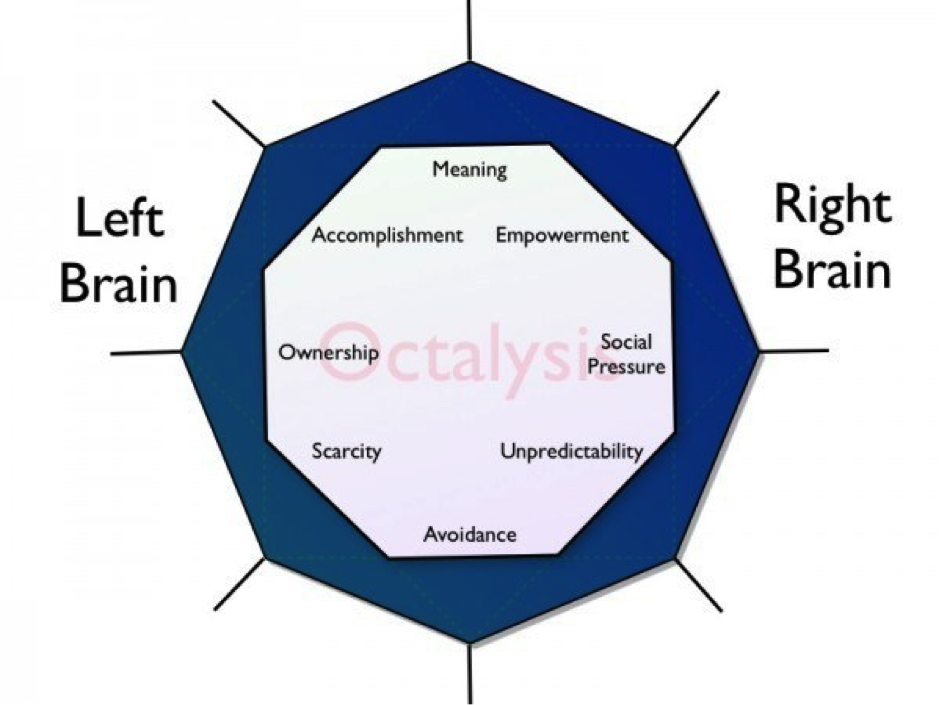
    Yu-Kai Chou, the author of Actionable Gamification: Beyond Points, Badges, and Leaderboards(2017), says gamification will ‘go deeper’ as marketers seek for ways to make the desired behaviours enjoyable instead on stimulating action solely with rewards and gifts.

    As the industry becomes more mature, gamification designs centred on rewards and incentives (extrinsic motivation) will give way to designs centred on making behaviours or tasks actually enjoyable for the participant to carry out (intrinsic motivation). While extrinsic motivation design is very helpful in getting a person to start performing a specific behaviour or task, it has been found that the moment extrinsic motivation is eliminated from the equation, the person will lose interest in continuing to carry out that particular behaviour or task.

    For instance, if you want a child to perform well in school, an external incentive will only get you so far. Speaking from my own personal experience, I used to really like studying, I found the whole experience fun and engaging. Then, in my last year of primary education, I got my parents to agree to get me a present if I got good grades. The incentive worked, I was excited and driven, and I eventually got the grades to back it up.

    However, once I entered my secondary education, the external incentive was no longer there and I ended up losing my initial motivation to study. The experience was no longer as fun or as engaging as before. I never really understood why until I found out about the impact of extrinsic motivation.

    Perhaps a better way my parents could have done to tackle this would be to ignore my request and reassure my effort to foster my sense of self-achievement (PS: I love my parents, mind you). After all, someone who is intrinsically motivated is more likely to continue working on it despite the challenges they may face.

      Source: Yu-Kai Chou’s Octalysis Framework – Left Brain (Extrinsic) vs Right Brain (Intrinsic)
    Source: Yu-Kai Chou’s Octalysis Framework – Left Brain (Extrinsic) vs Right Brain (Intrinsic)

    How you feel impacts what you do.

    An Coppens, Founder and Chief Game Changer of Gamification Nation, wrote an article highlighting empathy mapping and how it plays a role in instigating behavioural change.

    In the new age of gamification, a strong and emotionally engaging narrative will be important. For example, Judy Willis, a neurologist wrote in her book that fun experiences increase levels of dopamine, endorphins, and oxygen in the human body – all things that promote learning. So, it is important to incorporate happy and fun experiences when designing a learning programme to nurture these positive emotions, which subsequently leads to a higher retention rate.

      Source: iStock
    Source: iStock

    It is interesting to see how gamification has matured as an industry, as well as the shift towards a more intrinsically motivated approach. Can’t wait to see how it would evolve in 2019!

  • Gamification In Business

    Gamification In Business

    Written by: Sufiz Suffian, Head of Business Development

    Gamification is quickly gaining traction all over the world, including Malaysia and can be seen just about anywhere.

    In fact, you may have already interacted with elements of gamification numerous times over the past couple of hours, whether it was through social media, e-commerce sites, or while purchasing groceries at your local supermarket.

    So before we dive deeper into how gamification has invaded our lives, it is best to first understand what gamification even is.

    What Is Gamification?

    In my career, I have come across many misinterpretations of gamification. Although the name does include the word “game”, it is often not as simple as that.

    Gamification is the concept of using game design elements in non-game applications to make it more fun and engaging. In short, it is essentially behavioural psychology in human-centric design that you can interact with just about anywhere.

    Gamification has the capability to motivate an individual to display a particular behaviour or undertake a series of actions for a specific goal or purpose. This is accomplished by encouraging users to engage in these behaviours by showing them a scaffolded path to mastery, and by taking advantage of our human psychological predisposition to engage in gaming.

    Gamification involves identifying “player types” and their corresponding motivational drives.

    By understanding who your target audience is, you are able to include motivational elements to spur your audience to act in a particular manner that would benefit you and possibly your business.

    Moreover, if these motivational elements and desired behaviours occur frequently enough and in the right order, users will begin to develop habits that will keep them coming back for more.

    After all, everyone loves games, so why not turn everything into one?

    Why Gamification?

    Whether it’s collecting points to unlock discounts or prizes during your next purchase, or to earn higher cashback rates by making a transaction at certain business establishments, with the right motivation and the right “reward” (be it intrinsic or extrinsic), businesses have got you right where they want you.

    For instance, Facebook alone uses endless elements of gamification, from collecting likes on your recent status update, or having your friends share an article you posted on your page. As of 2017, daily social media usage of global internet users amounted to 135 minutes per day, up from 126 daily minutes in the previous year!

    Unsurprisingly, the world has also taken notice of gamification. In 2014, the global gamification market size was approximately USD 960.5 million and is expected to reach USD 22,913.0 million by 2022, at a CAGR of 41.8%.

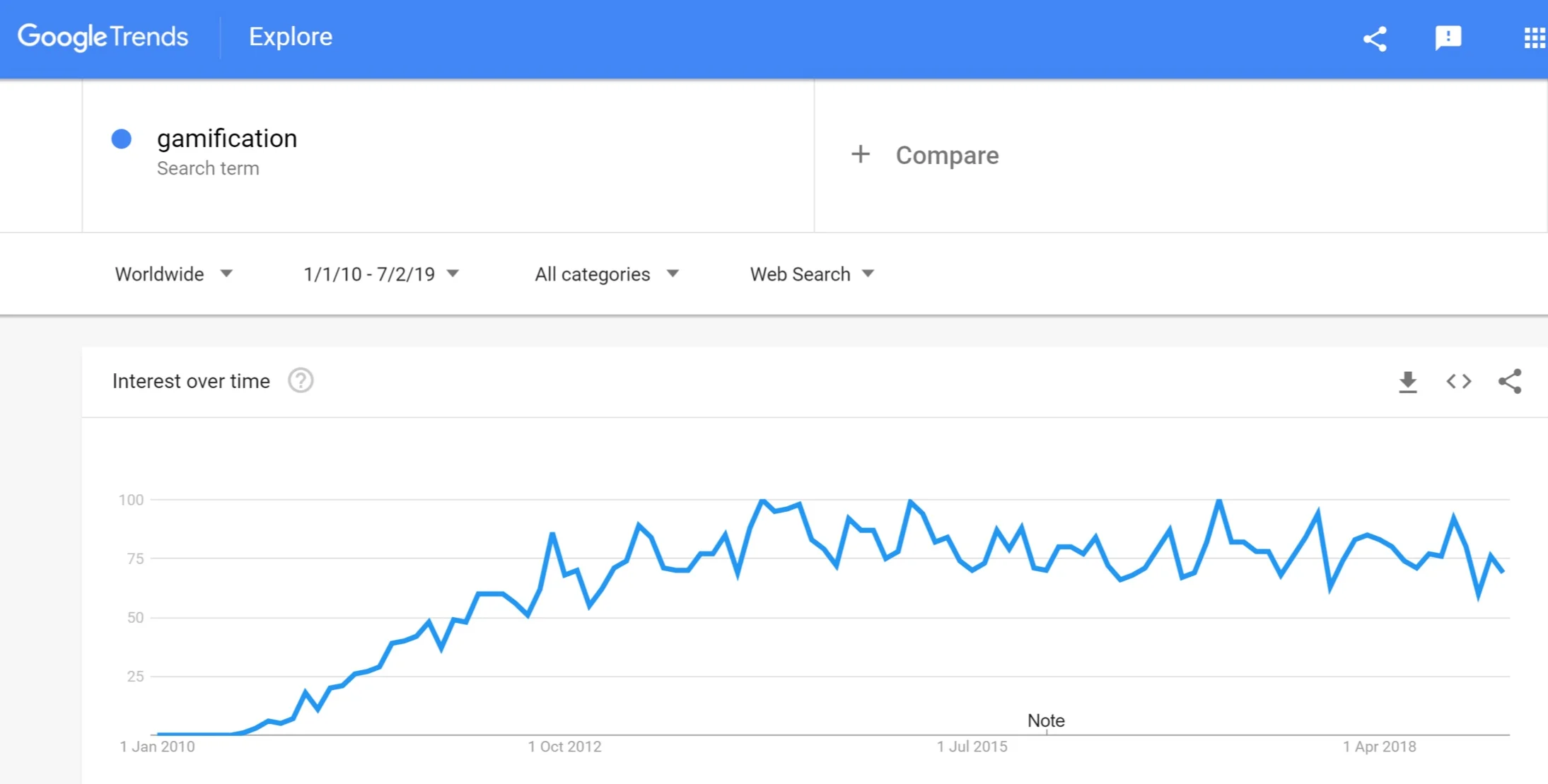
    There is even an increased interest in gamification globally as shown by significantly improved Google search trends for gamification over the years, including in Malaysia.

     Google Trends for gamification worldwide.
    Google Trends for gamification worldwide.

    So what sort of gamification is already out there and what can you learn from them to potentially inject some of it into your own business?

    Examples of Gamification

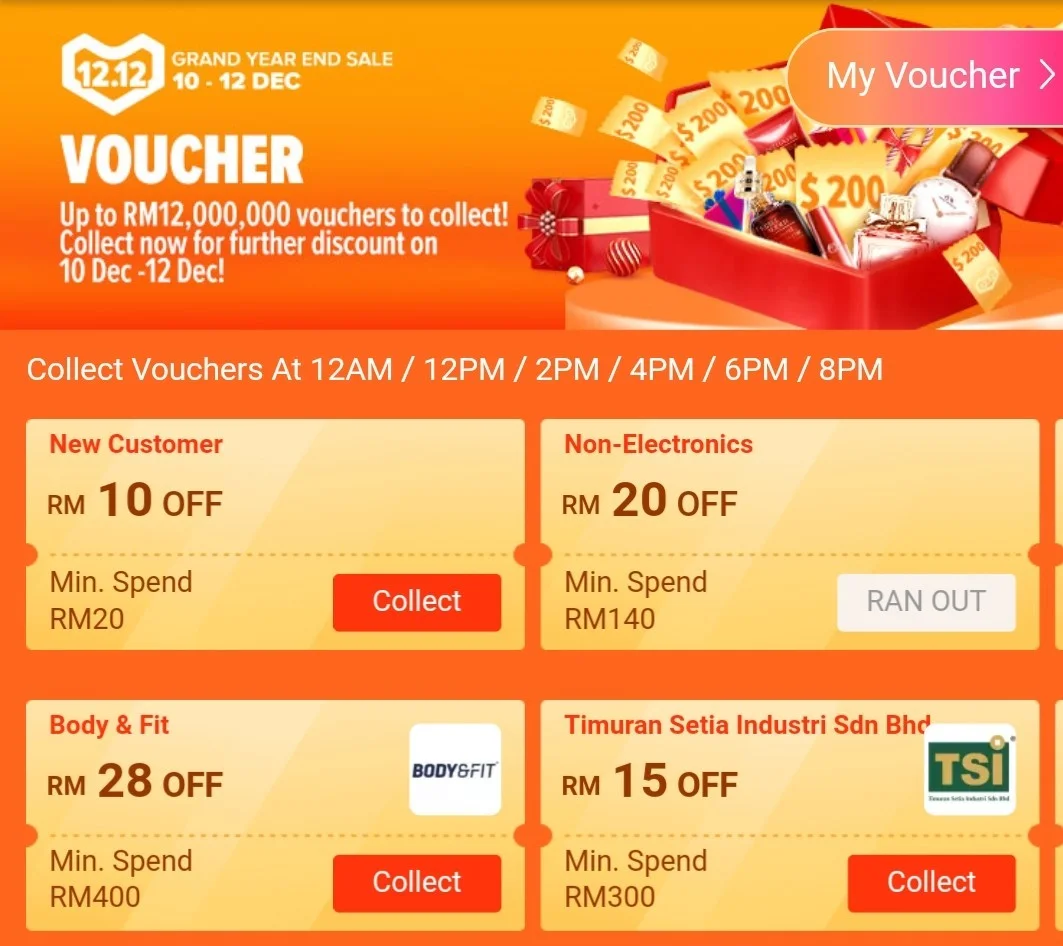
    The e-commerce giant Lazada is among many businesses that frequently uses gamification to drive their sales revenue. By shopping via their mobile application, you can access an array of gamified promotions and vouchers. Most have elements of scarcity and/or time limitations to spur users to quickly take action on their purchases.

     Example of Lazada’s gamified promotions and vouchers.
    Example of Lazada’s gamified promotions and vouchers.

    What’s more, after getting your first good deal via Lazada, you’ll be motivated to open the app again and again just to chase the next great deal.

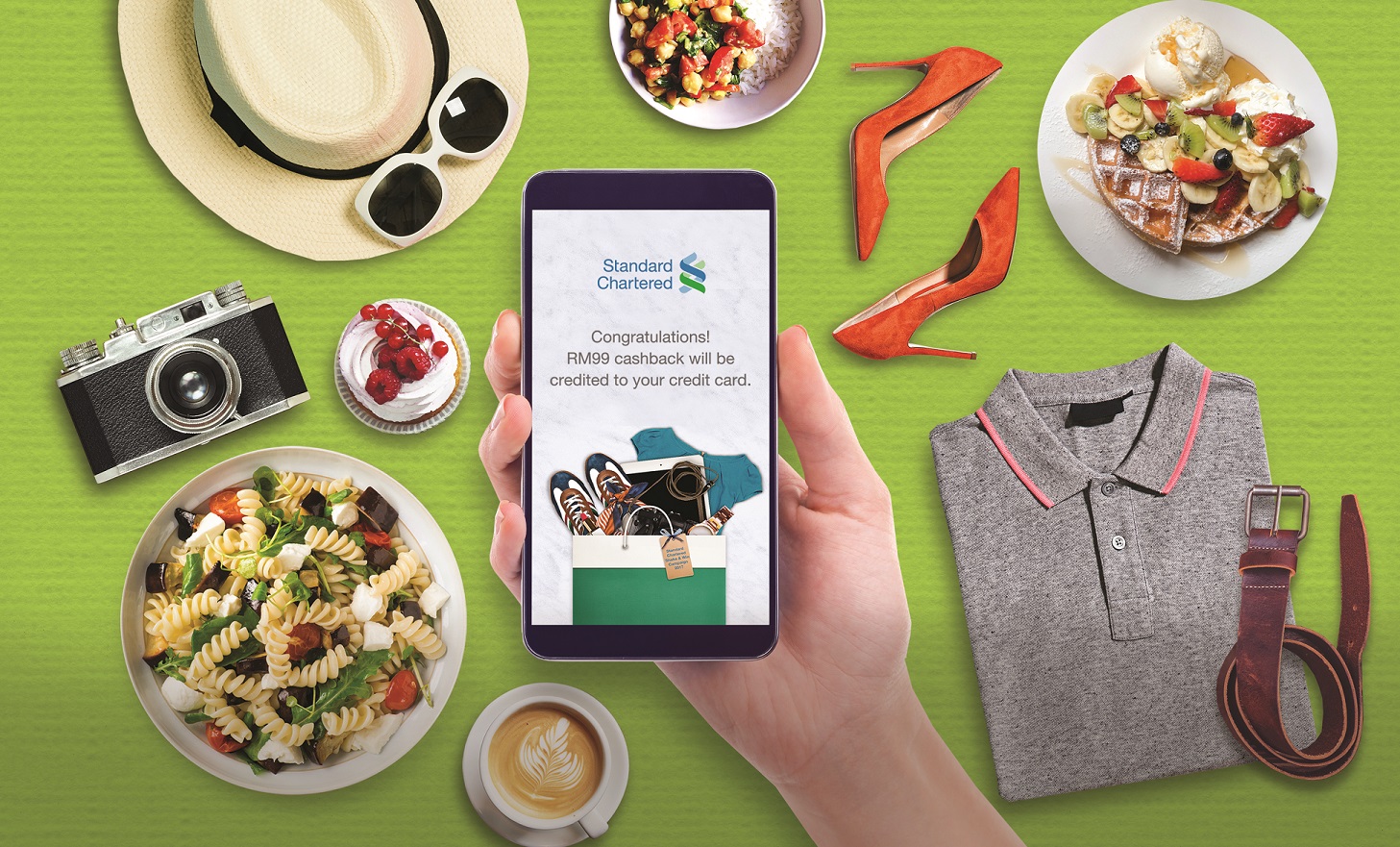
    Lazada also has “shake rewards” which has become a growing trend among businesses in Malaysia. This includes implementation by mobile wallet Boost, and multinational banking and financial services company Standard Chartered. By using your mobile device’s motion sensors, users can shake their device to gain random rewards or vouchers which they can then redeem during their next purchase.

     Example of Lazada’s Shake-It Campaign.
    Example of Lazada’s Shake-It Campaign.
     Example of Standard Chartered’s Shake & Win Campaign
    Example of Standard Chartered’s Shake & Win Campaign

    Another example is DooIt, an online live trivia game show where participants log into their mobile application at certain times of the day to answer a series of questions to win a share of the daily prize money. Yes, actual money.

    Advertisements are peppered in between questions and pleasantries by the game show “hosts” while the participants are concentrating hard on their screens to quickly select the correct answers to each question within the limited time. What you have here is a fully engaged audience that have made time in their busy schedules to participate in a game with other like-minded participants (which normally number in the thousands at least) just to win a small share of the prize money.

    This creates a unique platform for businesses to advertise their products and services to an audience that is fully listening during an age when advertisements have cluttered every public and virtual space available (think advertisements on billboards, television, radio, websites, etc.).

    Gamification has also been used in fields of medical research, particularly AIDS.

    For 15 years, many experts in the world were hard at work trying to decipher a crystal structure for one of the AIDS-causing viruses known as the Mason-Pfizer Monkey virus (M-PMV), but were unsuccessful.

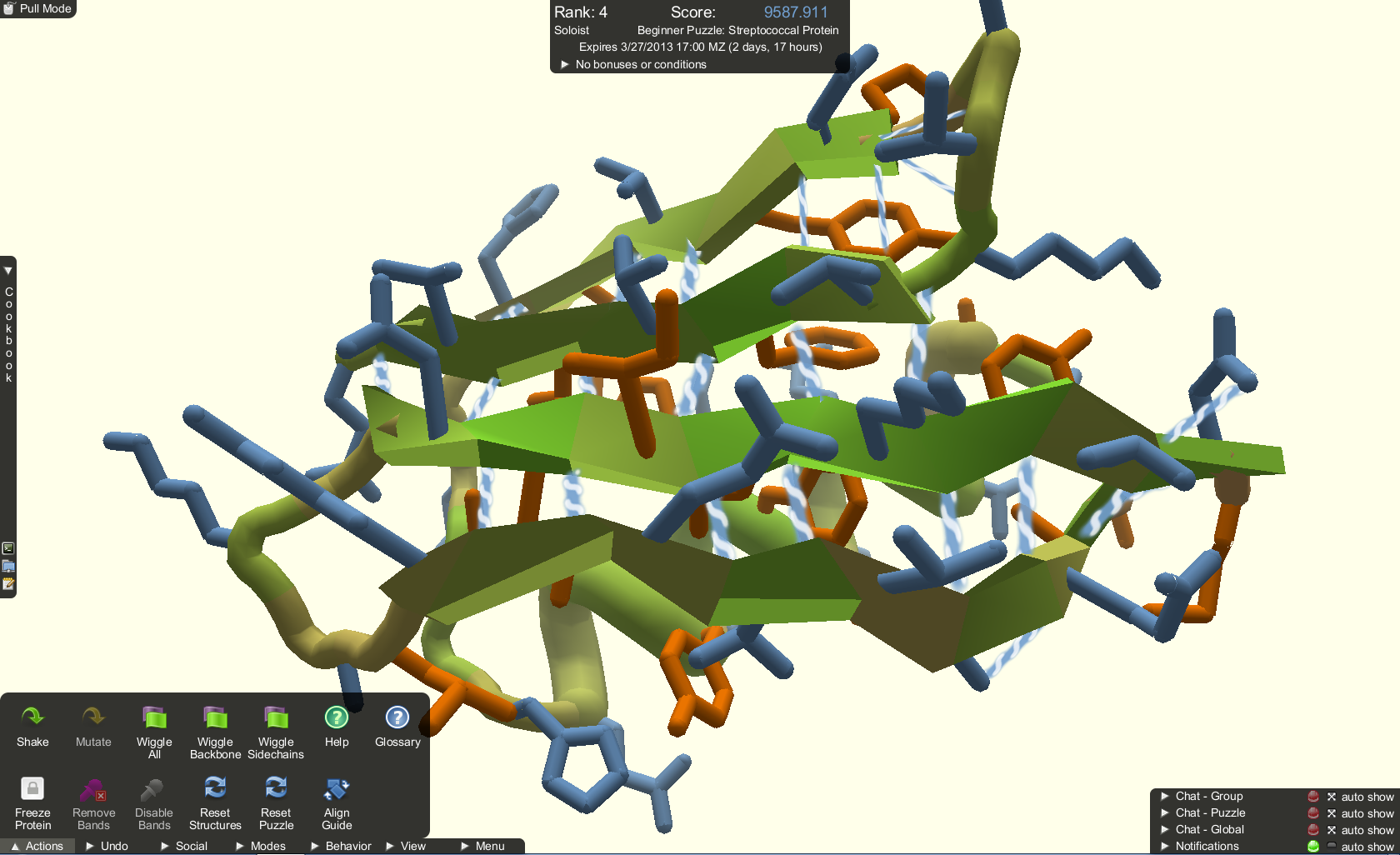
    The University of Washington’s Center for Game Science collaborated with the Biochemistry department and FoldIt, an online puzzle game about protein folding, was developed. Over 240,000 players all over the world registered for the game and competed against each other. As a result, a solution to the structure of the M-PMV was found in merely 10 days!

    This was a major breakthrough in the AIDS research field which these experts could not accomplish in 15 years, while a game did it in a fraction of that time with the help of many competitive gamers.

     Image of FoldIt online puzzle game for AIDS research
    Image of FoldIt online puzzle game for AIDS research

    The simple act of shaking your device, opening a mobile application at specific times of the day, answering trivia questions, or competing against strangers to solve complex puzzles for any kind of reward, be it big or small, creates a feeling of satisfaction, success, achievement or victory for the user which can trigger the release of endorphins (the feel good hormone) in the brain, which makes the user feel better about themselves. It’s no surprise how this can quickly turn into a habit for the user.

    It is clear that gamification is nothing to sneeze at and it will continue to grow in relevance throughout the world, including the business world.

    Business owners have often been stumped with the problem of generating more revenue, customers, and market share. Just as these PHD-wielding scientists had spent 15 years of their lives trying to solve an equation to the Mason-Pfizer Monkey virus. Perhaps the formula they have been seeking all this time was right under their noses.

    The formula was most likely, the often underestimated: gamification.

  • 3 Business Examples Of Deep Gamification In The Workplace

    3 Business Examples Of Deep Gamification In The Workplace

    Here are 3 urgent examples to show upper management that team games get teams motivated to work harder and more frequently, and are not just for catchy terms like “team-building” or “team spirit”

    By Lex Tan

     Current examples get their attention.
    Current examples get their attention.

    When introducing gamification to corporate environments, whether its to a Small Medium Enterprise (SME) or a Multinational Corporation (MNC), there’s always a scramble for solid examples to help overcome skepticism. Here are three concrete examples with hard-hitting facts that will help you shoot down common objections from skeptical colleagues or management.

    After all, if you can’t use effective Return On Investment (ROI) stories from companies who invested in gamification and made work enjoyable, what ammunition can you use?

    Google – Gamified Travel Policy

    Google, the tech behemoth itself, utilizes gamification in its pioneer’s stance towards their open booking approach. This travel policy offers travelers the chance to budget for their itineraries, arrange travel and, if they come in under budget, reserve the difference for future trips.

    This appeals to Gamification Guru Yu Kai Chou’s core drives of Ownership and Accomplishment, where these travelers feel like they know better than anyone else how to get the “best deal” for their travel. They are also rewarded indirectly, as they can spend the credit they save on better travel options, like a nicer hotel or a business class flight.

    Google has even consolidated its program globally through Carlson Wagonlit Travel and maintains preferred supplier perks and upgrades that employees can bid on with those surplus credits.

    Mike Tangney, the global travel manager responsible for this innovative new policy shares, “One guy staying at Mountain View [Google’s global headquarters in California], where the hotel cost on average is $200 a night, was spending $6 a night,” he said. “I called him to ask what he was doing. He said, ‘I love camping, so I’m staying in a campsite in the summer and earning $100 a night in credits so that maybe I can stay in the Four Seasons in the winter.’ “

    Clearly, this system has been an effective way to run their travel bookings, while teaching employees how to  ‘Spend when you can, save when you need to.’

    Bridgewater Funds – Employee Baseball Cards

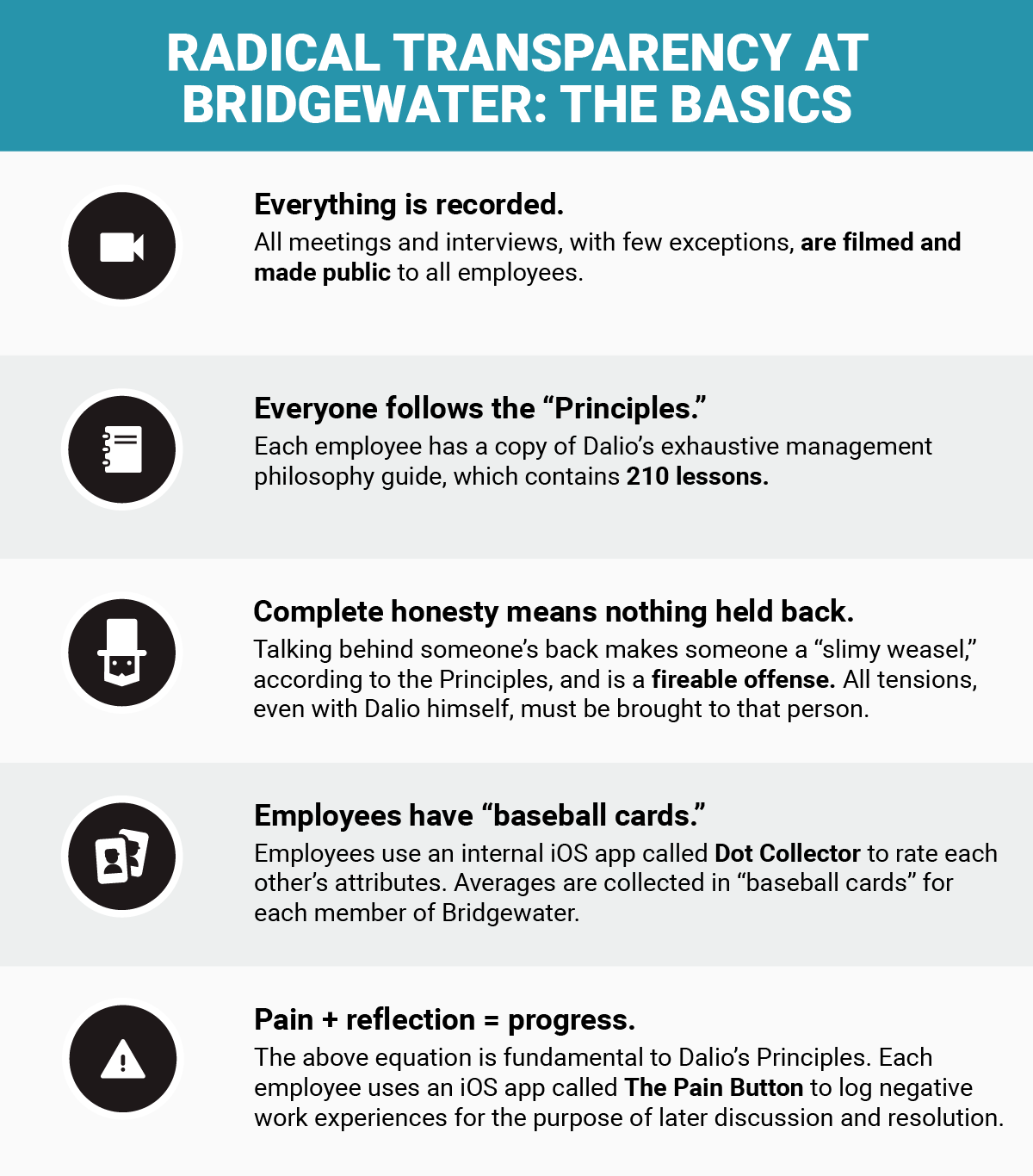
    During his 2017 TED Talk in April, Ray Dalio, the founder of Bridgewater Funds, the world’s largest hedge fund, talked about what he fondly termed Employee “Baseball cards”. The author of “Principles”, that champions “radical truth” and “radical transparency.” demoed an iPad app called “Dots Collector”, which allowed them to rate each other across over 100 attributes on a 1-10 scale.

    The instant feedback that employees get of their everyday performance creates an intrinsic drive to constantly improve, even while they’re executing a presentation, chairing a discussion, or participating in work processes.

    Their “cards” also help lend their opinions weight, so when it came to voting on decisions in real time, they were able to move execution along faster by going with a majority vote – though not just based on how many hands were in the air, but whose hands they were. This gamified system allowed for the company to realistically implement an “idea meritocracy”.

    Leading Financial Institute – APEX Sales Training Simulation

    After running multiple sessions of Think Codex’s off-the-shelf sales acceleration training across 40 branches and 300 employees, our clients internal evaluation system reported a 266% increase in monthly branch revenue after only two months.

    Based on Think Codex’s simulation evaluation results, most employees attributed it to higher interest and engagement during the simulation, as well as having “real” examples to anchor their understanding to.

    After 3 months, monthly branch revenue reportedly crossed the 300% mark, to the delight of our clients, as well as our designers who redoubled their efforts to improve our simulations.

    APEX was built around a concept similar to what is found in Malcolm Gladwell’s book “Outliers”, that to be a master at anything, you would need to put in 10,000 hours of deliberate practice. So we’ve designed an accelerated simulation that allows participants to practice selling a product utilizing Features, Advantages and Benefits (FABs) & Unique Selling Propositions (USPs). Not to mention pitting their upselling skills against some of their biggest competitors and potential buyers – their own colleagues.

    To get more information on gamification or our solutions, please contact us so that we can reach out and have a talk with you!

  • Core Drives of Gamification: The Relevance of Social Influence & Relatedness

    Core Drives of Gamification: The Relevance of Social Influence & Relatedness

    by Bryan Woo, Simulation Designer

    Social Influence & Relatedness refers to a core drive in Yu-Kai Chou’s Octalysis Framework. Simulation Designer Bryan Woo talks about his experience with this core drive and how it guided him to undergo behavioural change in a natural way.  

    The year was 2012 and I was walking towards campus for my first day at college. It was orientation day and campus was packed with people, mostly parents dropping their children off, and other students making their way from one place to another.

    I would be lying to you if I said that I wasn’t nervous. It was a lot to take in, especially when you’re trying to keep up with a pace that you aren’t used to. Growing up in a small town in Perak, Malaysia was rather slow paced as compared to the hustle and bustle of a capital city like Kuala Lumpur.

      Photo by Zukiman Mohamad from Pexels
    Photo by Zukiman Mohamad from Pexels

    Eventually, my day went on with icebreakers and speeches. I made a few new acquaintances with some of my peers during those activities, but nothing beyond your typical “Hi, nice to meet you, bye” interactions, since most were already part of their own social circles.

    So ended my first day of college.

    As I walked back to my dorm, I was beginning to worry that I would struggle to make new friends and cope with living away from home. Well, at least until my roommate moved in a few days later. Which to my surprise, was my old high school mate from back home!

    Long story short, the next few days got a lot easier after that, especially when socializing with others. I would like to think that having a familiar face around and seeing him enjoy his time here was the catalyst I needed to get out of my shell, and explore my new surroundings.

      Bryan breaking out of his shell
    Bryan breaking out of his shell

    Looking back, my experience back in college demonstrated Social Influence and Relatedness –  one of the core drives within Yu-Kai Chou’s Octalysis Framework in Gamification. This core drive incorporates social elements that drive people to do activities, when inspired by what other people think, do, or say.

    Social Influence refers to activities such as competition, mentorship, collaboration or group quests, companionship, and social treasures. Relatedness, on the other hand, takes about nostalgia and emotional associations, much like how storylines are crafted to appeal to certain audiences.

      Shared experiences forge bonds with an institute or group
    Shared experiences forge bonds with an institute or group

    Tying it back to my time in college, I experienced Relatedness in the form of my old roommate moving in and having a familiar face around from back home. Seeing him interact with new people and experiences has driven me to do the same, hence my being driven by Social Influence.

    Humans are considered social beings, and in a majority of our everyday activities we involve at least one or more other people. Activities like team sports, business meetings, working in an office space, church services, or other religious gatherings, etc..

      Photo by rawpixel.com from Pexels
    Photo by rawpixel.com from Pexels

    It is true that we also engage in these activities for other reasons, but there’s no denying that social influence is an equally important drive for each of them.

    Hence why gamification initiatives can benefit from tapping into this core drive. A well-designed program can foster genuine motivation and performance in regards to working in collaborative and competitive environments, thus allowing users to embrace new challenges and experiences together with others.