Author: andrew

  • How To Take The Role of Games In Business Seriously

    How To Take The Role of Games In Business Seriously

    Games have always been seen as an activity for entertainment and leisure, but not for work. Here we explore the place of games in the business world.

    By Andrew Lau

    Everyone has played games. It’s something we experience as part of growing up. Games help us to learn, to avoid repeating mistakes, to choose the right friends, to win graciously, and to lose well. These very things that happen during childhood are what we can also apply to our working lives.

     Gamifying business goals makes achieving them so much more desirable
    Gamifying business goals makes achieving them so much more desirable

    Lately, gamification has come into business in a big way. More and more companies are making time to play, whether to increase employee engagement through team-building activities, or to facilitate learning in a business environment.

    As someone who helps organizations develop their employees’ potential, I often find myself telling bosses that “people learn by doing”. When you need to coordinate with others to learn new concepts, change mindsets, or produce results, then reading slides and memorizing manuals are not effective.

    This is why I’ve spent most of my career building business simulations that help colleagues experience and resolve real-life challenges in a safe environment.

    Business simulations are powerful. They can be built to isolate and target specific issues. Most importantly, you can make mistakes and learn without impacting the real business world.

    Engagement Vs Efficiency: Why does Gamification work?

    For most people they often see the outward representation of games such as cards, tokens, badges, avatars, and leaderboards. However, the real secret lies behind the design of the gamification system.

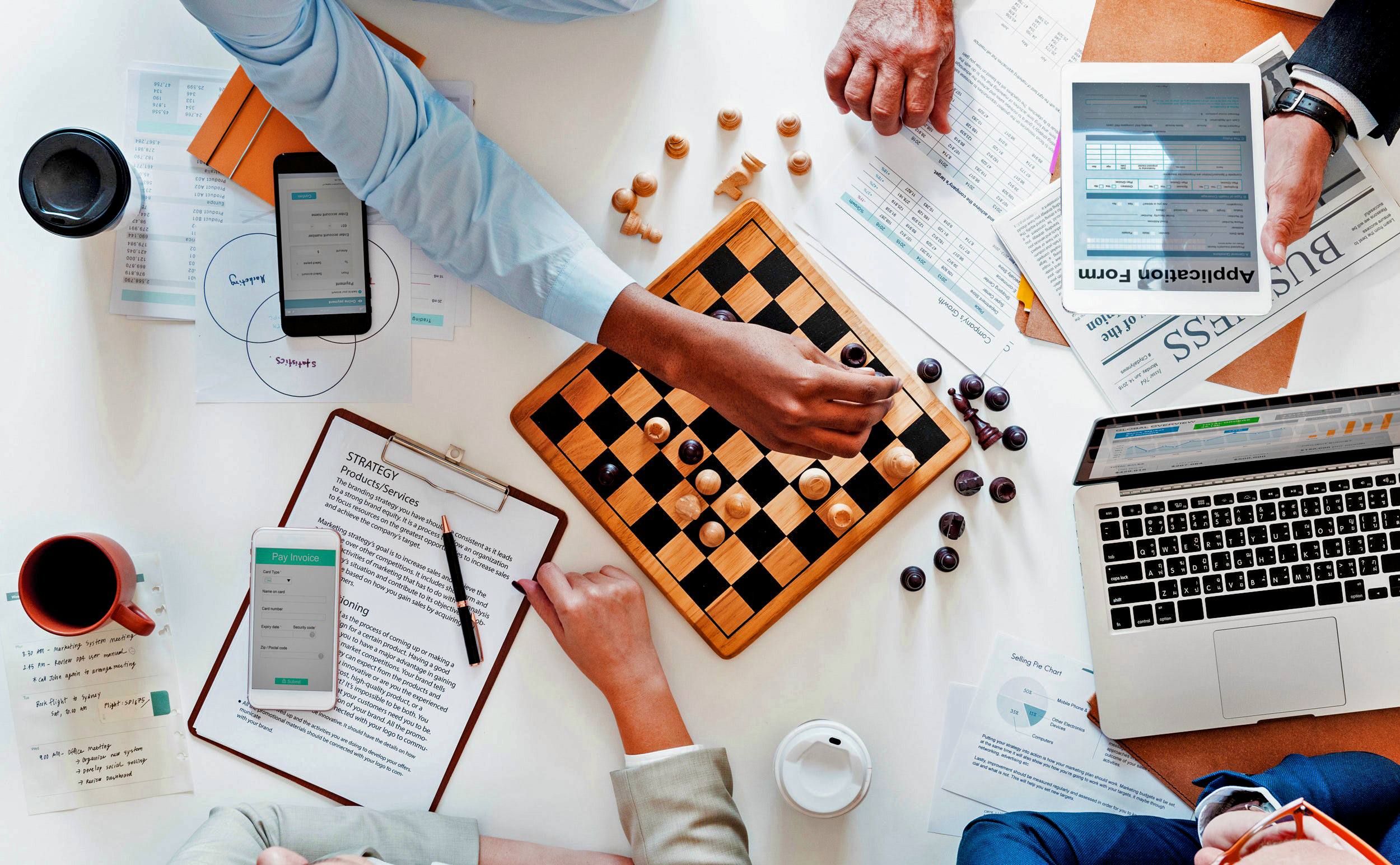
     Behavorial design - Photo by Startup Stock Photos from Pexels
    Behavorial design – Photo by Startup Stock Photos from Pexels

    There are typically 2 types of system design in the world:

    i. Function-centered design creates systems with the end goal of efficiency. However, even though this system is efficient, it does not mean people are motivated or engaged to use it. Most systems in a business are designed this way.

    ii. Human-centered design on the other hand. focuses on user engagement and motivation instead. It makes people want to use a system and derive personal meaning from their interaction. The question that should be asked during design is “What do we want to make the user feel?” (Engagement) as opposed to “How can we make things faster?” (Efficiency)

    You’re Happier When You Play

    E-Learning is a classic case of function-centered design. Internal e-learning platforms are an efficient way to distribute content among employees. However, it’s usually not designed to actually motivate or engage your people to WANT to learn.

    Here’s how most people approach e-Learning.

    First we go for the quiz, and if we pass (hurray!), we are deemed to have learned the subject. If we fail, then we go through the drudgery of re-watching the videos, only most times, we don’t.

     How engaging is e-learning really?
    How engaging is e-learning really?

    We turn on the video, make a cup of coffee and chat with our colleagues or attend to our emails. We wait for the time when we can take the quiz again. If we fail, repeat coffee and emails till we get it correct.

    This is what learning through a function-centered designed system could look like.

    Learning through a human-centered design system is hugely different. The most obvious difference is that there is usually a big dose of gamification. Imagine if learning in organizations was geared through completing business missions and quests. The only way to complete missions would then be by applying theories and tools.

    Users also rapidly ideate and prototype their ideas in a safe environment. They use iteration to keep getting better at a competency. By the end of a learning session, their repeated actions would have formed the building blocks of new behaviours, ultimately bring results to organizations.

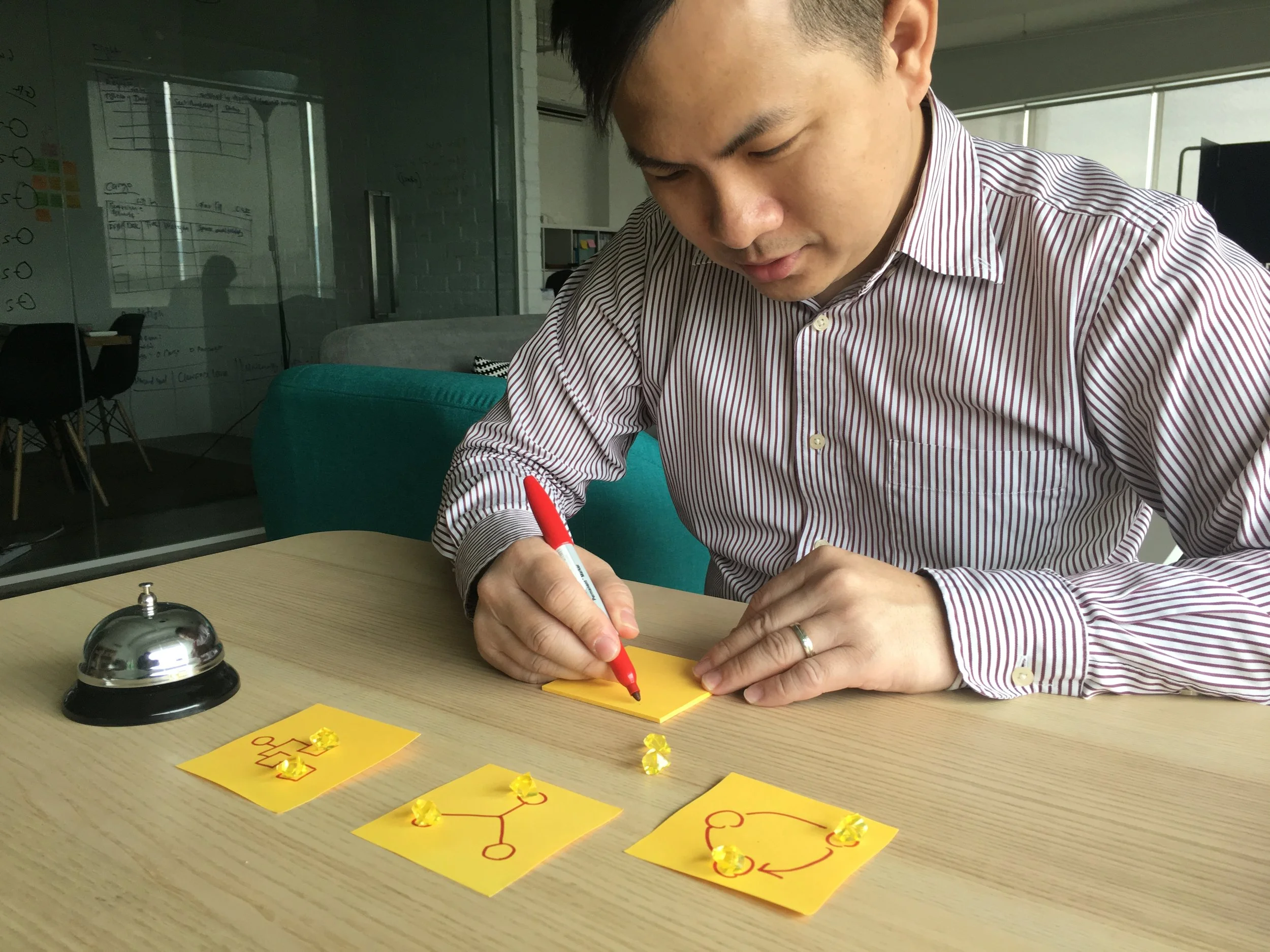
     Think Codex CEO Andrew Lau prototyping human-centered design concepts
    Think Codex CEO Andrew Lau prototyping human-centered design concepts

    Most importantly, users have a lot of fun while gaining insights.

    Gamification truly taps into the core of human-centered design. It’s about designing a system that gets your customers, employees, and even yourself, to be both extrinsically and intrinsically motivated toward desired actions.

    End Game

    So where does this leave us?

    Everybody loves games and are drawn to it because it connects us to who we are as humans.

    We are driven by:

    1. A positive sense of meaning, empowerment, social influence, accomplishment and ownership.
    2. A negative sense of unpredictability, scarcity and avoidance.

    All these drive human engagement and motivation.

    So, to drive results, the choice is simple. All you need to do is press Play.


    Andrew Lau is the CEO of Think Codex, a Learning Gamification Organization that believes the best way to get results is through human-centered systems. You can write him at andrew.lau@thinkcodex.com
     

  • Training & Development: Keeping your Millennials Engaged At Work

    Training & Development: Keeping your Millennials Engaged At Work

    By Bryan Woo, Simulation Designer

    As many organizations start to diversify themselves with more and more millennials, who will soon grow to dominate the workplace, it brings about an interesting challenge: how do you develop and keep your best millennials engaged at work?

       2016: Deloitte found that Millennials hold 20% of leadership roles
    2016: Deloitte found that Millennials hold 20% of leadership roles

    Research by Gallup has revealed that only 39% of millennials strongly agree that they have learnt something new within the last 30 days, as well as only 29% of millennials being engaged at work.

    Millennials that feel they have learnt something new

    Millennials that feel they are engaged at work

    The results are rather alarming, considering the fact that most organizations within the top quartile of employee engagement have been linked to 17% more productivity, 10% better customer ratings, as well as 21% more profitability as compared to their bottom tier counterparts.

    Interestingly enough, a fun fact about the average millennial is that they spent a staggering 2,000 – 3,000 hours reading books, and 3x that amount playing games before turning 21. Based on those numbers, we can be certain that millennials are very familiar to gameplay & game mechanics. Which brings me to my next point: What if you can tap into a millennial’s familiarity with games and carry that over into his or her learning and development, while at the same time, keeping them engaged at work?
     

    Enter, gamification.

    Gamification, in its simplest definition, is the process of using the fun & engaging elements found in games and applying them to non-game, real world environments in order to influence behaviour. It has gained popularity in use especially in classroom and other learning based environments.

    What makes gamification a unique learning approach. is that it is considered a form of “Human-Focused Design”, defined by Yu-kai Chou, an expert in gamification, as a design process specifically revolving around the learner in mind. This process places emphasis especially on the learner’s feelings, motivations, as well as engagement.

      Recapture the joy of learning as a kid. - Photo by  Ben White  on  Unsplash
    Recapture the joy of learning as a kid. – Photo by Ben White  on Unsplash
  • 5 Misconceptions of Gamification In Learning

    By Kerry Wong, Lead Simulation Designer

    1. You must be an experienced player

    Many people think that if they don’t play games regularly, they may not easily pick up games used for learning. However, the point of gamification in learning is to integrate game elements in the learning process to motivate participation and engagement among the learners, regardless of experience. 

    As a Benjamin Franklin quote goes “Tell me and I forget. Teach me and I remember. Involve me and I learn”. Gamification in learning works best when learners are involved, it doesn’t matter if they are not doing well in the game. It’s the process that matters, meaning games aren’t only meant for the pros. 

    2. Games are not meant for learning

    Growing up, most of us have been told by our parents that games are bad for you, it hinders your learning and you’re better off hitting the books the old-fashioned way. This simply isn’t true.

    Depending on the learning outcome you want to achieve and proper game-design, gamification can be a very conducive way for people to simulate real life experiences that prepare them to deal with scenarios they might face later in life. This is done by offering them a chance to roleplay and test their possible responses in a safe environment.

    3. Games are for nerds

    Gaming is often seen as too complex, and only for the nerds. While we are definitely in the age of the geeks, gamification in learning is often made simple to encourage understanding and engagement.

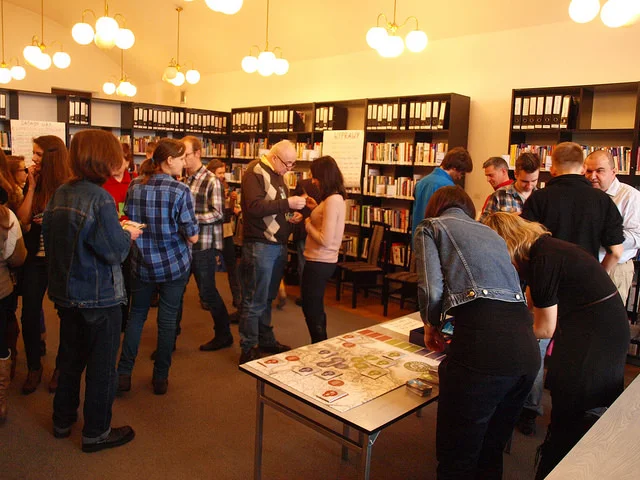
    As an example, Think Codex has a strategic thinking training that uses a simple board game setup to help teach complex theories in bite sizes, making it easier for learners to understand and apply it in the game.

    4. Games are for young people
     

    Older generations tend to be a bit hesitant about gaming, as they didn’t grow up with as much video game exposure as the younger generation today. But saying it’s only for young people is a myth of course, some of the oldest games include chess, go, checkers, poker, etc. 

    We believe that gamification can be used to target any age group by focusing on different kinds of behaviours and motivators, that align with different types of intelligence, motor skills and preferences. For example, a survey conducted based on Marczewski’s Player and User Types Hexad found that people within the age of 40-50 tend to be philanthropist; Philanthropist prefers collaborating with people and tend to learn through reflective observation. You can find out your own player type here!

    5. Gamification is just hype

    Some people have written off the rise of gamification as just a “phase”, but we think that gamification is here to stay, as we at Think Codex have seen how gamification has fostered better understanding and synergy in the workplace.

    With such incredible results and great feedback from our clients, we are sure that gamification’s growth in Malaysia and around the world will continue.

  • Strategic Thinking: When Theory Meets Workplace

    Strategic Thinking: When Theory Meets Workplace

    By Andrew Lau

    Strategic thinking has been an important and famous topic with regards to organisations, so much so that it has been mentioned countless times in management, innovation and corporate articles and blogs.

    There are numerous workshops and trainings with regards to this area and we would like to shed some light on this topic as well and how simulations actually play a part in honing this skill.

    We would start by introducing what is strategic thinking, its crucial components, an example of how it applies to our daily life and how simulations are able to effectively address this skill. We would like you to take note that there are countless amount of research with regards to strategic thinking, with numerous amount of segregation, components and definition.

    We take on the theories of strategic thinking from Liedtka, as we believe that it is the most wholesome and well defined one yet.

    What is Strategic Thinking?

    The best way of learning what is strategic thinking is by knowing what strategic thinking is not. On the surface level, when strategic thinking is mentioned, we have in our minds that it is thinking about the strategy itself. It may appear to us that when we approach a project, planning up a strategy with regards to it denotes strategic thinking, but that is not the case.

    Strategic thinking at an actual fact is a way of thinking, more specifically a mindset with regards to approaching a certain task or project, or in more layman terms, a more organised way of thinking. 

    You may ask, “what is the difference between both of the definition that you had just spouted?”

    Well, the difference between making a strategy and approaching a project with a strategic mindset is the flexibility and adaptability that you possess when critical moments appear (i.e. when something does not go as planned).

    A strategic mindset makes you think from your core of what is important to you, what are your strengths, what are your tolerance level for risk, who are your stakeholders, how are you approaching your future, and how you would turn your challenges into opportunities; which a mere strategy (with multiple backup plans) could not have addressed. It gives you a wholesome picture of what is happening within and around you for you to make the best possible decision at that moment in time.

    And as Liedtka personally has said:

    Strategic thinking, on the other hand, is a synthesizing process, utlizing intuition, and creativity, whose outcome is “an integrated perspective of the enterprise”

    We hoped that we have managed to clear some of the misconceptions with regards to strategic thinking. Now let us move on to the elements of it to fully understand it better.

    Components of Strategic Thinking

    In order for strategic thinking to happen, all the following components have to be realised. Some could be more salient at different points of time depending on the circumstances. They are:

    1. Systems Perspective: Having a mental model of the complete end-to-end systems of value creation, and understands the interdependencies within it.

    2. Intent-Focused: A strategic intent is differentiated and implies a unique point of view about the future, which communicates a sense of direction, discovery and destiny to the team or individual.

    3. Intelligent Opportunism: The ability to adapt without having to depend on top management strategies, which leave open to the possibility of new strategies emerging.

    4. Thinking In Time: After having seen the future that we want, what must we keep from our past, lose from that past, and create in our present to get there?

    5. Hypothesis Driven: Mirroring the “scientific method” by generating hypothesis and engaging in testing as central activities. Hypothesis generation asks the questions “What if…?” while hypothesis testing follows the critical question “If… then…?”

    Understanding and practicing these five components will give you a powerful source of competitive advantage by (as quoted by Liedtka)”

    Their whole system perspective should allow them to redesign the processes for greater efficiency and effectiveness. Their intent-focus will make them more determined and less distracted by their rivals. Their ability to think in time will improve the quality of their decision-making and the speed of implementation. A capacity for hypothesis generation and testing will incorporate both creative and critical thinking into their processes. Intelligent opportunism will make them more responsive to local opportunities… This meets the three fundamental strategically valuable capability: (1) they create superior values for customers, (2) they are hard for competitors to imitate, (3) they make the organisation more adaptable to change.

    How can strategic thinking be applied in our daily lives?

    Let us take a scenario here. You are currently in the marketing department of a FMCG industry and you are considering a career change because you have seen that your peers are switching companies and you feel that you have done enough time within this company. So most likely you would think of, “should I take a leap?” or “where should I go to next?” Ideally, it makes sense to venture into the same industry at the next company but you would like to try something new as well hence, you are in a dilemma. So let us apply the components of strategic thinking into this situation. It is important to take note that there are no right or wrong to this and would depend on individual differences.

    The conventional definition of strategic thinking would get you to immediately come out with a long term plan, and mini goals to get there. What are your backup options if one the other does not work as planned. That would be your strategy. As you go down the line, the same cycle dissatisfaction happens again and you revamp or come out with another strategy. There are some things to be questioned here.

    • Have you looked at the big picture? Such as what are some of your strengths and your important networks that you could cascade into opportunities? What you think you are good at versus what people value about you?
    • Have you looked into your past and find out what you are good and poor at and how have you changed since then?
    • Have you looked into the future of job needs? And what kind of skills do you need to equip yourself with in order to meet the future job needs?
    • Do you have a specific/few direction(s) which you would you want to head towards?
    • Have you gathered enough information to garner the resources needed to revise your strategy when your needs changes?
    • Have you evaluate and manage to risk involved, for each of the path you take?

    It may sound overwhelming at first, but as more practice is involved with regards to the strategic way of thinking, the easier it would be for you to utilise them. They should come naturally as it is a mindset by itself.

    After answering all the questions, you should have a vivid picture /clear sound of what you should do next. This helps you to stay true to yourself and not ending up making a career change based on what you have seen on social media or small talks with your peers. In addition, it gives you a clear picture of the skills/knowledge/stakeholders that are at your arsenal and how they can be transferable to the next workplace that may or may not be relevant to your current industry.

    Here is an example of how strategic thinking is applied in the scenario above:

    First you look at the big picture and draft out the important stakeholders that have brought you to this day. That would be your uncle who provides you sound advice, your previous boss who introduced you this job, the sales manager who introduced the ropes of the company to you and your trusted team partner who backs you up in time of need. Interview them on why did they chose you? What do they see in you? And how have you improved over time?. Then draft out your strengths, skills and interests.

    Take a look on how your skills match other forms of interests that you have. Know what is the best environment for you to work with and research on the transformation of job needs in the near future. Then take a look on where you need to improve or further polish to meet those needs. For example marketing has been going digital and customers’ demands are getting more specific, thus you feel that you need to hone your data analysis skill in order to segment customers’ needs more effectively. 

    Do not be afraid to look back at your past and check on what do you dislike and where your achievements were. Be sure to put that in mind when you are drafting your plan. For example, you are comfortable with technology and is always updated with the current technologies, at the same time hated being too comfortable in one place. 

    By now, you would have an intent on where you want to go. If your traits includes risk-taking and future-minded, then you would naturally be more comfortable in going to an industry that is more futuristic and different from your current industry (e.g. tech). If your trait consists of stability then consider taking another role within the same industry or vice versa. Be sure to check the risks involved in each decision as well. 

    With that, you are all geared up to face the situation when there are changes in job needs within the economy. For example, you would have an adequate amount of knowledge to face the digital marketing world as well as the competencies to carry out corporate marketing plans. The skills that you have obtained by then could further propel you to help bring existing companies into digitalisation, and many more opportunities to come. 

    In conclusion, we can see in the example that there is no one right way towards strategic thinking and each components of the theory could emerge at different points in time. Two persons with similar traits / strengths may have totally different career pathways due to differences in their pasts and traits. However, having an organised way of thinking helps you to get a firm grasp of the situation and how you could respond to them in an effective way.


    Promotional Content Beyond This Point


    How does simulation effectively addresses strategic thinking?

    Strategic thinking does possess its complexity and therefore, requires a medium complex yet simple enough to transfer this skill towards the learner. We do not think traditional classroom teachings are adequate in addressing the full scope of strategic thinking because the fluency of this mindset has to be practiced in the real world setting to successfully grasp its mechanics. At the same time, the the workplace may be too hectic or comfortable that the learner falls back to his or her comfort mindset. Therefore, we believe that simulations possess the complexity, yet simple enough in a controlled environment to allow learners to practice this skill first, so they would have the confidence to apply them within their workplace.

    With the alignment of Liedtka’s theory to our Strategic Thinking Simulation, Allocate, we are able to transfer the theoretical components in stages towards the learners and at the same time, allows them to test out the theories within a safe and realistic environment.

    In addition, we have also aligned specific tools within the programme to help the learners translate the theories (in the head) into paper (visualising) so that they could act on them (execute). With this, we are sure that the strategic thinking mindset can be brought back into the workplace. And the benefit continues when they are shared within the working space.


  • The Unsustainability Factors of Learning Solutions, and How To Innovate.

    By Andrew Lau

    The CEO of Think Codex takes this opportunity to share his views and how Think Codex came about. Here, he addresses the issue of why learning solutions are not sustainable, and which are within our control

    Why are Learning Solutions not sustainable?

    Organisations spend a huge amount of money on training and development but still we are seeing people complaining about how they do not see the relevance of it to their work or that they fail to bring the knowledge back into their workplace.

    This had me thinking about how to make learning more efficient, and the best person to start with, was myself.

    I began to recall the moments where I had failed to bring the key lessons of the trainings I had been to back into my workplace, and dissecting them into distinct elements. I figured that while there are a number of external factors which are outside an L&D Professional’s control, like organisational culture and structure, there are still some factors within our influence:

    1. Recall – Can a person remember what they have learnt?

    The typical training method of teaching through slides and written material has been in existence since 600B.C – the time of the ancient Greeks.

    While the tools may have changed from Papyrus to Powerpoint, the method remains. More importantly however, research has found this method to have the lowest recall rate.

    This means we need to seek out newer proven methodologies such as prototyping and simulations. By changing the methodology, we can shift retention rate from 10% to as high as 90% – a staggering multiplier of nine.

    This is because when we prototype in a realistic environment, we can customise the knowledge/solution in accordance to our own style and personality. I’ve found that this creates a sense of ownership, helping us recall things better as we feel that we have created that realization with our own effort.

    That said, people have thrown questions at me saying “how can we direct what a person learns if he/she were to direct his/her own learning. We cannot ensure that they learn the desired material”.

    O ye of little faith. Let me address this in the next section, have some confidence.
     

    2. Confidence – Is the person willing to try out the learning(s) at work?

    Why is a person reluctant to try out what they’ve have learnt in trainings?

    At the heart of it, it boils down to this dialogue within their heads – “This looks good, but will it work for me? Will I be able to do it?” The only way to ease such fears is for a person to be able to try out the concepts and theories in a safe environment.

    Such an environment must provide business-like reality to mirror the complexity and challenges in the working world. Games and activities that promote luck will not be able to allay the fears of a person. In short, the learning environment must bring participants into a mental and emotional state of real business.

    So fear not doubters, simulations can be designed to a person towards the key learnings by incorporating the raw concept of it directly into design, with the environment built around it. 

    Think of a maze, there are many twists and turns, and the participants are free to take their personalised actions towards achieving them. However, a simulation also has rules, a series of check and balances to ensure that the participants do not stray away, tethering them to an area where the learnings are key. This not only helps them with recall, but also amplifies the feeling of empowerment with regards to their actions. 

    3. Simplicity – Is the learning & tools hindering implementation?

    During my years in an oil and gas company, I once attended a highly-regarded decision making workshop. The content from the vendor was solid, but their process of decision-making took about 2 days to complete. In a normal operational environment this would be near impossible to actually execute.

    At other times, I was confronted with tools so complex that it was just not possible to understand without an instructor’s help. Needless to say, I didn’t apply any of the tools.

    Methodology and tools should be simple and take no more than 15 minutes to learn. This is so that a person can teach colleagues the tool, and still have 45 minutes to apply the tools in a typical 1-hour business meeting. Tools that are simple will reduce the barrier of entry into the workplace.

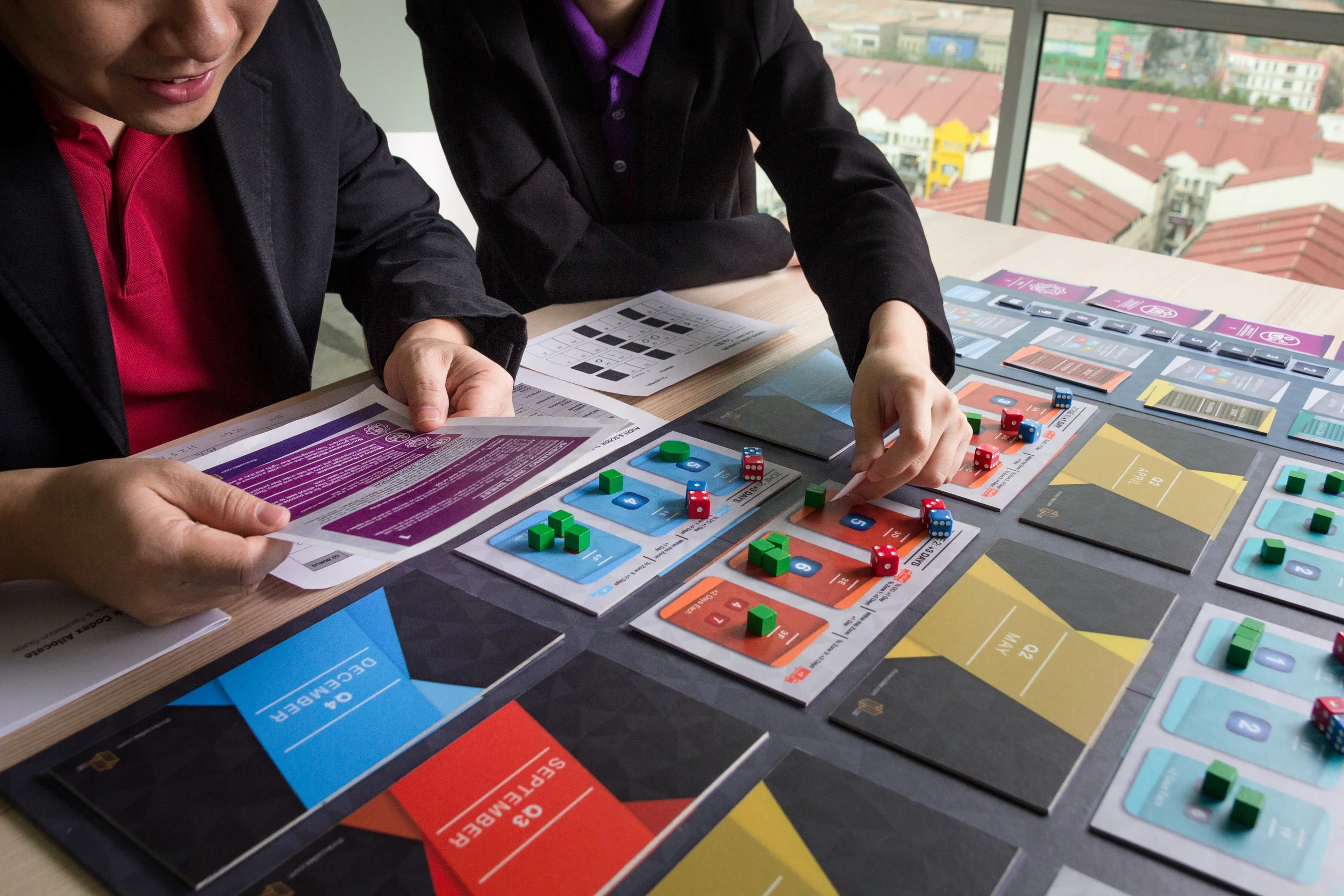
     Our strategic thinking simulation - Allocate.
    Our strategic thinking simulation – Allocate.

    This is the direction where I aspire to bring Think Codex to – a simulation design company that focuses on making learning sustainable. If we are to innovate the L&D in our organizations, it does not require sophisticated digital products but can begin with 3 simple core principles in the form of Recall, Confidence and Simplicity. 

  • The 3 Objectives in Evaluating Learning Solutions

    Talent Development professionals are constantly bombarded with emails, calls and chats from learning solution providers. The options provided can be quite diverse and many providers claim expertise in multiple categories. How then do we filter the ones that provide quality-learning solutions from those are merely great at marketing?

    To understand the quality of a learning solution, it needs to be tested against 3 types of objectives. They are:

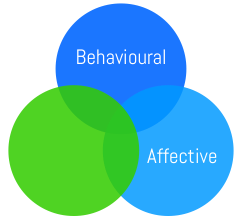
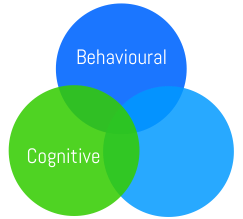
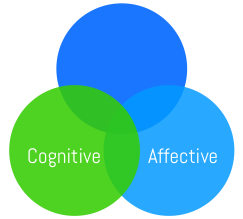
    Cognitive Objective: What do you want a person to know?
    Affective Objective: What do you want a person to think and care about?
    Behavioural Objective: What do you want a person to be able to do?

    It is imperative that all 3 objectives are present in a single learning solution. The failure of this, gives rise to 3 types of employee:

    The Opinionated Employee
    Opinions of trainers or dominant participants form the basis of discussions in learning solutions that are without proper cognitive objectives. While opinions can be based off experience, we also know that each experience is unique and cannot be used as learning theories. Proper cognitive objectives provide participants with solid concepts, models and processes that are applicable in various context of work. Danger arises when employees value opinions as basis of action without doing checks on relevant theory. This makes the learnings unreliable for it could not be replicated consistently across similar situations.

    The Compliant Employee
    Once a participant learns truth from a theory (cognitive objective), ideas will begin to form. However, learning solutions without affective objectives do not provide the opportunity for participants to nurture their own ideas – a crucial step for ownership. A lot of training focuses only on theory and then straight into action steps. If employees do not create and own their ideas, we will have an organization filled with compliant workers. Such an organization will find it impossible to innovate because great ideas are collaborative in nature – as it requires many people to contribute and refine it collectively at all levels.

    The Hesitant Employee
    The final objective of an effective learning solution is to provide an avenue where participants can test out their ideas. The iterative process of trying out ideas and improving them helps to validate their ideas. When the ideas become refined, this will lead to sustainability as participants are confident to apply it in the working environment. Without an ecosystem to test out ideas, employees remain hesitant as they would deem it too risky to try out unproven ideas in the real life working environment. Whatever that has been learned will unfortunately remain in the classroom, which wastes the resource and effort of the company.

    The next time we evaluate a learning solution, test it against the 3 objectives and these questions. What do you want a person to know? What do you want a person to think or care about? What do want a person to be able to do? With this, you will be able to source out the best learning solution for your employees. 

    Call to Action

    We design simulations to ensure the key learnings are applied back into the workplace by providing key learning theories, providing the space for participants to gain ownership of their learning as well as giving them the space to practice the skills. We strive to combine all 3 objectives because we want effective learning solutions for our clients. Contact us to learn how! 

    And if you like our reads feel free to comment below or click subscribe for more!

  • Gamification of Learning: The Benefits

    Gamification of Learning: The Benefits

    Welcome back and we hope that you had a great festive weekend. This week we have found a great article from Harvard Business Review which reflects on the cause that we are fully supportive of and we would like to share it with you. The following article is written by Martin Reeves and Georg Wittenburg about how Games Can Make You A Better Strategist


    Play has long infused the language of business: we talk of players, moves, end games, play books and so on. And now we hear often about the “gamification” of work—using elements of competition, feedback and point scoring to better engage employees and even track performance. Even so, actual games are still taboo in most organizations—the stereotype of the work-avoiding employee cracking new high scores in Minesweeper has given gaming a bad name. And the corporate executive playing games to improve his or her strategy-making skills is still rare. This is unfortunate. We think that games have an important place in cultivating good strategists, and that now more than ever games can give executives an edge over their competition.

    First, there has never been a greater need for companies to learn new ways of doing things in response to a complex and dynamic business environment. And second, the sophistication and effectiveness of strategy games at our disposal has risen tremendously. In the past two decades, strategy games have evolved from dull monochrome dialogs to well-designed AI-based apps.

    We think that the next generation strategy apps will finally be able to prove a real business case. Just consider some the advantages games have over more traditional approaches in strategy education. Books are great to foster intellectual understanding but are not interactive and do not reflect the reality of busy schedules and declining attention spans. Live pilots are highly realistic but costly, time consuming and risky. And coaching or mentoring approaches have great merits for personal development, but are hard to scale.

    Games on the other hand can create an experiential, interactive and tailored understanding of strategy at low cost and in a scalable manner. They allow managers to suspend normal rules in an acceptable way and they provide an effective audiovisual medium for absorbing ideas.

    In our work with executives and strategy games, we see five distinct benefits of using games for enhancing strategy formulation and execution skills:

    1. Games provide inexpensive, real-time feedback. With instant feedback, explicitly expressed in scores or implicitly via a competitor’s behavior, executives can learn much more quickly than in the real world.

    In addition, unlike in reality, failing in games has no costly downside. Games are testing grounds for strategies. They’re “sandboxes” where erroneous behaviors can be undone and different decision paths tried out. Execute a flawed strategy in the real world and your organization might falter; applying it in the gaming realm, and a lesson is learned at the cost of only a little frustration.

    Well-produced strategy games can model environments tailored to a company’s circumstances and targeted skills. Based on the user’s actions, a game can quickly adapt to the learner’s individual skill level and learning curve — clear advantages vis-à-vis books, articles, or seminars. A smart game keeps the manager in what psychologist Mihaly Csikszentmihalyi calls the “flow” zone, an optimal corridor between challenge and skill, by building a series of rounds of increasing difficulty. The learning curve of a game can thus be tailored to the individual player, without overwhelming them as reality often does.

    People Express, for example, is a business simulator that provides players with a rich inside perspective on starting and managing an airline. In each simulated time period, the player makes strategic decisions and receives feedback from past decisions—on how fast to grow, how to set prices, or how aggressively to advertise. Hiring policies influence morale, productivity and turnover, marketing efforts shape demand growth, and competitors fight back. Strategists learn to manage and steer complex systems—without the costly risk of bankruptcy. “Deep actionable knowledge and decision-making skills develop when people have the chance to apply classroom theory in the real world, with its messy complexity, time pressures, and irreversible consequences,” notes John Sterman, a professor at MIT who uses this game to educate business students and executives (we spoke with him recently about how games enhance strategy).

    2. Games allow managers to deeply engage with ideas by incorporating interactivity. Games require managers to analyze the environment, make judgment calls, execute decisions, and reflect on the consequences. Stimulating aural and visual senses, games provide a much more immersive experience than written text or spoken words. Games will further reinforce this edge over books or seminars once VR (virtual reality) becomes fully market-ready.

    Playing with and/or against others helps train a range of game-theoretic skills: wisely choosing one’s actions based on anticipated competitive reactions over a multiple-period time horizon. From cooperation to competition, a game with multiplayer features taps into the rich culture of board games humans have been playing for centuries.

    As an example, a large utility company created a number of different teams role playing competitors and regulators. Each team’s task was both to decide on pricing, investment, M&A and integration priorities and to experiment with new business models while anticipating and reacting to the actions of competitors and regulators. The game play included collaborative interactions like agreeing on M&A/JV efforts. Exogenous shocks (new technologies, economic-political events) were incorporated as well to train players to stay agile and flexible. This interactive element helped the company not only to lay out strategic responses to possible contingencies, but also to get into the competitor’s or regulator’s shoes and see the world from their perspective.

    3. Games allow structured analysis of an executive’s behavior. By unveiling what-ifs and routes-not-taken, well-developed games help managers reflect on their actions (and omissions). This way, even implicit choices and intermediate steps in executing a strategy become apparent and this helps in understanding the causalities that led to victory or defeat. A replay function can help retrace a player’s actions or view the game play from a competitor’s perspective. And score-keeping allows performance comparison with others.

    The Your Strategy Needs A Strategy game was created by BCG and Neofonie, a Berlin-based mobile computing company, to allow users to develop a hands on appreciation of the importance of choosing the right approach to strategy and execution in each business environment. It was released at the same time as a book with the same name. It features short rounds of game play in different environments and provides a running commentary on how the player is performing. A leader board allows comparison across players and identifies “best-in-class” strategists. Post action replay allows players to understand the consequences of their action (see the screenshot below). And contextualized links to relevant content allows players to deepen their understanding of what happened and why.

    This process of analysis and reflection can give answers to such questions as: Was the choice of strategy incorrect, or execution flawed? To improve outcomes, does the player need to work on better observation, deeper consideration of options, greater agility, more flexibility and so on.

    4. Games allow different scenarios to be tested. Strategy games can “enhance” reality by simulating different scenarios that require particular strategic responses. For example, exogenous shocks that haven’t (yet) occurred in real-life, but could plausibly materialize, can easily be modeled. How would a pharmaceutical company react, for example, when a new innovation disrupts the industry’s cost structure? Or what are the consequences of a conspicuous privacy scandal for a social networking company?

    Strategy games anticipate and amplify reality by acting like vaccinations. By reacting to subcritical doses of a harmful diseases, a host develops immunity by “learning” to react for the worst case—a full scale infection.

    Reid Hoffman, the founder of LinkedIn, plays The Settlers of Catan, an old-school board game, and says that tech entrepreneurs are drawn to the game because it “most closely approximates entrepreneurial strategy”. It requires players to collaborate and exchange resources to amass points, while the random rolls of the dice change the environment and require players to constantly adjust their strategies.

    5. Games can be rolled out easily to many managers. Whereas conferences, seminars and coaching practically limit the number of participants, digital games display almost unlimited scalability.

    Many strategy games and simulations we use today have their origin in the military sphere. The defense sector uses strategy games and simulations to train hundreds of thousands of their troops. Scalability is critical. Games only need to be programmed once, but can be rolled out to a large target audience at minimal incremental cost. Adjustments in scenarios can often be implemented comparatively easily and cheaply, by retuning a few parameters or by creating a new visual “skin” for the game.

    Used appropriately, games can help corporations build strategic skills in a timely, cost effective and focused manner—a critical capability in today’s dynamic business environments. It’s time to break the taboo—and get serious about play.



    From Our Team

    We feel that simulations are the new path towards sustainable learning and we strive to  provide a holistic platform for learners to practice their skills and to be rolled out fluidly to any level of participants where the clients deem suitable. With reference to this article, we also have a strategic thinking simulation in our line of products as well. Do check it out and drop us an e-mail if you have any inquiries!

    And if you like our articles, feel free to drop us a comment or subscribe our newsletter!


  • 3 Ways to Increase Your Memory Retention During the Festive Season

    3 Ways to Increase Your Memory Retention During the Festive Season

       It’s the Year of the Rooster and we from Think Codex would like to wish everyone of you a Happy Chinese New Year. This time around, we thought it would be interesting to share with you some tips on how to remember the things you have learnt, while enjoying moments with your family and friends, so you could spearhead the year with full force. So here goes:

    1. Sharing is caring

       As cliche as it sounds, sharing has proven to help retain the information that you have learned and also transfer them from your training into everyday life. Share anything and everything including the programmes that you have attended, the key learnings, or the experiences. This helps you to recall the information that you have learnt, as well as obtaining different perspectives from your family and friends. Recalling the information with the presence of other social cues would help to strengthen the information into the long-term memory.

    Imagine an octopus finding more areas to latch on as it explores the environment (It certainly would be harder to be drifted off by the currents)

    2. Practice your key learnings during the festive season

       Practice is essential in helping to transfer your learnings effectively back into the workplace. That is why we encourage you to apply them during the festive season.

    Let us take the example from our Allocate Strategic Thinking Simulation, where it teaches about how to align your existing strategies with future opportunities that comes by. With that said, you could practice the key learnings of the simulation by planning who you would like to meet during the festive season in a manner where you could make the most out of it.

    Not only that, you could practice the key learnings from Allocate in the your annual card game sessions too. Practice not only promotes recall, but also helps to build confidence in using the skill in the future.

    3. Gamify the mundane activities

       Have a lot of plates to wash? Have many guests to serve? Why not make those activities fun by making a game out of them? Compete with your relatives on who can finish washing the plates faster or whoever that could serve more drinks to the guests (We wouldn’t encourage you to compete in who finishes the Chinese New Year cookies the fastest though). 

    What is important here is that you enjoy the process, get things done, and make meaningful connections.

       Tired of forgetting about the things you have learnt? Research has shown that, skills that are not practised would most likely decay due to interference from other information. So let us not make these learnings go to waste. Start practicing with any opportunities that you could find! 

    Once again from Think Codex, we wish you a happy holiday and have a safe journey back home.

    Call to Action

       Think Codex is a company which design simulations to help translate learning needs of corporations back into the workplace. We provide off-the-shelf and also customised simulations for our clients. Visit our website for more information about our products and if you like this piece of content, please help to share it out or subscribe to our newsletter to get more. Cheers!


    References

  • Make Corporate Learning Fun Again

    Make Corporate Learning Fun Again

        They say all play and no work makes jack a lazy boy. But what if we are able to make work fun again?

        Play has exist in our culture for ages. Dr. Stuart Brown, the founder of the National Institute of Play, has interviewed thousands of people to document their relationships with play, and found strong relationships between play and success. However, the frequency of play has greatly reduced in our lives due to everyday responsibilities. In the video, Dr. Stuart Brown describes how play facilitates learning of great values such as connection, teamwork and most important of all, provides practice.

    Click here to watch Dr. Stuart’s presentation on “Play is More Than Just Fun”.

        This is why here at Think Codex, we aspire to design and promote learning through the medium of play. To be specific, we design simulations based on the learning needs of corporations. We chose simulations due to (1) their ability to simplify real and complex systems, (2) their ability to demonstrate other parties’ perspectives, (3) it helps participants to develop and test their skills in a safe environment and, (4) provides a deep and vivid understanding of even the most abstract training concepts (which we termed as mindset change).

       What is more important though, is that through the gamification of learning, the participants have also agreed to abide by a set of conditions in order to create an experience, which puts them through “inefficient” means to achieve the goal of the game.

       For example, if someone were to ask you to put a ball in a hole, the most efficient way to do it is just to pick it up and put it into the hole. But when you are required to put a ball into the hole by colliding another ball (the cue) into it – and using a stick as the pushing force, we have a game. By now you should have guessed that the game that was referred to is snooker.

       What is more interesting, is that when participants have agreed to abide to the rules of the game, they have indirectly agreed to put their heart and attention into it.

       Besides, we are also able to focus on the subject matter by providing these “inefficient” means to reach the goal. And participants are still able to practice their skills freely as long as they abide by the rules of the game. Just as how a snooker player has many ways in making the cue collide with the ball, as long as only the cue touches the ball.

       We believe that this achieves ownership and practice as participants are able to test and retest the subject matter with regards to their personal way of doing things.

        Why is ownership and practice so important? Well, research papers have indeed shown that ownership and practice indeed do increase the effectiveness of learning while failing to do so would bring about the opposite effect. Karpicke and Roediger’s research have found that repeated retrieval of information during learning has enhanced the retention rate of the participants in the future. On the other hand, Berman, Jonides and Lewis’ research has found that information that has not been revised into the long-term memory would suffer from memory decay – due to interference from other information. This is why we emphasise deeply on practice throughout this blog.

       With that said, there are also tonnes of other benefits with regards to learning simulations, and some of them being:

    1. The ability to make mistakes and learn before moving out into the real world.
       
    2. The outcome of the simulation comes in the form of an experience (i.e. not through reading and discussions).
       
    3. The participants are able to get consistent and immediate feedback.
       
    4. It is enjoyable.
       
    5. The ability to practice the skills hands on increases the confidence and retention of using the skills back at the workplace.
       
    6. The mindset change of the participants would help facilitate further transformation in the office space.
       
    7. Simulation can also be used to complement other trainings, such as an assessment or medium of practice.
       

        This is why we strive to make learning exciting again. We view learning as something fun and meaningful, and can be successfully applied back at the workplace. Learning should be approached by using all of our senses such as sight, movement and sound, so that the knowledge would be better encoded into our daily lives.


    Call to Action

        Think Codex is a company which design simulations to help translate learning needs of corporations back into the workplace. We provide off-the-shelf and also customised simulations for our clients. Visit our website for more information about our products and if you like this piece of content, please help to share it out or subscribe to our newsletter to get more. Cheers!


    References

    R. Garry Shirts, A Taxonomy of Simulation Related Activity. Learning Through Experience.

    R. Garry Shirts, Ten Secrets of Successful Simulations. Learning Through Experience

    Dr. Stuart Brown, Play is More Than Just Fun. TED

    Bryant Nielsen, Benefits of Using Simulations. Your Training Edge

    Marc G. Berman, John Jonides, and Richard L. Lewis (2009), In Search of Decay in Verbal Short-Term Memory, Journal of Experimental Psychology: Learning, Memory and Cognition, 35(2), doi:10.1037/a0014873

    Jeffrey D. Karpicke *, Henry L. Roediger III (2007), Repeated retrieval during learning is the key to long-term retention, Journal of Memory and Language, 57.